Deeside discoveries – Migvie, Glen o’ Dee and Dunnottar

We spent most of last week exploring Deeside in the sunshine. There were various historical sites we planned to see, but it’s often the hidden places you come across unexpectedly which catch the imagination. Here are just a few…

Migvie Church
IMG_5596      IMG_5600

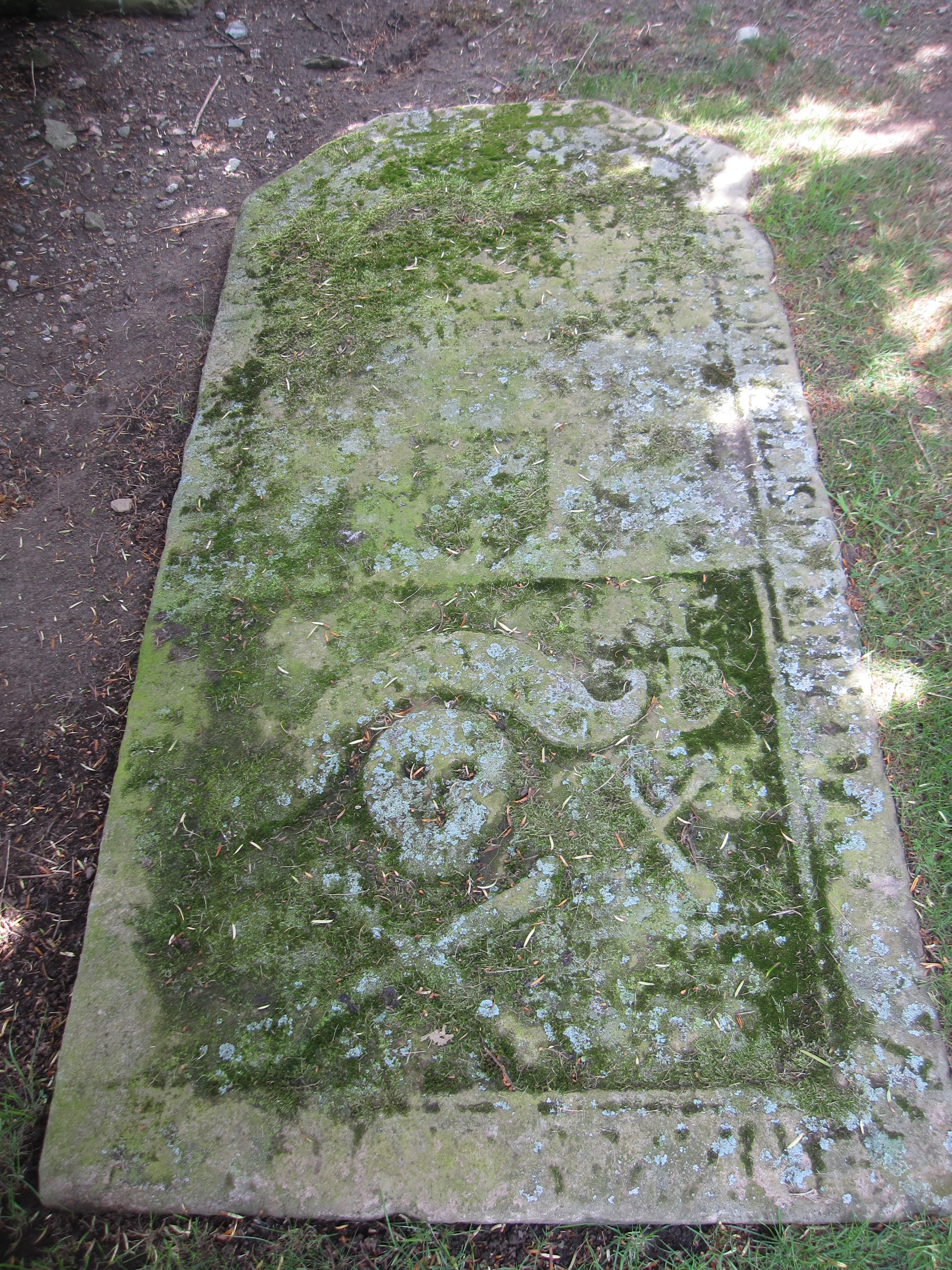
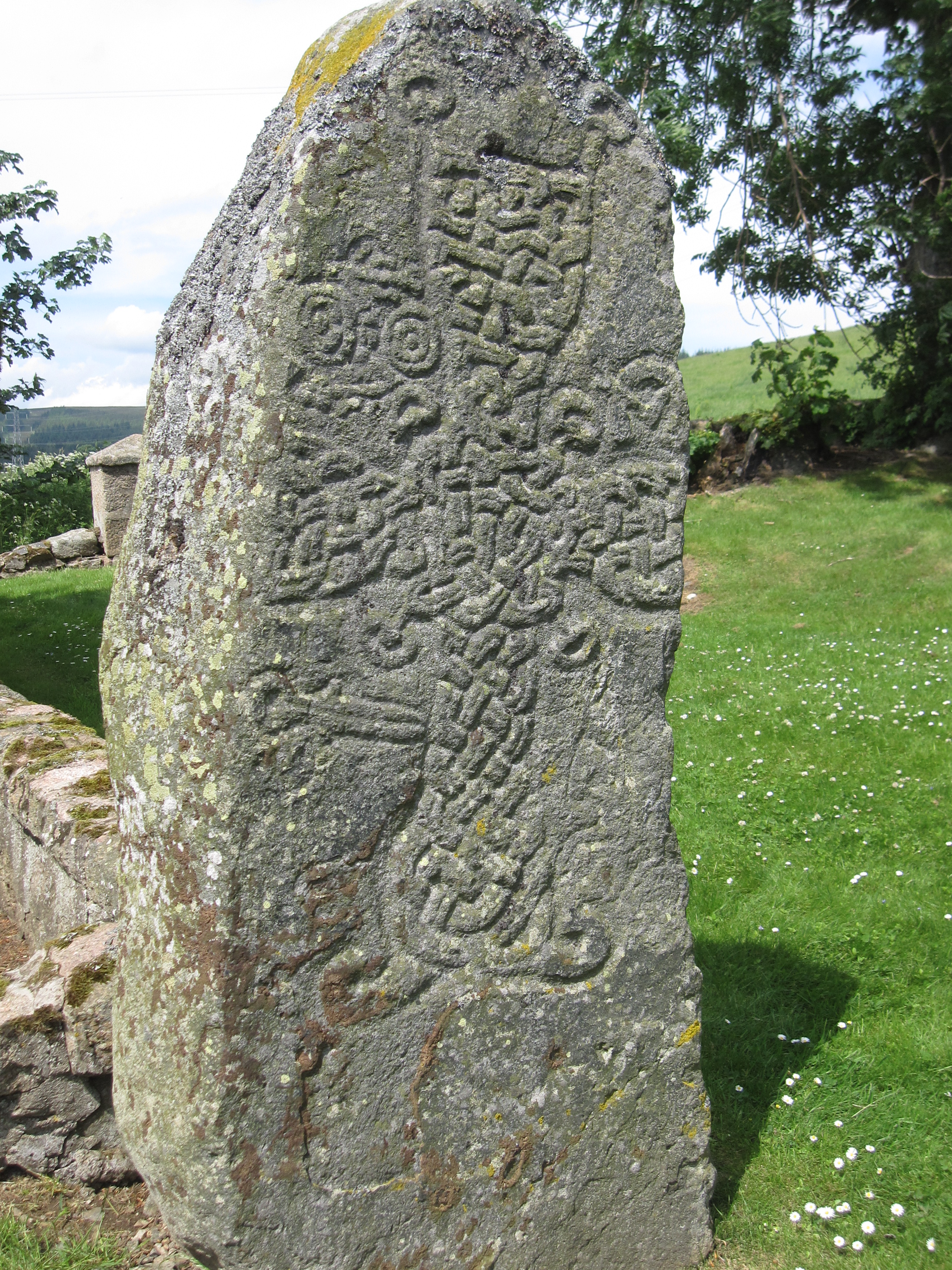
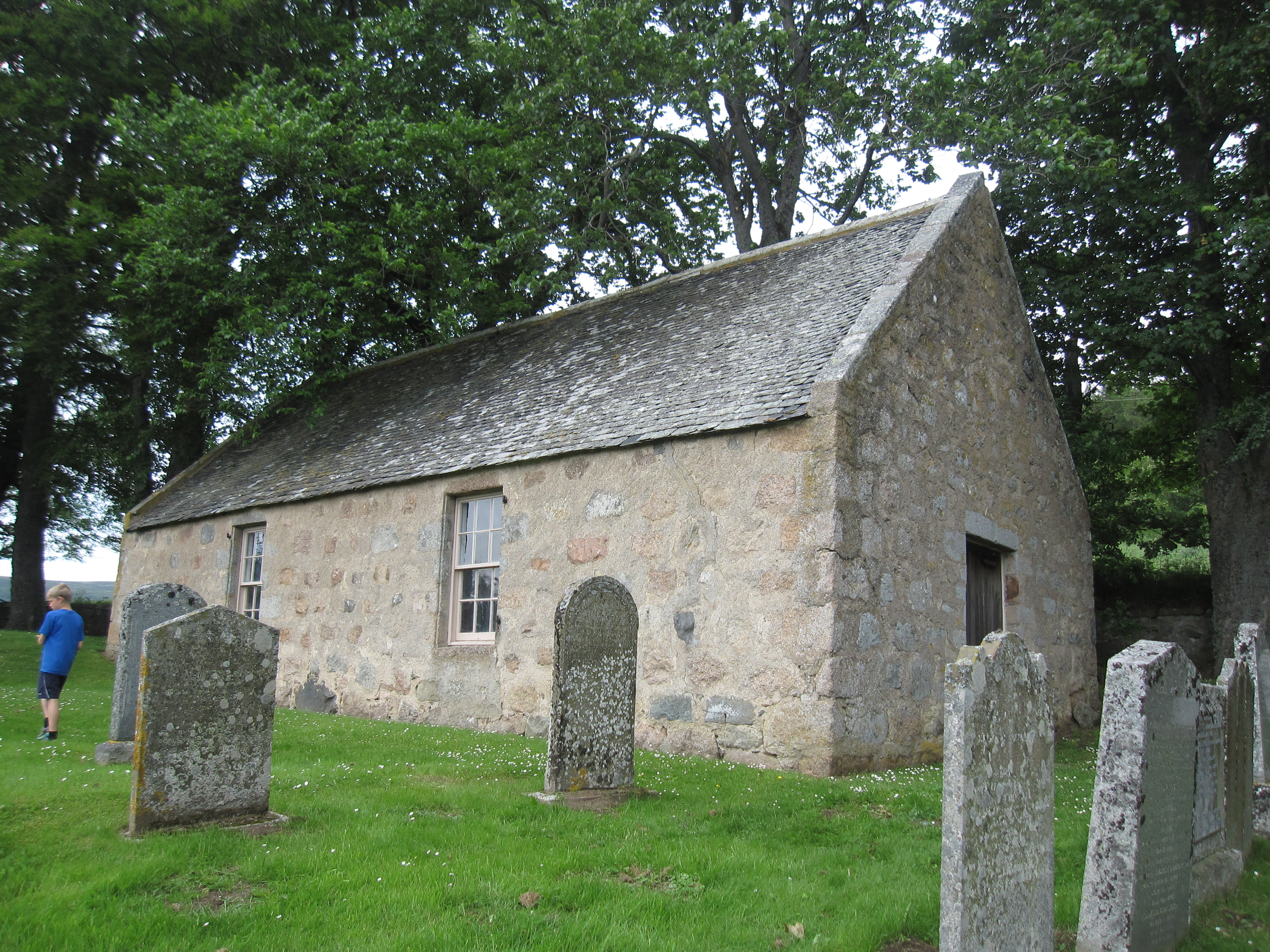
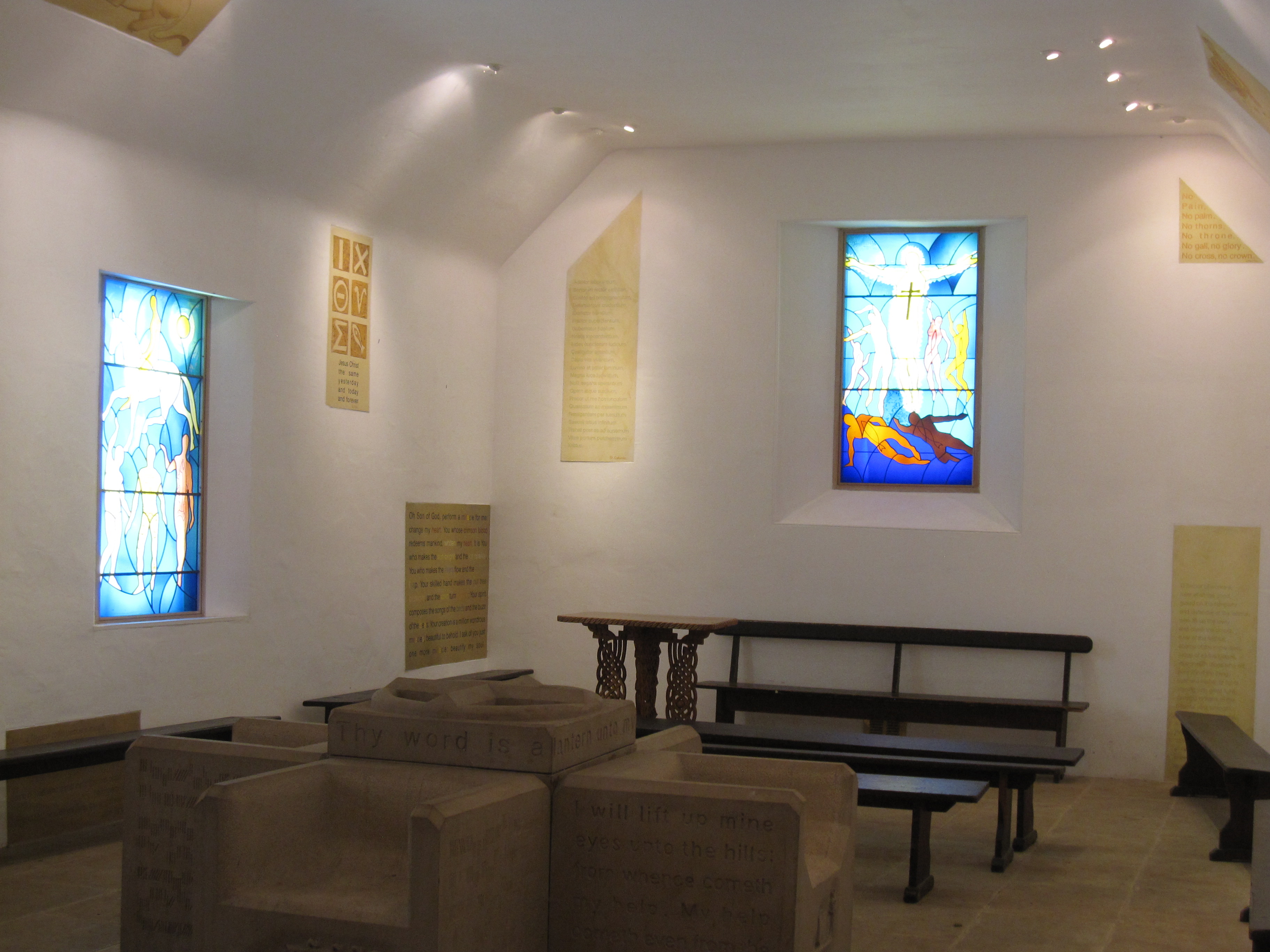
We tracked down Migvie Churchyard in search of this Pictish symbol stone, which was well worth seeing. There was an interesting 17th-century graveslab nearby too. There was, we noted, no sign outside the church, but it’s always worth trying the door of a country church. What we found inside was utterly astonishing.
IMG_5622IMG_5619

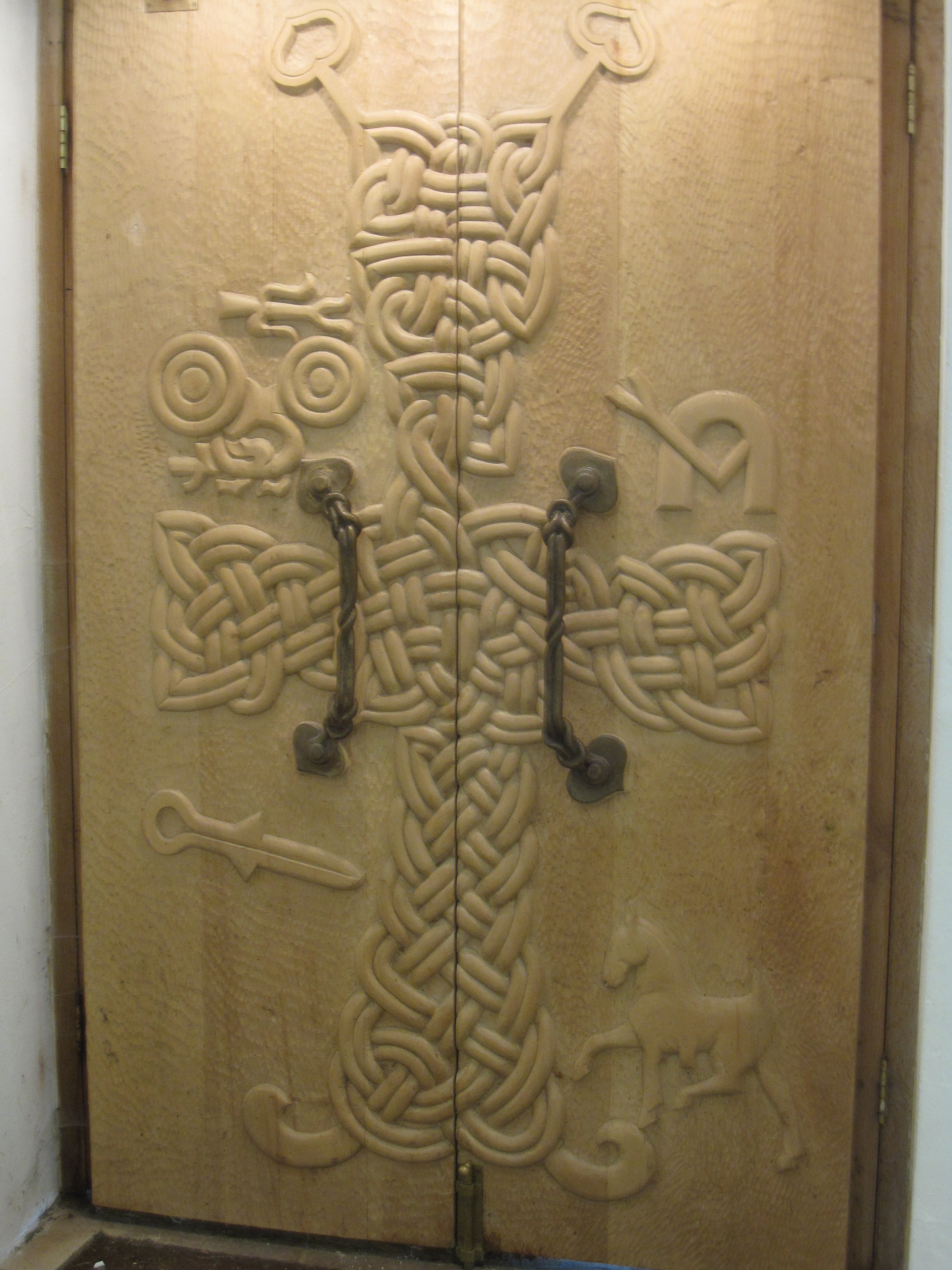
The building was painted white, lit through beautiful coloured stained glass windows, and furnished and decorated with painting, stonework and woodwork which incorporated many Celtic and Pictish saints and symbols as well as verses from Scripture and other writers.

It turned out to be the work of local craftspeople, commissioned by Philip Astor (of the Astor family, and married to the writer Justine Picardie), who owns Tillypronie estate, as a memorial to his parents. I’m not sure how it is used, but it was a place of real beauty and peace, thought-provoking, and somewhere I could easily have spent far longer than we were able to.

IMG_5615IMG_5616IMG_5611IMG_5617

Glen o’ Dee Hospital

IMG_5579

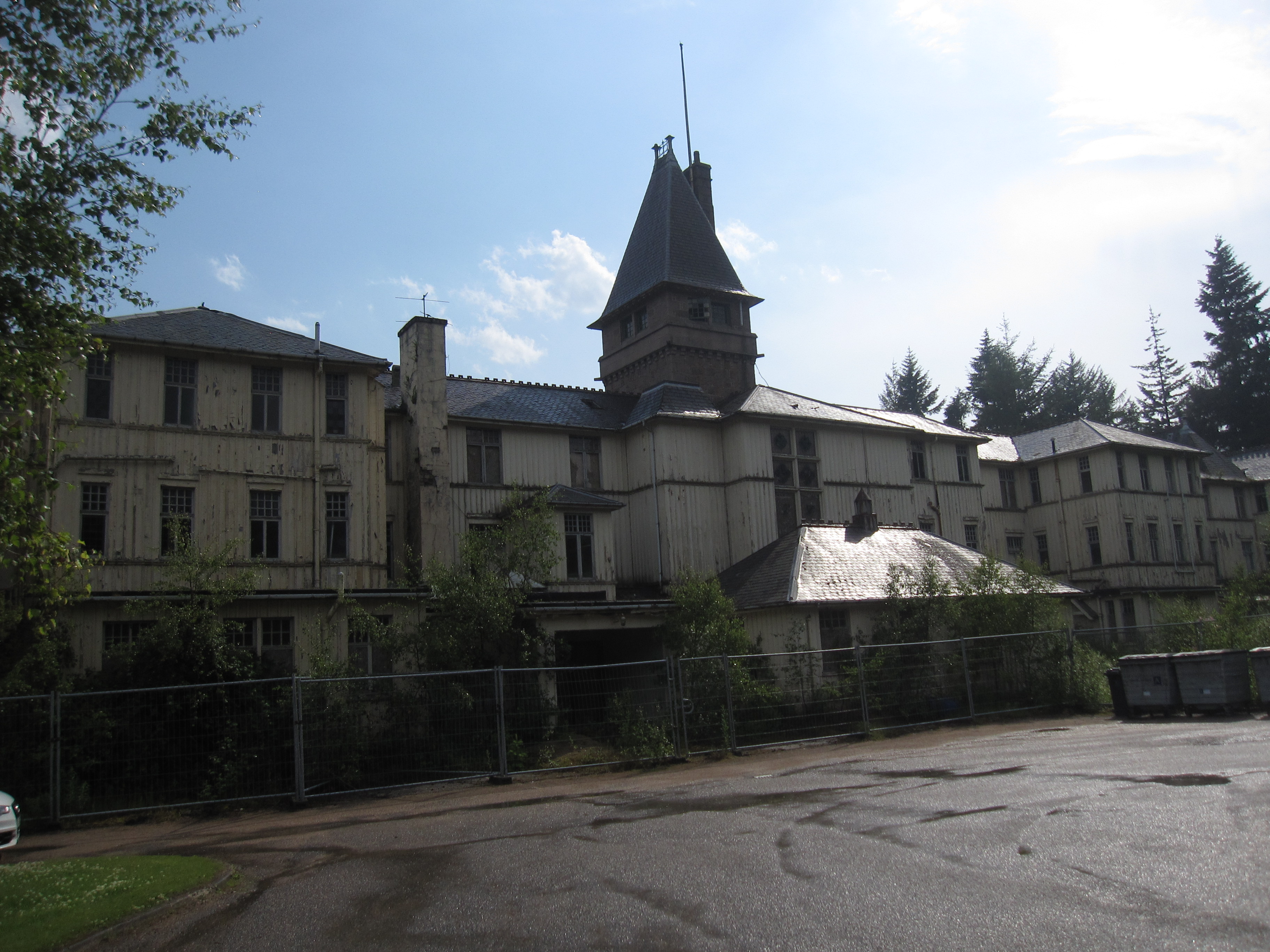
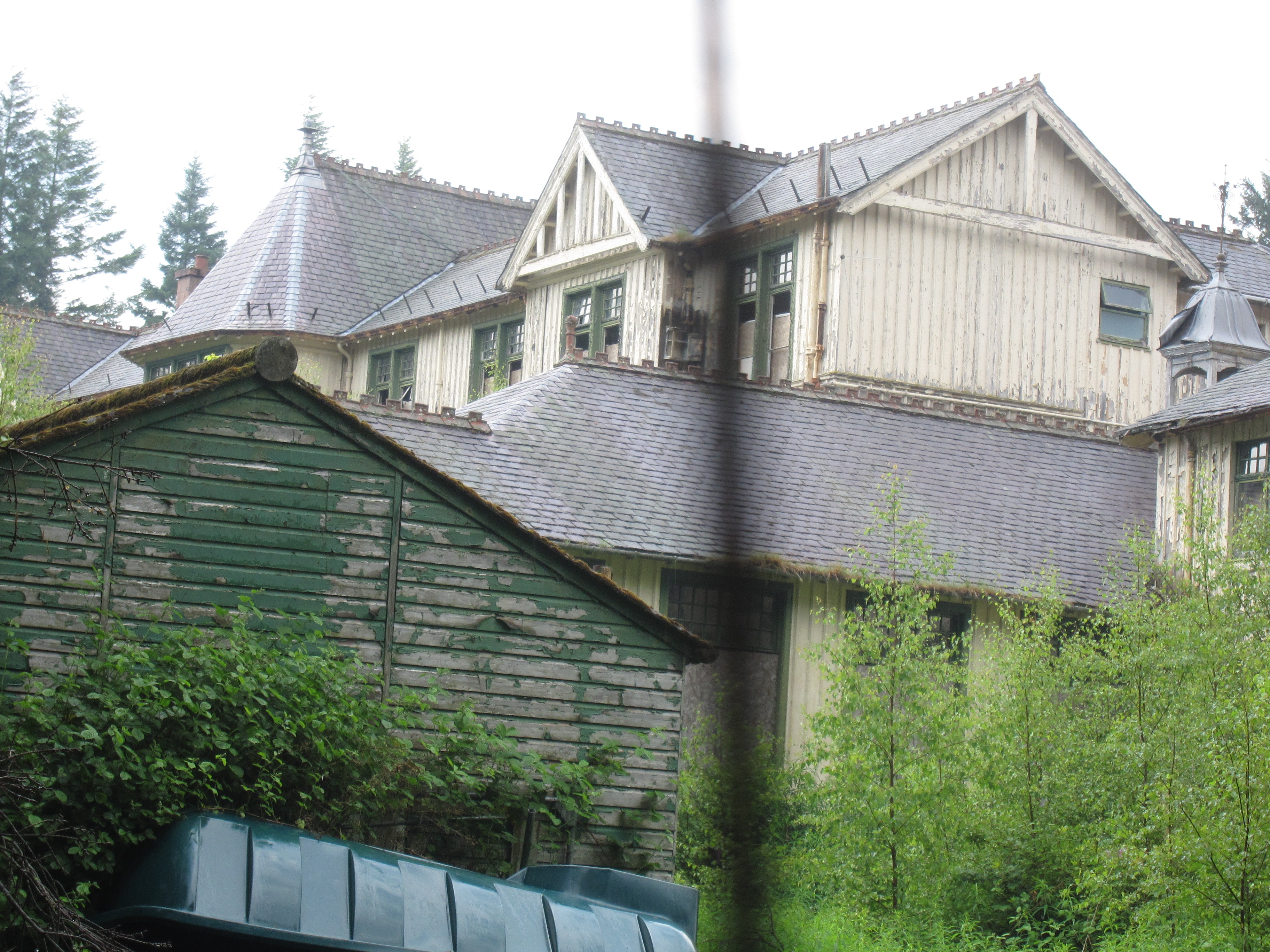
A complete contrast, this one, but another unexpected discovery. I had come across the name of this former tuberculosis sanatorium during the course of some research, and when we saw the signpost we decided to take a quick look. I’m not sure what we expected to find, but my photos definitely don’t do this unusual building justice.

IMG_5583

IMG_5581IMG_5577

You can see an image of how it looked originally here, and some photos of the abandoned interior here. Resting among the pine trees on the edge of Banchory, the sanatorium was built in 1899-1900, and modelled on the pioneering sanatorium built in Nordrach in Germany. It was originally known as Nordrach-on-Dee, and was intended to provide fresh air, treatment and research in the battle against the scourge of tuberculosis. As treatments changed and the disease became less common, the sanatorium was no longer needed. Since then the building has had a spell as a luxury hotel, and then was used once more as a sanatorium during the Second World War, before becoming a convalescent hospital. It finally closed in 1998. This stunning building is Grade A listed so can’t be demolished, but instead is crumbling slowly into total decay. Apparently it featured unsuccessfully in the 2003 TV series Restoration, but it’s a tragic loss of an unusual and fascinating building.

The Whigs’ Vault, Dunnottar Castle

This one was top of the list of places I wanted to visit. My ongoing, long term writing project touches tangentially on some of the Covenanters who spent six weeks imprisoned in horrendous conditions in a vault in this inaccessible castle. Dunnottar sits in a spectacular location on the cliffs, almost completely surrounded on three sides by the North Sea, and can only be accessed by a narrow path and steep steps.

IMG_5701

We had a prior engagement with some puffins at Fowlsheugh a little further south. We basked in sunshine as we walked along the cliff edge spotting razorbills, guillemots, kittiwakes and the elusive, wonderful puffins, then drove back up to Dunnottar. It was a perfect summer’s day.

IMG_5677

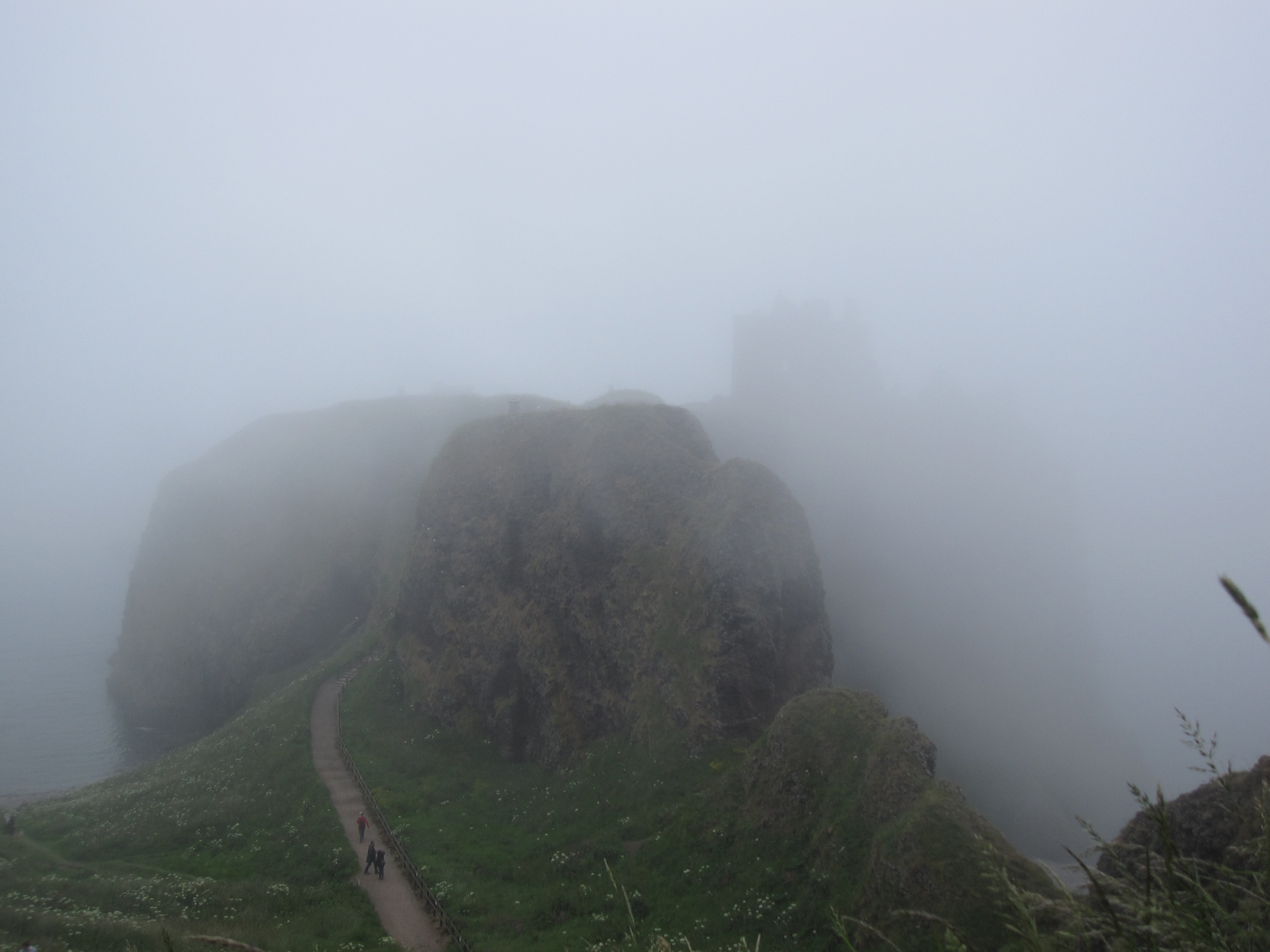
But this was the view when we reached Dunnottar, just five or ten minutes up the coast.
IMG_5709

A bit unfortunate for the poor people who were trying to celebrate a wedding on the cliffs overlooking the castle.

IMG_5784

The east coast haar remained stubbornly persistent throughout the rest of the afternoon, so we didn’t get the full effect of being surrounded by the sea – but in some ways the swirling mist added to the atmosphere. And nothing could remove the resonance of standing in the vault where over 150 Covenanters who had survived the walk from Edinburgh were imprisoned, with no sanitation and little food and water.
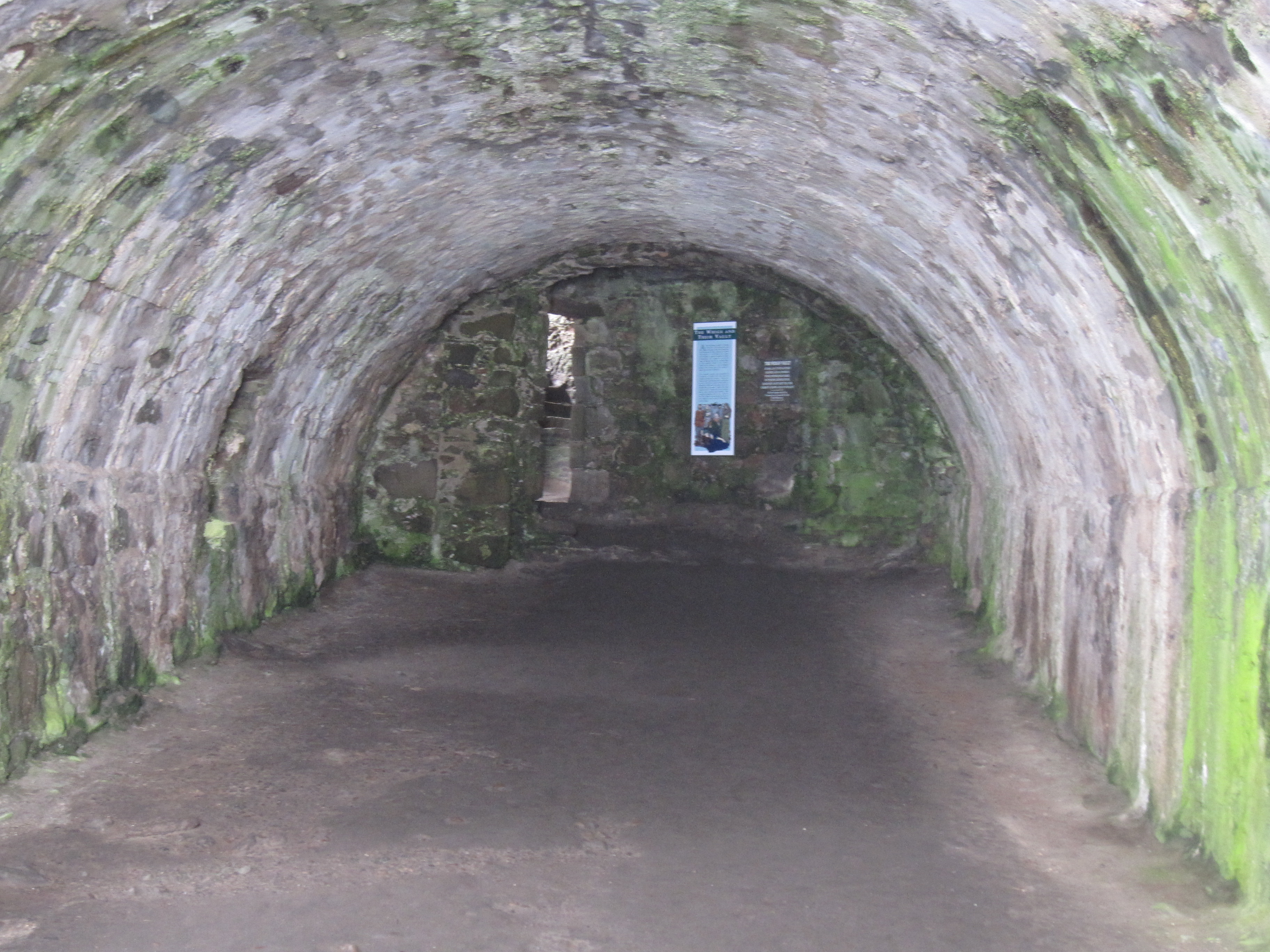
IMG_5753

In Lewis Grassic Gibbon’s Sunset Song, Chris and Ewan spend a day at Dunnottar:

There the Covenanting folk had screamed and died while the gentry dined and danced in their lithe, warm halls, Chris stared at the places, sick and angry and sad for those folk she could never help now, that hatred of rulers and gentry a flame in her heart, John Guthrie’s hate. Her folk and his they had been, those whose names stand graved in tragedy.

Much to think about, much to work on.

© All content copyright Flora Johnston. You may reblog or share with acknowledgement, but please do not use in any other context without permission.

Without Machine Gun To Cambrai

I just came across this review online:

Chris Moore's avatarThe great war bookshop

Book Review: A Fool In France, by Christina Keith. Part One: The Daintiest of Tan Suede Shoes.

A publisher told me once: books come in two categories; those for men and those for women. Men buy books about Adolf Hitler, Winston Churchill and war; women buy novels. Apart from books about cookery and cats, that’s the English market. Writers of men’s books saw the 2014 centenary of the Great War approaching well in time but, so far, few of their books have captured the public imagination, perhaps because too many of them hit the market in one go and too many of them look the same. Most publishers are not mavericks in the herd. Instead of giving us interesting new stories they prefer re-garnishing the old ones. When the legend becomes fact, print the legend every time. Lions led by donkeys; mud, blood and self-sacrifice; in Flanders fields the poppies…

View original post 2,049 more words

Barrogill Keith

Barrogill

Back to thinking about the Keiths ….

I discovered this week that there’s an exhibition of paintings by Barrogill Keith currently being held in Thurso. Barrogill (his unusual name comes from the nearby Barrogill Castle, which is now known as the Castle of Mey and is associated with the Queen Mother) was my great-uncle. His eldest sister was Christina, whose First World War memoir I published as War Classics, along with some of Barrogill’s own letters from the Western Front. His youngest sister Patricia was my grandmother, and was also an artist.

I’m very excited to be heading up to Thurso soon to see the exhibition, and to spend some time in their hometown once more.

© All content copyright Flora Johnston. You may reblog or share with acknowledgement, but please do not use in any other context without permission.

Cupar Old: the cover

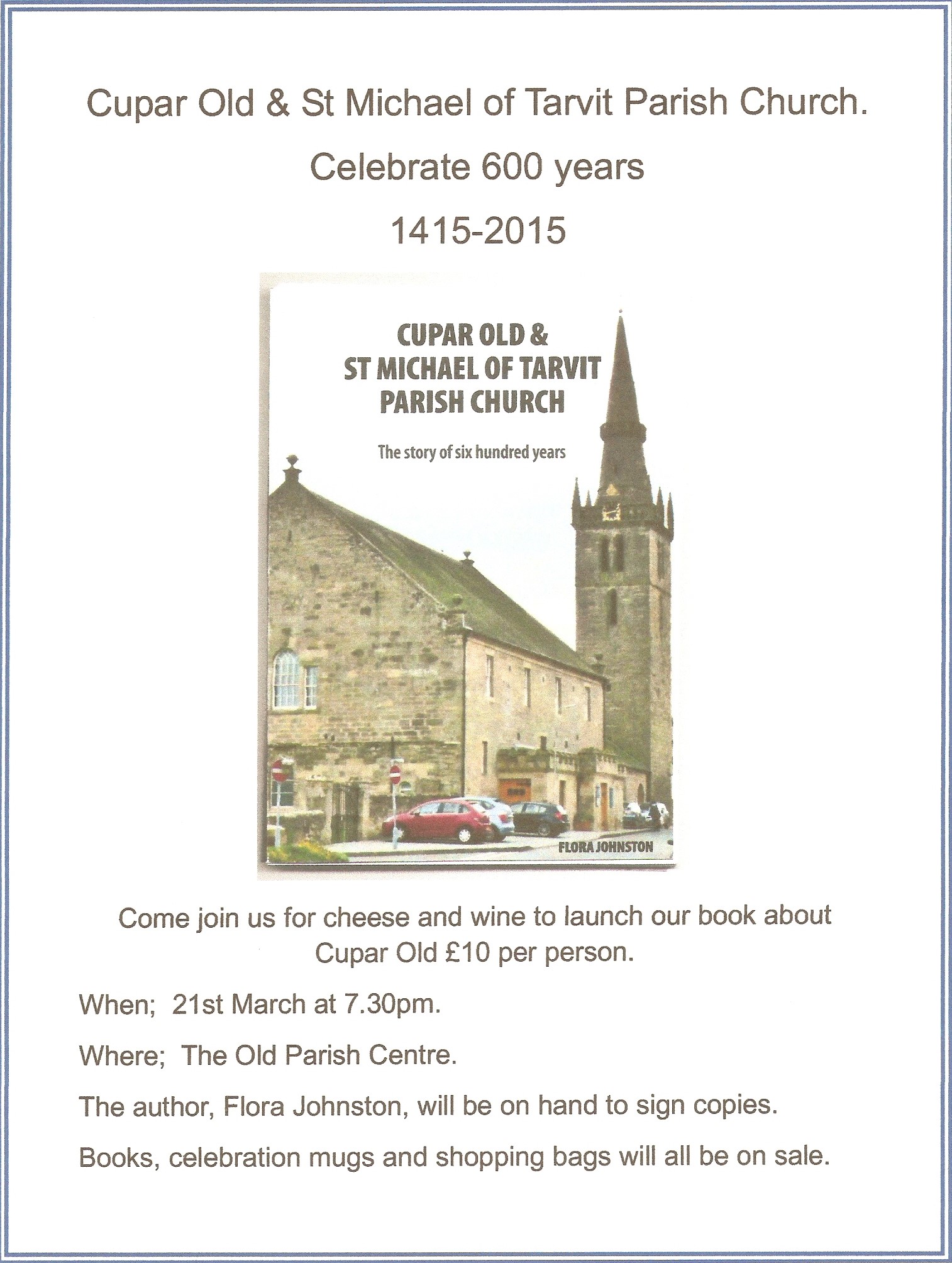
It’s exciting to get a first look at the cover for my book about Cupar Old Church. They’ve done a good job, I think. The launch will be on 21 March.

Cupar


© All content copyright Flora Johnston. You may reblog or share with acknowledgement, but please do not use in any other context without permission.
Cupar Old: six hundred years

I’ve another wee book coming out soon, this time the story of Cupar Old Parish Church in Fife, which this year celebrates its 600th anniversary.

IMG_8406

I wrote the book for them back in 2013, but the plan was always for it to be published early in 2015, and it should be launched in March. As an important Fife town in its own right, and a near neighbour to St Andrews, Cupar had many fascinating stories to uncover. It’s always interesting to see how major national and international events like the Reformation and the 17th century conflicts played out in one local situation.

Some of the research for this one involved going to St Andrews, and consulting records in the University’s Special Collections reading room – which at that time was a cramped and draughty portacabin! Since then, however, the Special Collections have moved into what used to be Martyrs’ Kirk in North Street. I worshipped there for a while when I was a student, so I’m sorry it wasn’t open yet when I was doing this work- I’d love to do some research there. It looks amazing in the image below, from the university website. I’ll just have to find a new St Andrews project!

martyrs-m

© All content copyright Flora Johnston. You may reblog or share with acknowledgement, but please do not use in any other context without permission.

War Classics: Canadian service records and Daniel Gordon Campbell

IMG_7368

Canadian National Memorial at Vimy

Over 100,000 Canadian First World War service records have just been made available online. It was a thrill to discover that the Attestation Paper for Daniel Gordon Campbell is among them.

I discovered something of Gordon’s story as I carried out research for War Classics. When Christina visited Vimy Ridge in March 1919, she wrote:

My eyes had turned to the horizon again, to the heights that once were St Eloi. Someone I knew lay there, who had been a Canadian, and it was too far for me to go. I could only see the Ridge where he had been killed, and not the place where he lay. 

Putting together clues from Christina’s narrative with information preserved elsewhere in the family, I was able to confirm that the ‘Canadian’ of whom she was thinking was Daniel Gordon Campbell. He had grown up near the Keith family in Caithness, attending the Miller Institute and Edinburgh University, and by the time war broke out was a lawyer living in Canada, and was engaged to be married to Louise, Christina’s sister. Louise never recovered from his death, and kept scrapbooks filled with newspaper cuttings about the Canadian action at Vimy, letters of sympathy from friends, and information about his final resting place.

Gordon’s attestation paper, which you can see here, includes a physical description. He had dark brown hair, dark complexion and brown eyes. Most strikingly he was 6 ft 6 inches tall, which sheds new light on the fact that he represented Scotland at the high jump!

SKMBT_C28413080512320

From Louise’s scrapbook, photo of memorial to Canadian soldiers who fell at Vimy

Every fresh little detail makes these men real people. Gordon left no children to remember him, and I haven’t yet explored to see if there are any other family members who might have kept his memory alive. But thanks to Louise’s scrapbooks and Christina’s time in France, he hasn’t been forgotten.


© All content copyright Flora Johnston. You may reblog or share with acknowledgement, but please do not use in any other context without permission.
 

.


Game of Crowns: the 1715 Jacobite Rising

The handwritten order for the massacre of Glencoe

http://www.bbc.co.uk/news/uk-scotland-edinburgh-east-fife-30394285

I was at the opening of this exhibition last night. It’s been created by the National Library of Scotland on George IV Bridge, Edinburgh, to mark three hundred years since the Jacobite Rising of 1715.

Many people have heard about Bonnie Prince Charlie and the events of 1745, but the 1715 Rising is less well known – yet it makes just as compelling a story. The star this time is not Bonnie Prince Charlie but his father James, known as James VIII and III by the Jacobites. James was born in 1688 into a world of complex family relationships, intrigue, rivalry and betrayal, which played out on an international scale. The exhibition traces his story, focussing on his unsuccessful attempt in 1715 to win back the crowns of Scotland and England. It displays some of the remarkable documents which survive from that time, including the secret orders for the massacre of Glencoe which are mentioned in the press release. It’s not all drama and violence though – you can even play a game of Top Trumps, scoring the characters for a range of attributes including length of wig!

I was fortunate enough to be at the opening because I was involved in researching and scriptwriting the various interactive elements of the exhibition. These include an interactive family tree and timeline,  and audio scripts which are spoken by key characters in the story – James, Queen Anne, George I etc. You can also listen to these on the National Library of Scotland website. I was working on this during the run up to the Independence Referendum, and it was impossible not to get goosebumps at the sense of history, and the connections between events 300 years ago and today. Professor Chris Whatley expanded on that theme as he spoke at the opening last night. Sheena Wellington, who gave an unforgettable performance of A man’s a man for a that at the opening of the Scottish parliament, sang Derwentwater’s Farewell last night, one of several Jacobite songs you can listen to in the exhibition.

Game of Crowns runs until next May. If you’re in Edinburgh, go along and have a look. It’s good to see some of the treasures held by our National Library, and together they tell a fascinating story. Towards the end of the exhibition you’ll see the baptismal certificate of James’ infant son Charles – better known today as Bonnie Prince Charlie. 1715 was not the end of the story….

© All content copyright Flora Johnston. You may reblog or share with acknowledgement, but please do not use in any other context without permission.

Perspectives on peace 1918: the Keith family

Two sisters and a brother. Three contrasting experiences of peace.

IMG_7354Barrogill was with the army in France:

They picked the divisions for the slaughterhouse and sent them forward with no purpose and no idea save that they be decimated. If that be generalship a bairn could do better! The war dragged on and our pals died. By the end of 1918 after we had assembled the might of the world against Germany, weight and casualties told; the Hun sought an armistice: and the war came to an end.

It was through our lines, just where I happened to be, that in October 1918 the big black car with its huge white flags passed carrying the Hun delegation seeking armistice talks. And Foch was just behind us in his train. I was told by a friend who was present that when Foch read out the terms he was proposing to hand the Germans, Haig intervened saying ‘Good God, the Hun will never accept these terms.’ To which Foch replied ‘I am afraid they will.’ As indeed they did. And so the war ended.
[from family archive material]

Christina was behind the lines in Dieppe:

Outside bells blared; flags flew; bands played; at every window in the Grande Rue faces looked out, laughing, crying. In the distance the ‘Marseillaise’ came rolling down and its echo ‘It’s – a – long – way – to – go.’

I stole into the Cathedral. Over the altar hung our flags, quiet and still. There was no need to wave them now. Utter quietness here and one spot of light only. In the chapel at my side lay the empty tomb and the marble watchers beside it. The figure of the risen Christ was outlined and ringed with light. Never have I seen so many candles ablaze together. Beneath Him in the darkness knelt clusters of black-robed women. Peace had come.

[from War Classics: the remarkable memoir of Scottish scholar Christina Keith on the Western Front, The History Press, 2014]

Mildred was working in London:

There were huge crowds already [at Buckingham Palace] but we were very lucky in getting up on the wall surrounding the statue of Queen Victoria. We were held up on the wall by soldiers and got a splendid view of the Quadrangle. We had only been there a quarter of an hour or so before the place was absolutely black with people so we were fortunate. General French and Townsend passed just beneath us on their way to the Palace – the police making way for them. It was grand. Then a band arrived and after half-an-hour during which everybody was cheering and waving flags and shouting ‘We want King George!’ he appeared! An Australian officer had managed somehow to get on top of the statue and he had most of the ragging. The King, Queen and Princess Mary appeared on the balcony and for fully ten minutes there was an uproar. It was grand and very, very thrilling. I shall never forget it. Then the band played first ‘Tipperary’ and everyone joined in- then ‘Land of Hope and Glory’ and ‘Keep the Home Fires Burning’. One after another of these topical songs, the crowds taking them up, and ending finally with all the allies national anthems. After that the King spoke but naturally I couldn’t hear a word – at least make out a word. I had a splendid view the whole time.
[from family archive material]

Remembering also Louise Keith’s fiancé Daniel Gordon Campbell, Sandy Morrison and Willie West, who didn’t come home.

© All content copyright Flora Johnston. You may reblog or share with acknowledgement, but please do not use in any other context without permission.

.