Vallay: ruined houses and a tidal island

IMG_2471

I spent last week on the beautiful island of North Uist in the Outer Hebrides. Top of the list of things to do this time was walking across the strand to the tidal island of Vallay. When we were on Uist last year the tide times were all wrong, but this year they were perfect, and the weather on the day we crossed was perfect too.

There’s something very special about a tidal island. I remember spending a few days on Lindisfarne when I was researching St Cuthbert, and being so struck by the rhythms of the place – the way the visitors empty out just before the incoming tide spills over the causeway, offering precious breathing space to those who live there and to the landscape itself.

IMG_2462

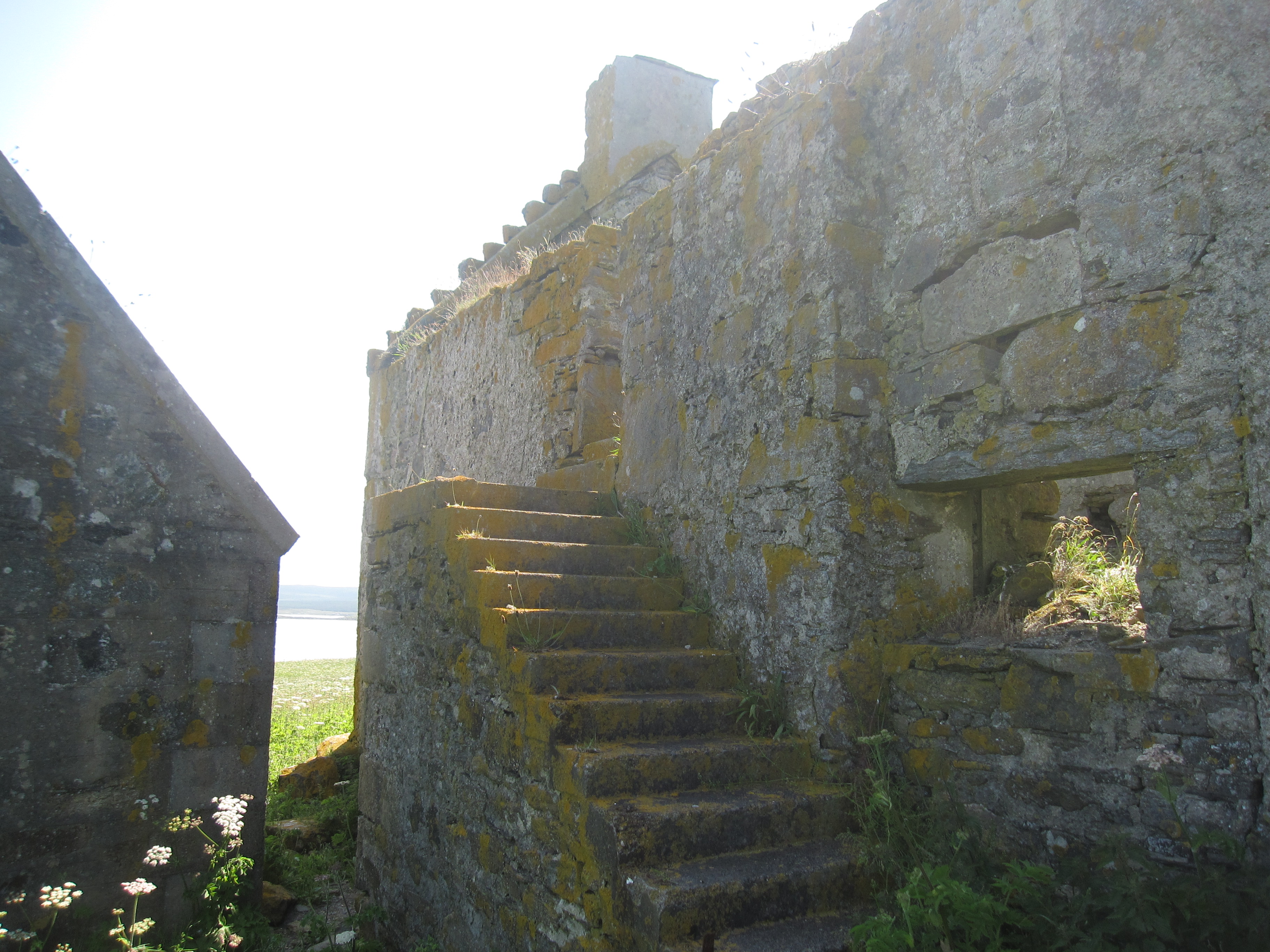
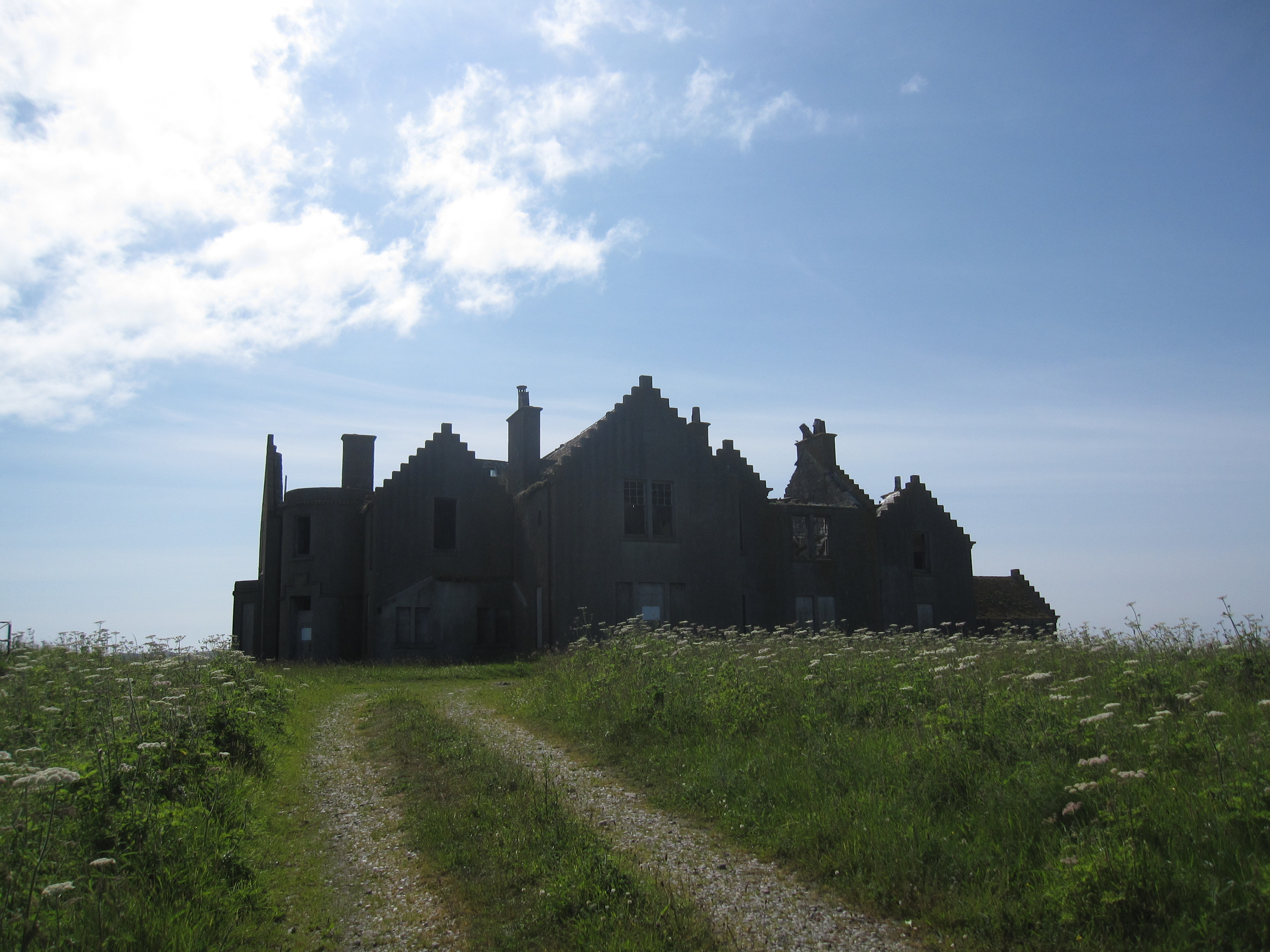
There’s no causeway to Vallay – just a vast expanse of wet sand – and there’s no one living there permanently nowadays either. But that wasn’t always the case, and the ruined houses which stand silhouetted against the skyline are a reminder of those for whom this place was once home.

In 2012 my book Faith in a Crisis was published by the Islands Book Trust. It explores the role of the clergy during the desperate years of famine and clearance on the islands of North Uist, South Uist and Benbecula. It told the story of three men, one of whom was Finlay Macrae, minister of the Church of Scotland on North Uist. From 1825 until his death in 1858 Finlay and his family lived on Vallay.

Faith in a Crisis

Now stop for a moment and think of a minister being dependent on the shifting tides for access to his parishioners. Not exactly convenient! Sources agree that Finlay was very much a farmer first and a minister second, and his sermons were known as ‘the short sermons of the ebb’, as he often had to cut his service short and make a dash for home! The pastoral care of his people must also have often been dictated by the ebb and flow of the sea.

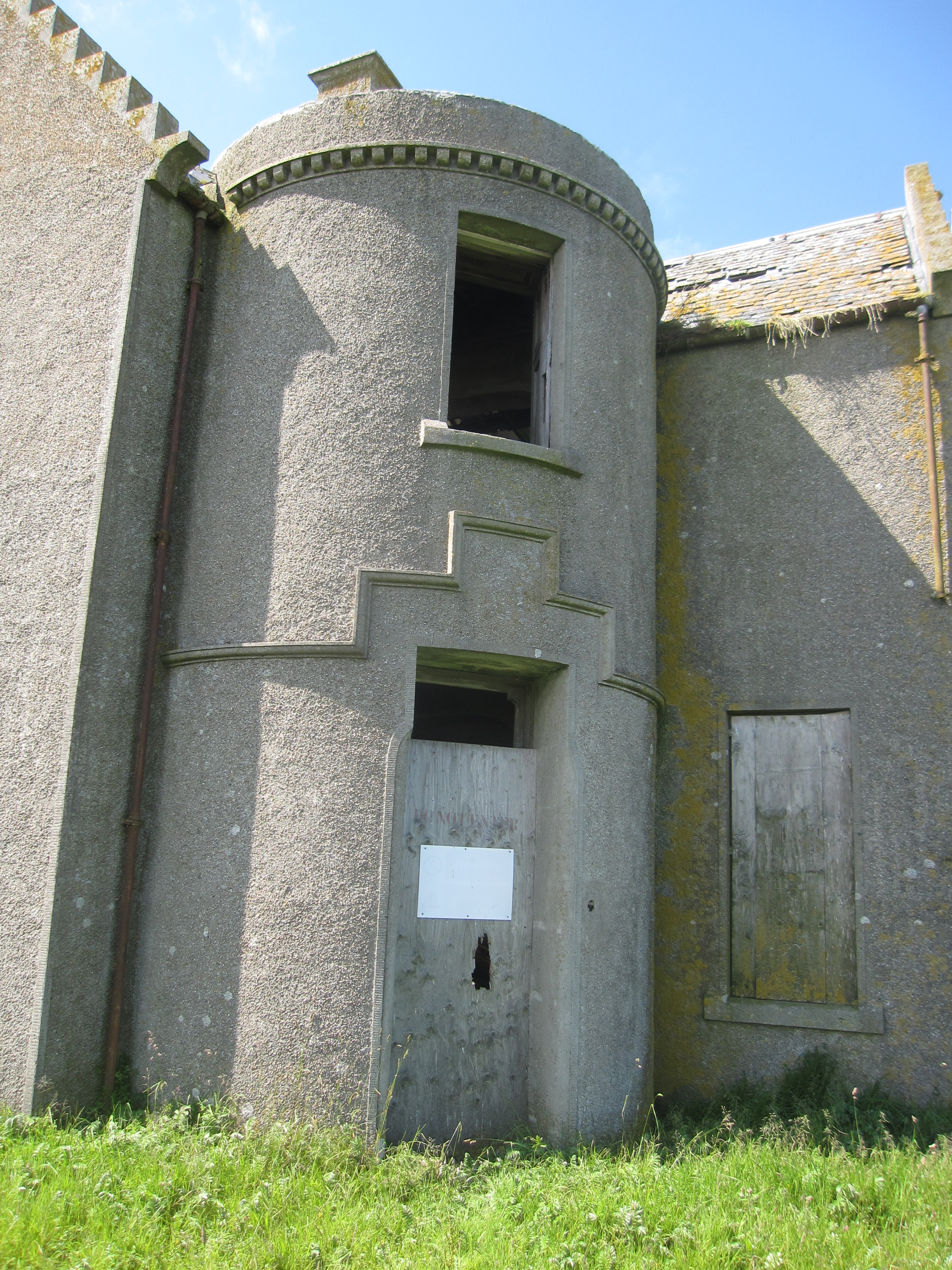
This is the house in which Finlay lived with his wife Isabella – sister of the local factor – and their children. It was said to have been built by James Gillespie Graham in the 1790s.

IMG_2483
IMG_2485


At right angles to Finlay’s house is another ruined house, known as old Vallay House, which is described on the RCAHMS  website as ‘the only surviving example in the Uists of a tacksman’s house with crowstepped gables’.

IMG_2552

It was built for Ewan MacDonald and his wife Mary MacLean, and their marriage is commemorated in a weathered lintel EMD & MML 1742.

IMG_2491

IMG_2477

These two simple, roofless structures are overwhelmed by their neighbour. Vallay House was built around 1902 for Erskine Beveridge, linen magnate, archaeologist and photographer from Dunfermline. Although ruined, his former home still contains haunting echoes of its life as a grand Edwardian mansion.

I crossed to Vallay thinking about Finlay, and found myself becoming increasingly intrigued by Erskine Beveridge. So much so that I think he deserves a separate post. More here.

© All content copyright Flora Johnston. You may reblog or share with acknowledgement, but please do not use in any other context without permission.
Stirling

I spent today at Stirling Castle. On my own. Part proper work, part research, part sheer indulgence.

The proper work bit was to see the exhibition Wallace, Bruce and Scotland’s Contested Crown before it closes next week. It’s fun to go along and watch people interacting with the displays.

IMG_2162

The staff were fantastic. The man who sold me my ticket told me about the special exhibition, about these documents which are ‘the oldest thing you’ll see today, older than any part of the castle’. The guide in the room was doing a brilliant job of making 700-year-old Latin texts sound interesting to a group of schoolchildren. The running totals on the ‘who would you vote for’ between Wallace and Bruce were up in the 600s, with a narrow lead for William Wallace. The exhibition was remarkably busy.

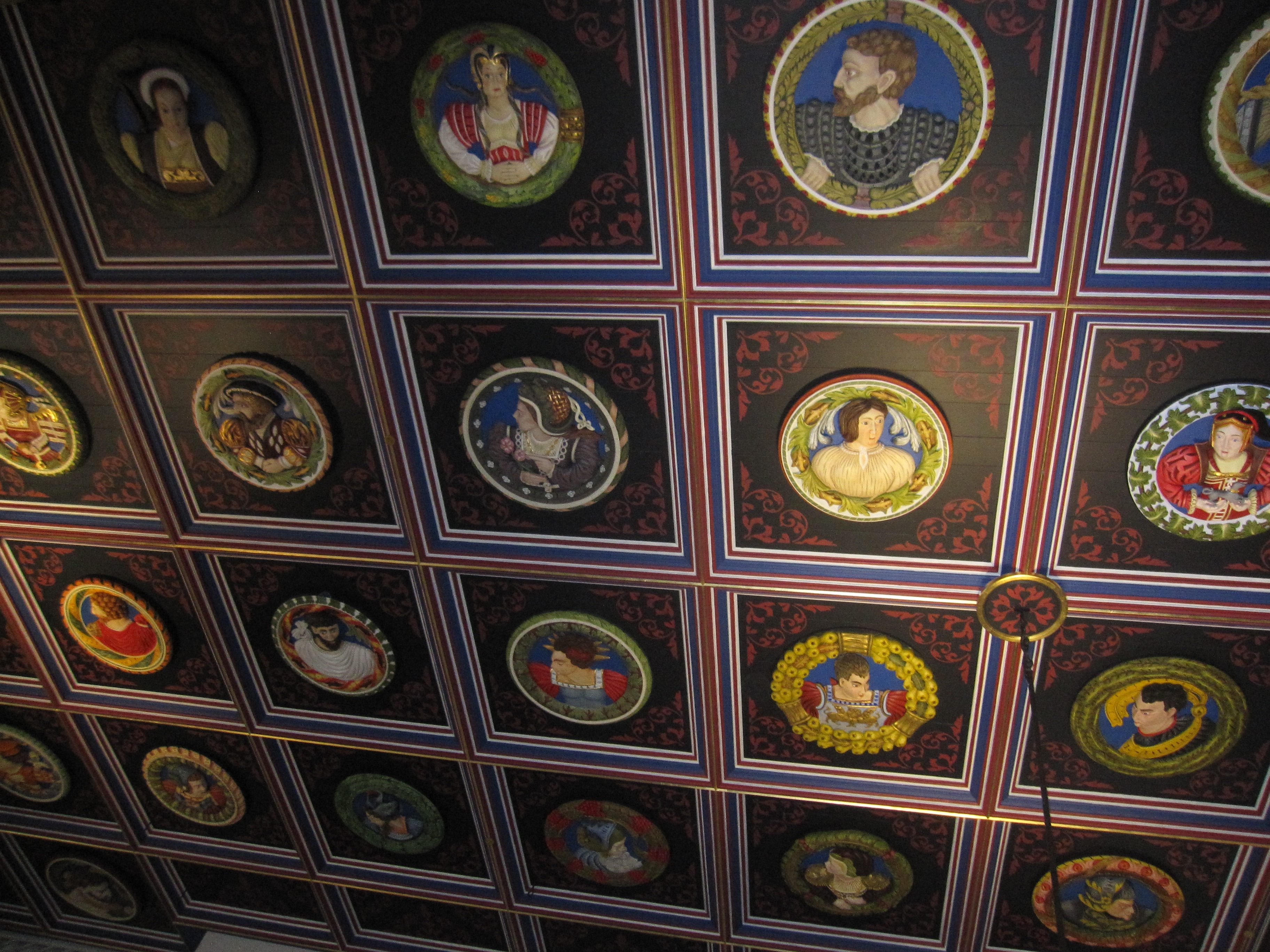
I was in Stirling Castle about twenty years ago on a Scottish History trip from St Andrews, and then again about ten years ago. But so much restoration work has been carried out on these magnificent Stewart buildings that it was well worth another visit. It’s fabulous to see the coloured reconstructions of the Stirling heads, and so much more. I love to think that many of these depict the men and women of James V’s court – it’s like having the pictures in Hello spread out across the ceiling!IMG_2108

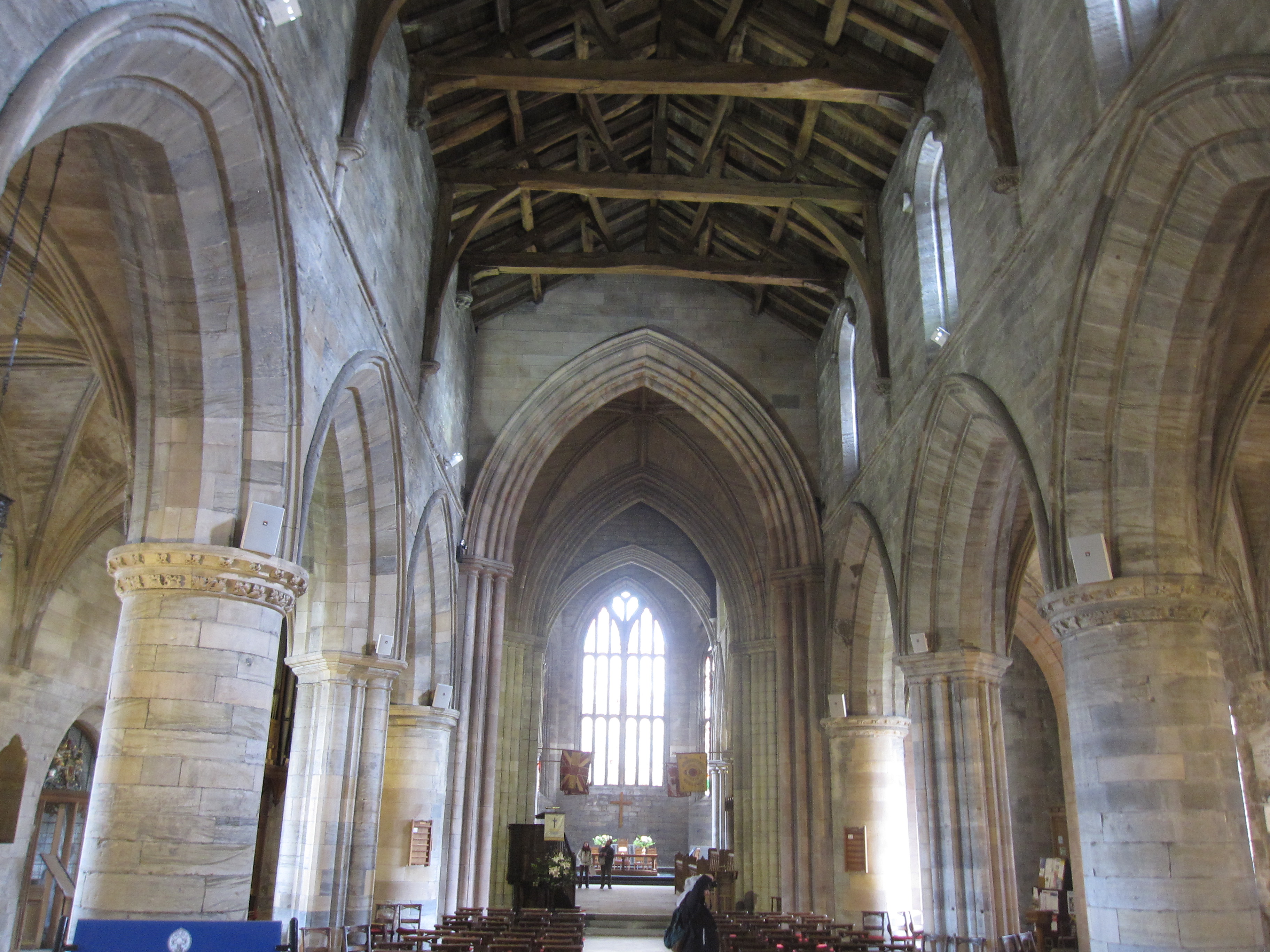
I wandered down the hill to the Church of the Holy Rude, which I’m not sure I’ve ever visited before but I particularly wanted to see today – that was part of the ‘research’ bit.

IMG_2204

The infant King James VI was crowned here in 1567 when his mother Mary Queen of Scots was forced to abdicate.

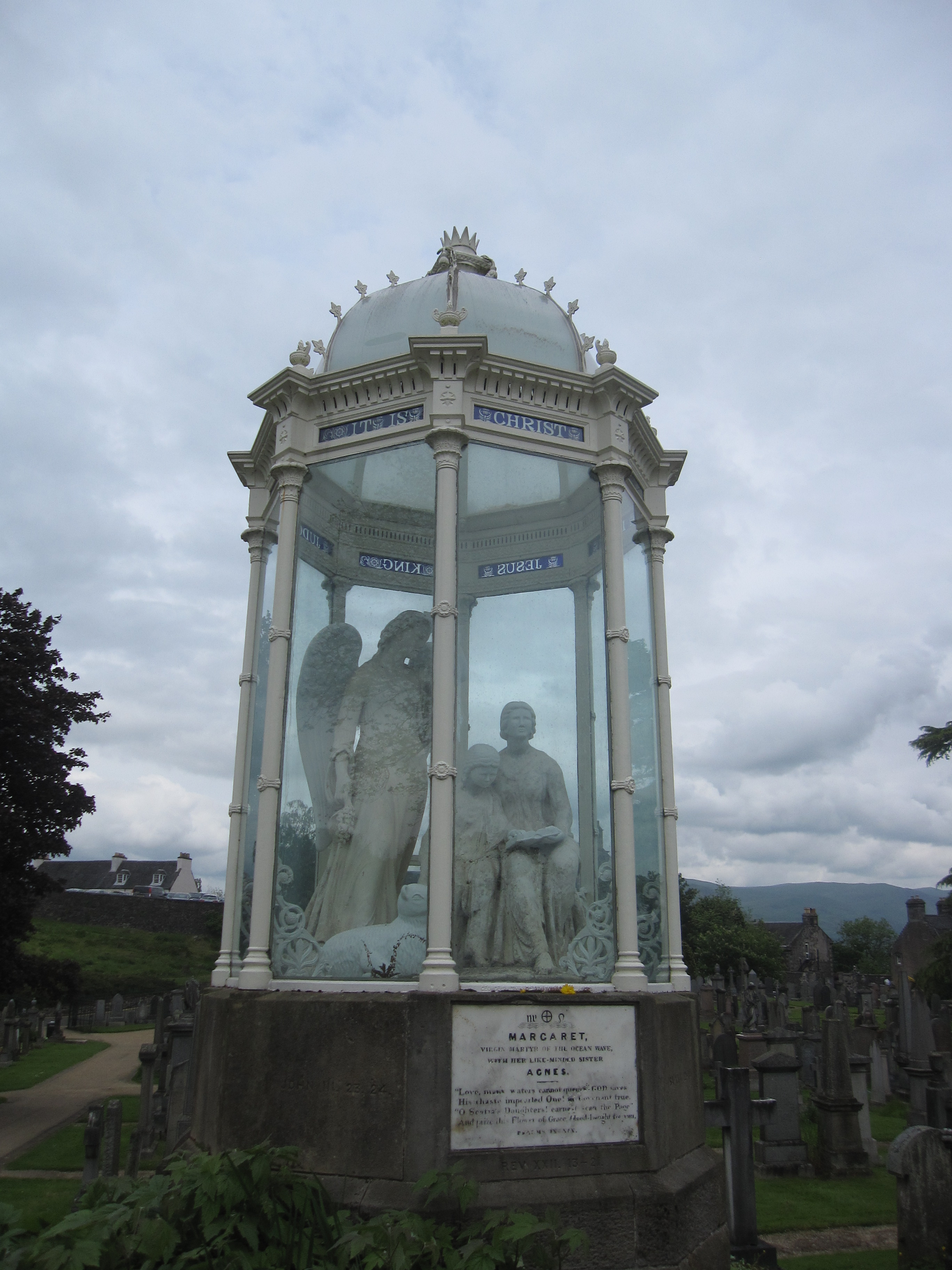
Behind the church is a graveyard which was partly laid out by the Victorians, and has some rather unexpected statues of figures from Scottish reformation history dotted around, including this truly bizarre monument to two famous Covenanting martyrs who were drowned in the Solway.

IMG_2206

There’s a small hill in the graveyard. Climb that hill and look around, and you really are in the heartland of Scotland’s history. The surrounding landscape has been fought over again and again – Stirling Bridge, Bannockburn, Sauchieburn …..  The castle of the Stewart kings looms high, not just a strategic fortress but also a self-confident expression of dynastic power and artistic ambition. The medieval church has its own story to tell through the centuries, and then there are those figures of the Scottish reformation, interpreted through Victorian eyes. Whistlestop tour through the centuries!

IMG_2215

© All content copyright Flora Johnston. You may reblog or share with acknowledgement, but please do not use in any other context without permission.

War Classics review in The Hindu

There’s an interesting article in The Hindu today. It groups War Classics with several books which approach the First World War from a different angle.

Witness to the truth – The Hindu.

1914 by Jean Echenoz

World War I spawned literature of various hues. One hundred years later, we still grope for meanings and explanations. Here are a few books that give us some indication of the pointless nature of the Great War, told by individuals who either experienced it firsthand or wrote about it later.

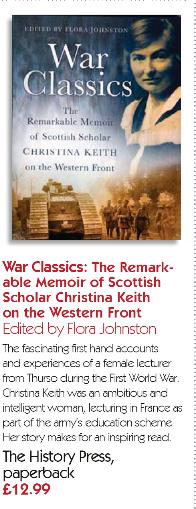
War Classics: The Remarkable Memoir of Scottish Scholar Christina Keith on the Western Front by Flora Johnston talks about a woman from upper class Scottish society, a lecturer in Classics, who went to live and struggle with common soldiers as a teacher with the army’s education scheme in France. The memoirs tell of the role played by thousands of men and women behind the lines to support the war and opens up a whole new world that lay just a few miles from the front. Keith also travelled across the devastated war zones after the Armistice and spoke of “a dream world, where everything happened… on a background of infinite horror”. She met the soldiers who had survived, saw tanks, clothing and weaponry lying littered across the battlefields of Europe and the war graves consisting of rough wooden crosses stuck in yellow mud and water.

I don’t think Christina was setting out to portray the war as pointless, but I do think her descriptions of the devastation it caused have real power – in part because they are written from a different viewpoint to most other commentators. The article concludes, We need books like these to approach the truth.

© All content copyright Flora Johnston. You may reblog or share with acknowledgement, but please do not use in any other context without permission.

Wallace and Bruce exhibition

And now for something a wee bit different:

Wallace and Bruce letters on show at Stirling Castle

Bruce letter

http://www.bbc.co.uk/news/uk-scotland-tayside-central-26886191

I’ve been working on the interactive to accompany this exhibition over the last couple of months. The exhibition brings together two extremely rare documents, one associated with William Wallace and one associated with Robert Bruce. Medieval documents aren’t instantly accessible to most of us, yet these two rare survivors have the power to link us directly back to some of the most exciting events in Scotland’s history.

The exhibition will set the documents in their national and international context, and the interactive helps you to explore both the actual documents and the story behind them.

It’s been fun to go medieval again!

The exhibition opens in Stirling Castle on 3 May. I’m looking forward to seeing it.

© All content copyright Flora Johnston. You may reblog or share with acknowledgement, but please do not use in any other context without permission.
Miss Tiny Keith

young ChristinaYesterday I found this wonderful article about Christina from when she was 14 years old. It must have been published c1903, probably in the Caithness Courier or John o Groat Journal, although the clipping doesn’t give a source. I love the picture, from the days when it was too expensive to take a photograph for a short piece on schoolgirl prizes.

It seems there’s always more to find!

War Classics: the remarkable memoir of Scottish scholar Christina Keith on the western front, edited by Flora Johnston, is published by The History Press

© All content copyright Flora Johnston. You may reblog or share with acknowledgement, but please do not use in any other context without permission.

Publication

War Classics: the remarkable memoir of Scottish scholar Christina Keith on the Western Front is now available to purchase via The History Press, Amazon, Waterstones and other websites.

Christina cover

It tells the story of a young academic from Thurso who travelled to France towards the end of the First World War as a lecturer with the army’s education scheme. Christina was part of the generation which pioneered higher education for women, and which was most affected by the war. The two themes of education and war intertwine through the book.

Christina writes with warmth and affection of her encounters with the troops, while her account of travelling across devastated battlefields is both vivid and moving. The book also includes letters written by her brother, David Barrogill Keith, from the Front.

© All content copyright Flora Johnston. You may reblog or share with acknowledgement, but please do not use in any other context without permission.