Category Archives: First World War

The Battle of Loos: a personal story

IMG_7387 (2)

Today is the hundredth anniversary of the start of the Battle of Loos, a battle which left deep scars on Scotland. There are commemorations taking place in various locations across the country this weekend, including Dundee and Inverness, home to some of the regiments which were so brutally affected.

Around 30,000 Scots were involved in the battle, and the losses were absolutely devastating. Loos was an attempt by the Allied forces to gain ground and create movement in attack, but as the troops launched their attack on 25 September it became clear that much of the German barbed wire was still in place, and the enemy machine guns and artillery were ready and waiting. A failure to provide reinforcements and relief to the first wave of attack contributed to the horror that unfolded. Loos was also the first time that the British army used poison gas.

My great-uncle, Alexander Morrison (Sandy), was killed at Loos on 25 September, one hundred years ago today.
sandym

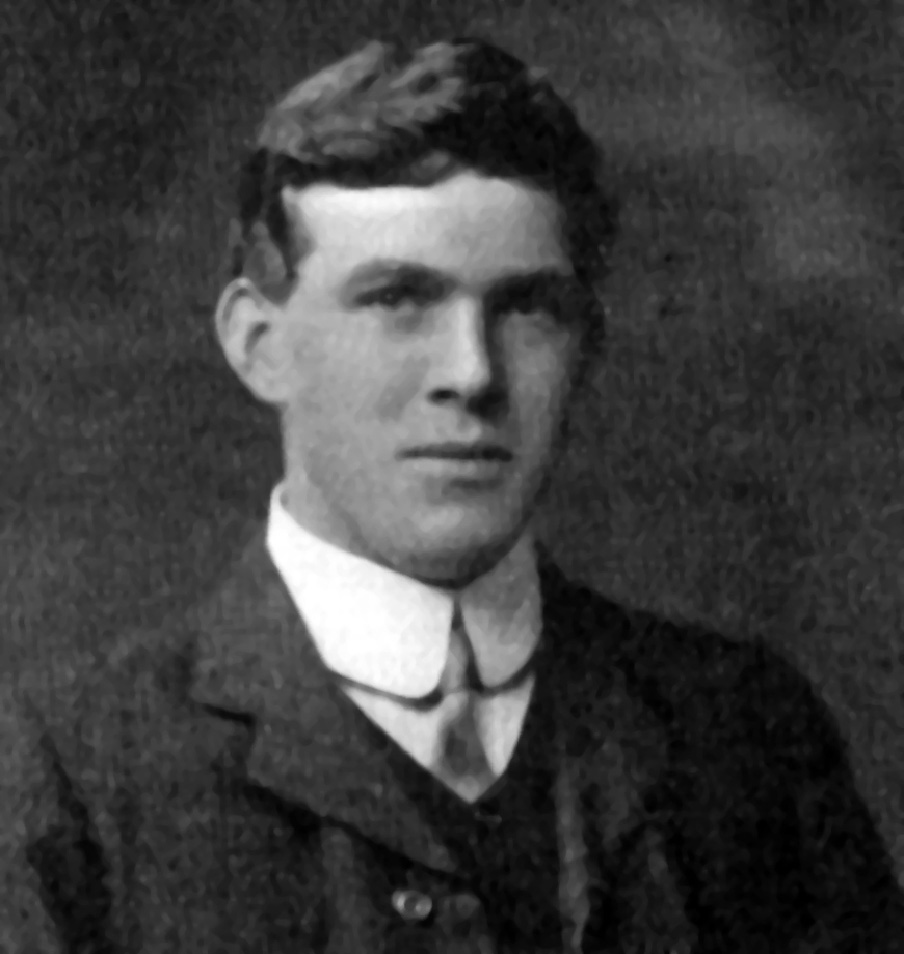
Sandy Morrison as school captain

Sandy was the third of seven brothers, born to Hebridean parents living near Oban. The family moved to Edinburgh for the sake of the education of the boys, sending them to George Watson’s College. By all accounts, Sandy was outstanding. This could simply be family legend, the natural result of grief over his death, but it seems to be borne out elsewhere.
001

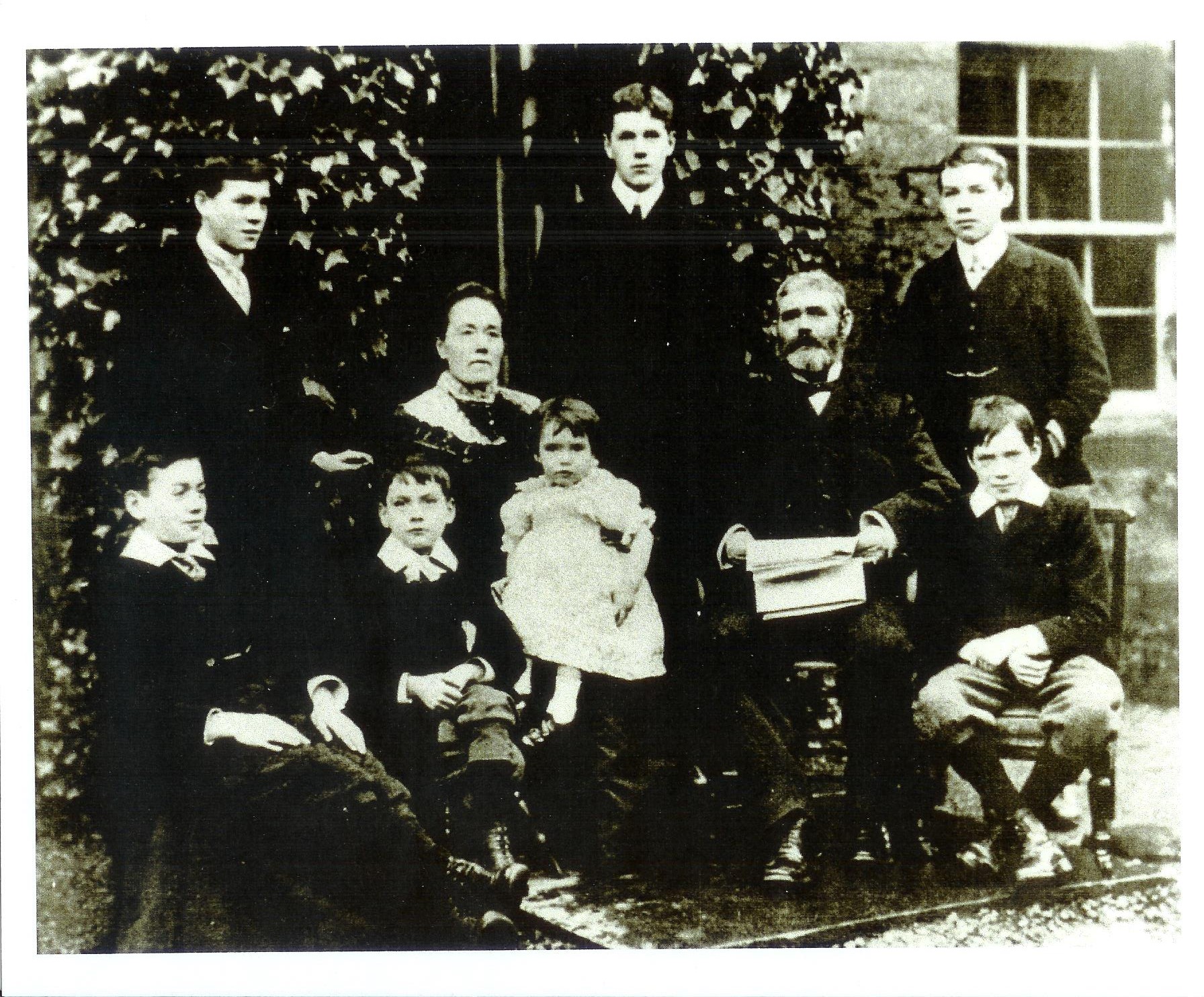
The Morrison family: Sandy is standing on the far right.

I spent the last three years of my schooling at the same school as the Morrison brothers. I remember towards the end of either fifth or sixth year, during that wonderful lazy time we used to have after exams (which today’s students don’t have with the much more efficient but much less enjoyable system of moving on before the summer holidays) I managed to escape some classes and spent the time instead in the library, going through old editions of the school magazine searching for references to the Morrison brothers. (Yes, I’ve been obsessed by all this stuff since back then!) There are some hugely entertaining references to these loud voiced Gaelic speakers keeping everyone else awake on camp, or to one of the brothers playing the bagpipes through Morningside at midnight, and many references to their full involvement in school life. Through it all it’s clear that Sandy was exceptional, and you can find out more about his school career here.

After school Sandy studied agriculture at Edinburgh University, then emigrated to become a farmer in Edmonton, Canada. The records suggest he was already making his way home to Scotland – probably for a visit – when war was declared. He joined up with the Cameron Highlanders, becoming a Captain.

In 2008 I was working on an oral history project, and took the opportunity to record some of my father’s wealth of family stories. This is his account of Sandy’s death at Loos, one hundred years ago today:

On the 24th of September 1914 Shakes [Sandy’s brother, William Shepherd Morrison] was stationed at Loos and he was forward in the trenches because he was spotting the fall of the shells and he met his brother Sandy. Now Sandy according to the family was the brightest of them all and the leading one of the family, and he had become a farmer in Canada but immediately that the First World War broke out he came back to Britain. He joined the Cameron Highlanders and at this stage he was a Captain in the 5th Camerons. The Colonel was Lochiel, Cameron of Lochiel, the chief of the Camerons. And there was to be a big attack on the Germans on the following day, the 25th, and the order was that the officers were not to be armed with their revolvers as was usual, but they were to carry rifles. But Sandy carried neither. He went into battle with an axe. His company was a Gaelic speaking company – this is the 20th century, but this is what happened! The night before then he met Shakes and he told Shakes that he didn’t think he would survive the following day and he didn’t – he was killed in the attack. And they found his body lying beside three dead Germans all with axe wounds on them.

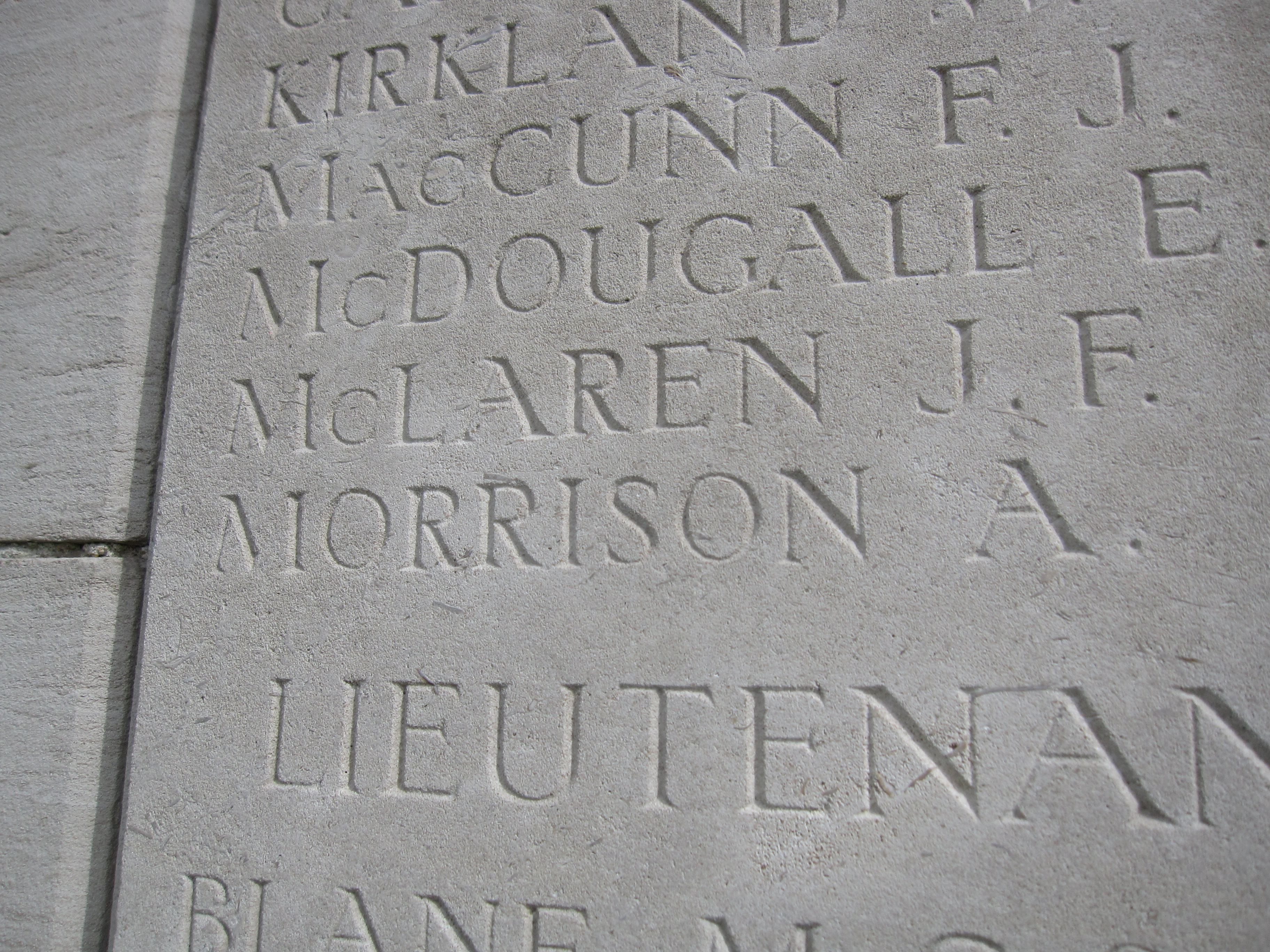
One hundred years on it’s hard to be sure of the truth of this family anecdote. Despite the story, Sandy’s body was never found and buried – like 20,000 others who fell at Loos he has no known grave but is commemorated on the Loos Memorial. But of course, in the carnage and confusion of a battle which lasted for days, someone might well have seen his body and testified to the manner of his death without a burial taking place or being recorded.
IMG_7391 (2)IMG_7392 (2)

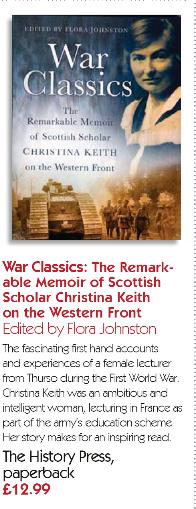
There is in fact an echo of the story of the axe in an unexpected place. In War Classics, my book about Christina Keith’s time in France at the close of the First World War, I published some letters written by her brother Barrogill to their mother from the Western Front. Just a few weeks after Loos, Barrogill was repeating a story he’d heard about the actions of someone they knew during the battle:

I heard that AS Pringle – who was north with Keith Fraser – has been badly hit. He was magnificently game. With a battleaxe and a revolver old Toosie got over the trenches. He was hit 4 or 5 times and still fighting when last seen.

So maybe Sandy did go into battle armed with only an axe, and maybe he wasn’t the only one. If so, it’s perhaps little surprise that he didn’t survive the horrors of Loos. His death was a huge loss to the family – decades later my grandfather, a doctor, still kept a photograph of his older brother in his consulting room. In Sandy Morrison we see the loss of someone with enormous potential – a tragedy which is repeated in the lives of every single one of those young men who fell.

In memoriam.

© All content copyright Flora Johnston. You may reblog or share with acknowledgement, but please do not use in any other context without permission.

Barrogill Keith

Barrogill

Back to thinking about the Keiths ….

I discovered this week that there’s an exhibition of paintings by Barrogill Keith currently being held in Thurso. Barrogill (his unusual name comes from the nearby Barrogill Castle, which is now known as the Castle of Mey and is associated with the Queen Mother) was my great-uncle. His eldest sister was Christina, whose First World War memoir I published as War Classics, along with some of Barrogill’s own letters from the Western Front. His youngest sister Patricia was my grandmother, and was also an artist.

I’m very excited to be heading up to Thurso soon to see the exhibition, and to spend some time in their hometown once more.

© All content copyright Flora Johnston. You may reblog or share with acknowledgement, but please do not use in any other context without permission.

War Classics: Canadian service records and Daniel Gordon Campbell

IMG_7368

Canadian National Memorial at Vimy

Over 100,000 Canadian First World War service records have just been made available online. It was a thrill to discover that the Attestation Paper for Daniel Gordon Campbell is among them.

I discovered something of Gordon’s story as I carried out research for War Classics. When Christina visited Vimy Ridge in March 1919, she wrote:

My eyes had turned to the horizon again, to the heights that once were St Eloi. Someone I knew lay there, who had been a Canadian, and it was too far for me to go. I could only see the Ridge where he had been killed, and not the place where he lay. 

Putting together clues from Christina’s narrative with information preserved elsewhere in the family, I was able to confirm that the ‘Canadian’ of whom she was thinking was Daniel Gordon Campbell. He had grown up near the Keith family in Caithness, attending the Miller Institute and Edinburgh University, and by the time war broke out was a lawyer living in Canada, and was engaged to be married to Louise, Christina’s sister. Louise never recovered from his death, and kept scrapbooks filled with newspaper cuttings about the Canadian action at Vimy, letters of sympathy from friends, and information about his final resting place.

Gordon’s attestation paper, which you can see here, includes a physical description. He had dark brown hair, dark complexion and brown eyes. Most strikingly he was 6 ft 6 inches tall, which sheds new light on the fact that he represented Scotland at the high jump!

SKMBT_C28413080512320

From Louise’s scrapbook, photo of memorial to Canadian soldiers who fell at Vimy

Every fresh little detail makes these men real people. Gordon left no children to remember him, and I haven’t yet explored to see if there are any other family members who might have kept his memory alive. But thanks to Louise’s scrapbooks and Christina’s time in France, he hasn’t been forgotten.


© All content copyright Flora Johnston. You may reblog or share with acknowledgement, but please do not use in any other context without permission.
 

.


Perspectives on peace 1918: the Keith family

Two sisters and a brother. Three contrasting experiences of peace.

IMG_7354Barrogill was with the army in France:
They picked the divisions for the slaughterhouse and sent them forward with no purpose and no idea save that they be decimated. If that be generalship a bairn could do better! The war dragged on and our pals died. By the end of 1918 after we had assembled the might of the world against Germany, weight and casualties told; the Hun sought an armistice: and the war came to an end.

It was through our lines, just where I happened to be, that in October 1918 the big black car with its huge white flags passed carrying the Hun delegation seeking armistice talks. And Foch was just behind us in his train. I was told by a friend who was present that when Foch read out the terms he was proposing to hand the Germans, Haig intervened saying ‘Good God, the Hun will never accept these terms.’ To which Foch replied ‘I am afraid they will.’ As indeed they did. And so the war ended.
[from family archive material]

Christina was behind the lines in Dieppe:

Outside bells blared; flags flew; bands played; at every window in the Grande Rue faces looked out, laughing, crying. In the distance the ‘Marseillaise’ came rolling down and its echo ‘It’s – a – long – way – to – go.’

I stole into the Cathedral. Over the altar hung our flags, quiet and still. There was no need to wave them now. Utter quietness here and one spot of light only. In the chapel at my side lay the empty tomb and the marble watchers beside it. The figure of the risen Christ was outlined and ringed with light. Never have I seen so many candles ablaze together. Beneath Him in the darkness knelt clusters of black-robed women. Peace had come.

[from War Classics: the remarkable memoir of Scottish scholar Christina Keith on the Western Front, The History Press, 2014]

Mildred was working in London:

There were huge crowds already [at Buckingham Palace] but we were very lucky in getting up on the wall surrounding the statue of Queen Victoria. We were held up on the wall by soldiers and got a splendid view of the Quadrangle. We had only been there a quarter of an hour or so before the place was absolutely black with people so we were fortunate. General French and Townsend passed just beneath us on their way to the Palace – the police making way for them. It was grand. Then a band arrived and after half-an-hour during which everybody was cheering and waving flags and shouting ‘We want King George!’ he appeared! An Australian officer had managed somehow to get on top of the statue and he had most of the ragging. The King, Queen and Princess Mary appeared on the balcony and for fully ten minutes there was an uproar. It was grand and very, very thrilling. I shall never forget it. Then the band played first ‘Tipperary’ and everyone joined in- then ‘Land of Hope and Glory’ and ‘Keep the Home Fires Burning’. One after another of these topical songs, the crowds taking them up, and ending finally with all the allies national anthems. After that the King spoke but naturally I couldn’t hear a word – at least make out a word. I had a splendid view the whole time.
[from family archive material]

Remembering also Louise Keith’s fiancé Daniel Gordon Campbell, Sandy Morrison and Willie West, who didn’t come home.

© All content copyright Flora Johnston. You may reblog or share with acknowledgement, but please do not use in any other context without permission.

.


Sir Walter Scott and Christina Keith

1814 – 1914 – 2014. Another anniversary.

BOOK-GreatScott

When I started work on Christina’s wartime memoir, War Classics, I didn’t know that it would end up being published in 2014, amid all the tv programmes, books and events commemorating the 100th anniversary of the outbreak of the First World War. In some ways – as you’ll know if you’ve read the book – her story will be even more relevant in 2018, when the focus of commemorations should shift to the transition from war to peace. I love Christina’s own account of Dieppe on the day peace was declared – the music playing in the streets, the rowdy, joyful army huts, the hushed stillness of the cathedral, and finally her walk down by the shore, thinking of the naval base at home in Thurso.

IMG_7532

The shore at Dieppe

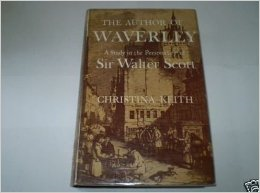
Recently, particularly here in Edinburgh, another anniversary has been marked, which also has relevance to Christina’s life and work. 2014 is the 200th anniversary of the publication of Sir Walter Scott’s first novel, Waverley. Christina’s final book was her study of Walter Scott, The Author of Waverley, which she finished shortly before she died and which Barrogill saw through publication.

Author of Waverley

The Author of Waverley: a study in the personality of Sir Walter Scott, by Christina Keith

Walk through Edinburgh’s Waverley station today – apparently the only railway station in the world to be named after a novel – and you’ll see quotes by Scott on the walls, windows and floor. These are part of a wider Great Scott! Campaign, organised to mark both the publication of Waverley and 10 years of Edinburgh’s status as the world’s first Unesco City of Literature.

There are a lot of ‘world firsts’ here, because Waverley is often said to be the world’s first historical novel.  Here I should maybe confess that I haven’t actually read it. Oops. I’m doing a lot of Covenanter-related research for a new book, so have recently read Old Mortality, but I will make sure I read Waverley before the end of 2014.

This whole train of thought (no pun intended – I blame my brother-in-law) was sparked in my mind when I received an email from someone who has read War Classics, and as a result is interested in Christina’s other writing, and is now reading The Author of Waverley. I’m so pleased to think that publishing her memoir has led someone to discover Christina’s other work. And the fact that all this takes place in the 200th anniversary of the publication of Waverley just seems to be yet another of those perpetual coincidences which make exploring history such fun!

© All content copyright Flora Johnston. You may reblog or share with acknowledgement, but please do not use in any other context without permission.

War Classics review in The Hindu

There’s an interesting article in The Hindu today. It groups War Classics with several books which approach the First World War from a different angle.

Witness to the truth – The Hindu.

1914 by Jean Echenoz

World War I spawned literature of various hues. One hundred years later, we still grope for meanings and explanations. Here are a few books that give us some indication of the pointless nature of the Great War, told by individuals who either experienced it firsthand or wrote about it later.

War Classics: The Remarkable Memoir of Scottish Scholar Christina Keith on the Western Front by Flora Johnston talks about a woman from upper class Scottish society, a lecturer in Classics, who went to live and struggle with common soldiers as a teacher with the army’s education scheme in France. The memoirs tell of the role played by thousands of men and women behind the lines to support the war and opens up a whole new world that lay just a few miles from the front. Keith also travelled across the devastated war zones after the Armistice and spoke of “a dream world, where everything happened… on a background of infinite horror”. She met the soldiers who had survived, saw tanks, clothing and weaponry lying littered across the battlefields of Europe and the war graves consisting of rough wooden crosses stuck in yellow mud and water.

I don’t think Christina was setting out to portray the war as pointless, but I do think her descriptions of the devastation it caused have real power – in part because they are written from a different viewpoint to most other commentators. The article concludes, We need books like these to approach the truth.

© All content copyright Flora Johnston. You may reblog or share with acknowledgement, but please do not use in any other context without permission.