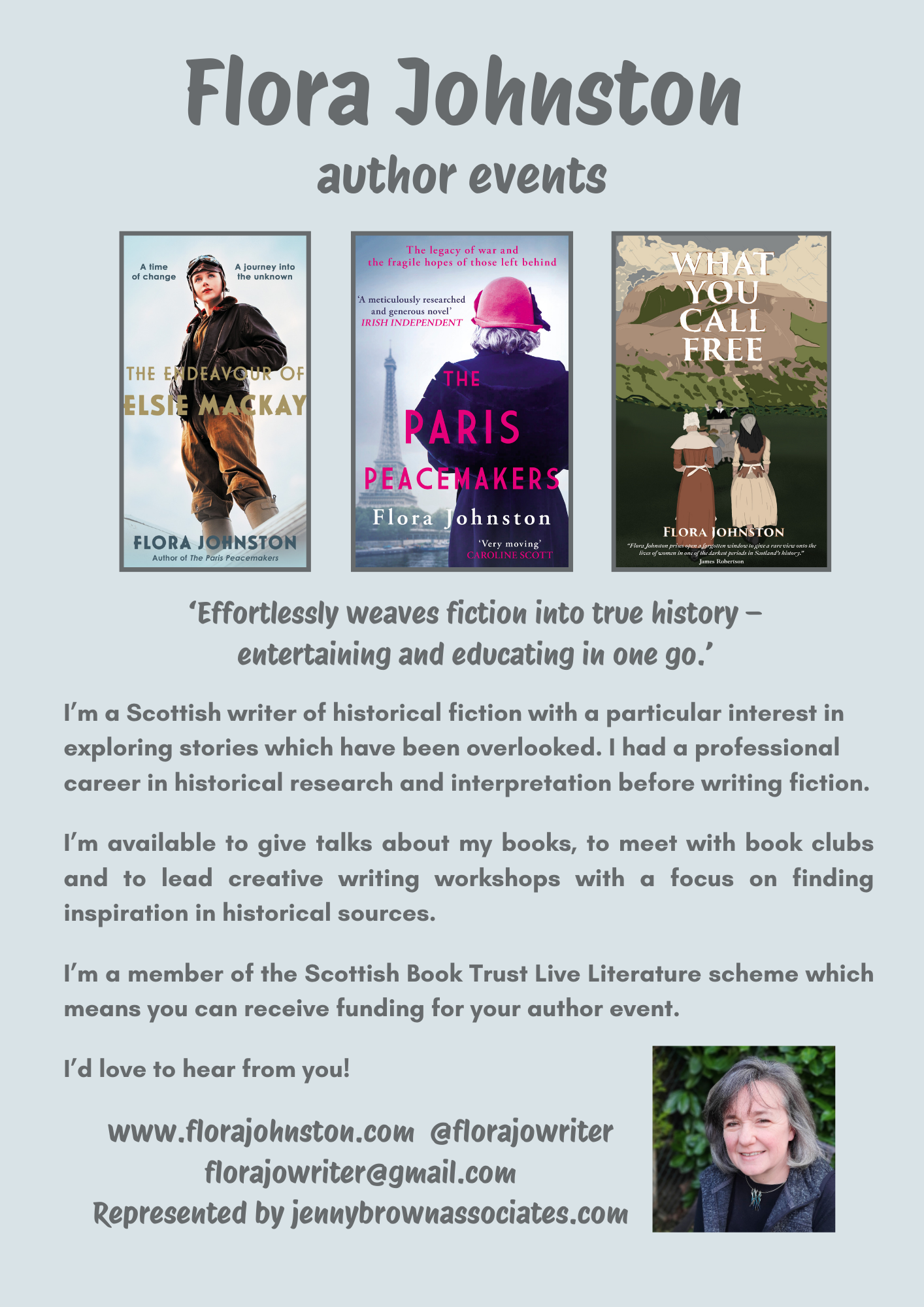


The paperback edition of The Paris Peacemakers will come out in October with a stylish new cover, and I’m delighted to share some events which are coming up. These are all free but ticketed: please do sign up and come along!
I’m so pleased to be taking part in the Portobello Book Festival again! I’ll be part of a panel on Women in Historical Fiction along Jane Anderson, author of The Paintress, and Sue Lawrence, author of Lady’s Rock. The panel will be chaired by Joanne Baird of the wonderful Portobello Book Blog. It should be a really interesting discussion. Tickets are available from Portobello Library.
Then on Wednesday 9 October at 6pm I’ll be in conversation with Helen Graham, author of The Real Mackay, at Edinburgh Central Library, chaired by Susan Elsley. In an event of interest to writers and readers alike, we’ll be talking about finding inspiration in family stories and using these to create historical fiction. Tickets are available here: https://www.ticketsource.co.uk/whats-on/edinburgh/edinburgh-central-library-george-washington-browne-room/flora-johnston-and-helen-graham-in-conversation-family-stories-in-historical-fiction/e-eqvpyq
And I’m excited on Tuesday 12 November to be celebrating the launch of the paperback in the fabulous HTA Design Studio at 75 Wallis Road, London at 6 for 6.30pm. I’ll be in conversation with Lisa Highton of Jenny Brown Associates. Tickets available soon.
Hope to see you there!


I went on holiday the morning after the book launch so haven’t had time until now to post some pictures. What a lovely evening we had at Blackwell’s in Edinburgh launching The Paris Peacemakers into the world. I remember James Thin’s as a kind of paradise from childhood visits , so it was the perfect location! Thank you so much to Matthew of Blackwell’s for hosting.
Jenny Brown chaired the event superbly, and it was great to dig a little more deeply into The Paris Peacemakers, to explore the three characters of Corran, Stella and Rob and some of the main themes, including the desperate need for peace and the impact of war, the fate of the 1914 Scottish rugby team, and opportunities for women. Thank you so much to everyone who came along and joined in.
The Paris Peacemakers is set in France and in Scotland in 1919. It follows the stories of three Scots as they attempt to pick up the pieces of their lives after the trauma of war while politicians attempt to rebuild the world they have shattered.
I’m really pleased with the reception so far, with some lovely reviews on NetGalley, Goodreads, Amazon and Waterstones. If you haven’t read The Paris Peacemakers yet please do get hold of a copy (hardback, e-book or audio), and if you have it really helps if you can leave a review.
Meanwhile, time to get back to work on the sequel!


The launch event for The Paris Peacemakers will take place in Blackwell’s Edinburgh at 7pm on Wednesday 1 May. Tickets available here.
Paris 1919: they need to rebuild the whole world, but can Stella, Corran and Rob pick up the pieces of their own lives?
Come along for an evening of conversation which promises to range from Thurso to Paris, from out of touch politicians to Scottish rugby players, from the devastated battlefields to the glittering Palace of Versailles.
It’s been an exciting week. I was delighted this week to be able to share that my next novel, The Paris Peacemakers, will be published by Allison and Busby in April 2024, with the sequel following early in 2025.
The Bookseller announcement said:
Lesley Crooks, publishing manager, acquired world English rights from Jenny Brown at Jenny Brown Associates. The Paris Peacemakers will be published in April 2024 with the second book following in early 2025.
“Its backdrop of the Treaty of Versailles, as international politicians attempt to rebuild the world they have shattered, will resonate strongly with our world today,” said Brown. “It also explores the little-remembered fate of the Scottish rugby team, swept up in war fever and mown down in battle.”
Johnston’s novel follows two sisters — Stella and Corran Rutherford — and Corran’s fiancé in the aftermath of the First World War. It was inspired by the Scottish rugby team which was “decimated” during the war and the letters written by Johnston’s great-aunt who worked as a typist at the Paris Peace Conference.
Crooks said: “It was such a pleasure to step into the vivid world Flora created and be introduced to her characters, who you can tell Flora knows inside and out. The Paris Peacemakers was remarkably assured and weaves together three compelling storylines tackling grief and the fragile hope of the post-war period.”
Johnston added: “There are many books about the horrors of war, but I wanted to explore what comes afterwards. How do we pick up the pieces: emotionally, ideologically, politically? It was a particular pleasure to draw on the letters of my great-aunt who, along with many other young women, swapped grubby wartime London for the glamour and intrigue of life a life as a typist at the Paris Peace Conference.”
I look forward to sharing this story with you!
It’s September, it’s officially autumn and the Edinburgh Book Festival is over. August is the month when I appreciate living in Edinburgh most (along with during the Six Nations!)


I’m excited though to share a range of events that I’ll be taking part in over the next few months. First up on 26 September there’s another chance to come along to a Ringwood panel event on Writing, Editing and Publishing. When we held this in Stockbridge Library in June it was a great evening so we’re running it again in Leith Library this time. If you’re having a go at writing or interested in a career in publishing, come along and join in the chat.
On 7 October I’m delighted to be taking part in the inaugural Edinburgh Women’s Fiction Festival. This exciting venture showcasing women’s writing takes place from 6-7 October and you can explore the full programme here. The organisers have generously chosen to highlight some debut fiction alongside established writers, and I’ll be reading from What You Call Free immediately before the Historical Romance panel with Catherine Hokin and Helen Swan on Saturday morning.
Next up is Book Week Scotland and I’m really excited on Monday 13 November to be sharing in a panel event with some other fabulous Ringwood writers: Rob McInroy, Carol Margaret Davison and L.A. Kristiansen. We’ll be discussing Historical Fiction: forgotten voices. Come along!

And finally (for now) on Monday 20 November I’ll be combining my writing with my day job and speaking to the Davidson’s Mains Monday Club at Davidson’s Mains Parish Church (where I work part time) about What You Call Free. All welcome – I can guarantee these ladies will give you a warm welcome and a good cup of tea!
Full details of locations, dates and times are available on my events page.
It’s been exciting this week to share the news that I’m now represented by Jenny Brown of Jenny Brown Associates, and I’ve been so encouraged by the positive response from the writing community. It’s not surprising though – I’ve been gradually trying to make my way in this world for quite a number of years now, and have always found the writing community here in Scotland and more widely to be a supportive place.

As well as being beyond delighted to have Jenny as my agent, it’s been rather strange this week to have information about my second novel out there in the public domain! I’ve been living in the world of The Paris Peacemakers for the last couple of years, but have so far shared very little about it. The novel was in part inspired by letters written by my great-aunt, who was a typist at the Paris Peace Conference in 1919. Most of the action takes place in Paris, but I started working on it early in 2020, just before Covid struck. It wasn’t until March 2022 that I was finally able to travel to Paris and see the places that I’d been writing about, and I remember vividly the emotional feeling of walking up out of the Metro Station and right into my novel.
I can’t wait to share it with you.
‘I am a writer to my core, so if the world decides to reject my writing, what then?’
I recorded a wee piece on surviving rejection in the creative world for Foolproof Creative Arts. Recently they have been running a fascinating series of #FoolproofBites: short nuggets of wisdom and inspiration from people working in all sorts of different creative areas. It’s well worth dipping into the whole series to see what you discover.

You can listen to my musings here or, if you prefer, here’s the transcript:
Hello, I’m Flora Johnston and I’m a writer. My first novel What You Call Free was published in March 2021 by Glasgow based indie publisher Ringwood.
It took me many years of rewrites, disappointment and rejection to get the book published. Rejection is common in the creative world but it can be soul destroying. So much of you goes into this thing you have created, and if people don’t value it, that can be really hard to deal with. So I thought I’d share just a few practical things about how I’ve dealt with rejection. Believe me, I am talking to myself here. It’s not as if the path to my literary dreams has suddenly become smooth. Far from it!
Rejection is part of this creative life, so while we might not be able to embrace it, we can try to make use of it. As artists we can take every experience, the joy and the pain, into our creative process. What better place to express those frustrations and disappointments?
Keep doing what makes your heart sing. I love the line from Chariots of Fire when Eric Liddell says, when I run I feel God’s pleasure. Now, when I run, God’s pleasure is the very last thing I feel, but when I write I know I am where I am meant to be. If that’s the same for you in your area, then whether your work is rejected or not, no-one can ever take away from you the pleasure of actually creating it. Do everything you can to keep that joy alive. Remind yourself why you do this in the first place. That might mean taking a break from the big project and creating something just for the sheer joy of it, for no-one else’s eyes. For me, I know it’s really important that when I’m being worn down by the process of submitting work and refreshing the inbox with dread, that I’m also already working on the next project, even loosely, to keep being creative.
This next point is probably the one I find hardest, and it’s about identity. I think one of the reasons rejection of our creative work is so hard is that it is so closely bound up with who we are. I am a writer to my core, so if the world decides to reject my writing, where does that leave me? That’s when it’s really important to consciously hold onto other parts of my identity. I am more than my creative work, you are more than your creative work. If you have relationships you value, if you are a person of faith, if you have a special place you like to go or other activities you can lose yourself in, hold onto all of these on the wobbly days when you feel as if the thing you want may never happen.
Finally, find someone you can share this with. Your friends and family might care, but they’re unlikely to fully understand. I went on a writing retreat and made some friends there who really get it, who are going through the same sort of stuff, who can encourage me and spur me on. There are lots of opportunities online and in person to connect with others who are working in the same area as you. Seek them out – and good luck!

During Book Week Scotland I’ll be joining fellow Ringwood Publishing author Lynda Kristiansen to talk about our novels within the context of Scottish historical fiction.
It’s such a thrill to speak about What You Call Free in the Grassmarket itself, where some of the most important action in the book took place.
And of course, having launched the book in March in lockdown, it’s wonderful at last to be able to meet and chat with readers in person.
Please do come along if you can.
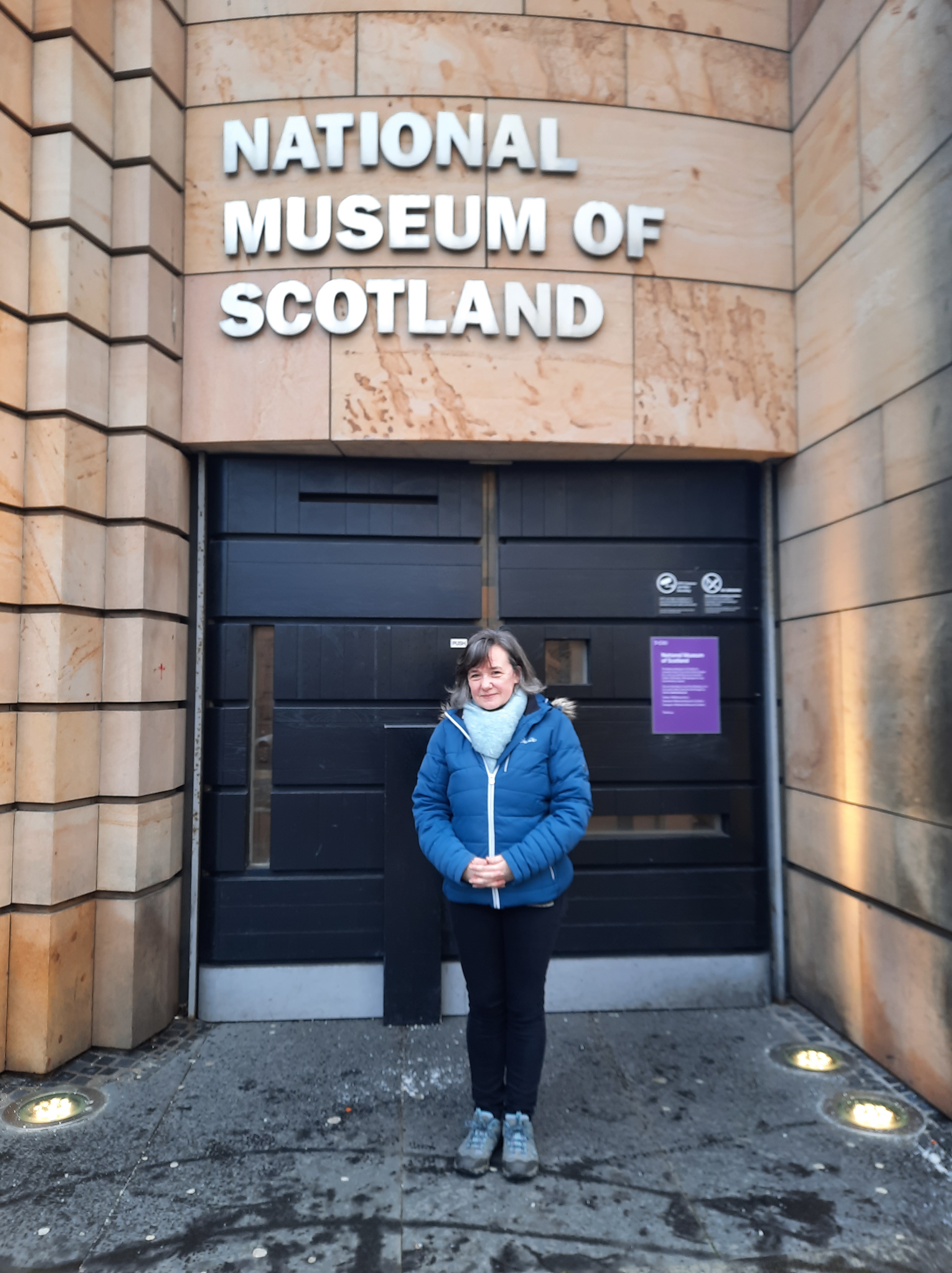
The National Museum of Scotland opened in Edinburgh in 1998, a new home for Scotland’s treasures. Straight out of university, I was fortunate enough to be part of the team creating the displays. What a privilege, to get up close and personal with the real objects which were handled by generations past, and what a gift to the storyteller too.

Some objects, like Mary Queen of Scots’ jewellery or Bonnie Prince Charlie’s picnic set, were famous and had always been on display, but there were also objects among the collections about which we knew very little. One of these was a gown made of sackcloth which had been donated to the museum in 1806 by the minister of West Calder parish. The description given at the time was: ‘a sackcloth gown, anciently made use of in the Parish Church of West Calder, as part of ecclesiastical discipline.’ (Archaeologica Scotica III p90)
That was it: no more information.
How would this ugly object fit in The Church gallery, alongside gleaming communion silver, pews and hymn boards? We needed to know more. And so it was that one day I went along to the National Records of Scotland, and I met Jonet Gothskirk.
Her story was buried in the records of West Calder kirk session. I’ve been back recently to check the records, and because they have been digitised it’s all done on screen, but at that time I turned page after page handwritten by the seventeenth-century session clerk. I followed Jonet’s story, not knowing how long it would last, not knowing what had happened to the man with whom she was said to have committed adultery, and not knowing, at first, that she was pregnant.
Jonet’s story and surrounding research helped us to display the gown in a meaningful way, and I wrote up our findings in an academic article for Costume journal in 1999. I moved on from the museum in 2000, but Jonet and her story stayed with me. Now, more than two decades later, she has become one of two protagonists in my novel What You Call Free, which will be published by Ringwood Publishing on 17 March.


Jonet’s story left me with so many questions, and also with a strange and slightly uneasy sense of responsibility! She was a real person. Those months when she was forced to parade publicly in front of her community wearing that gown must have been deeply traumatic, but had been long forgotten until I unearthed her story among the records. Now her name once more was on display for millions of visitors to the museum, albeit hopefully in a more sympathetic era. I did a bit of digging among genealogical records, and although I couldn’t establish anything with real certainty, there was a strong possibility that Jonet was just a teenager. My desire to give her a story was growing stronger.
In writing historical fiction the question at the forefront of my mind is always ‘what did it feel like?’ We can see and even touch the objects, we can read the archives – but what did it feel like? It took decades for Jonet’s story to emerge in its right form, intertwined with the story of another historical woman from late seventeenth-century Scotland, Helen Alexander (more on her another day). We know far more about Helen’s life from her own words, but like many men and women of her class, Jonet is remembered only for her ‘sin’. The story I have given her is therefore fictitious, my interpretation of what might have happened to a woman faced with Jonet’s circumstances. It is structured around the timeframe of her weekly punishment. I did consider making up a name, but it seemed important to give honour to the real woman whose ordeal inspired What You Call Free.

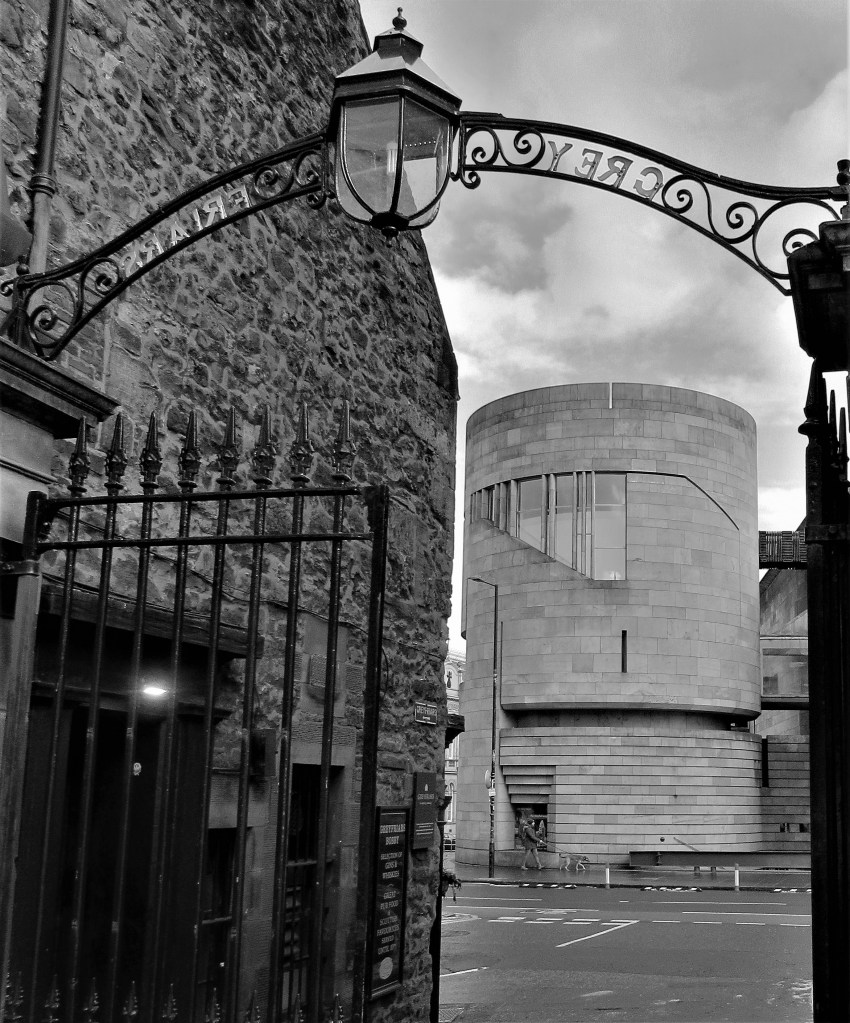
The museum is of course closed just now because of lockdown, but when restrictions are lifted you can go along to The Church gallery and see the gown for yourself, and remember Jonet and many others like her.
I will.
Register for the launch of What You Call Free.
Pre-order a copy from Ringwood Publishing.
 Flora Johnston