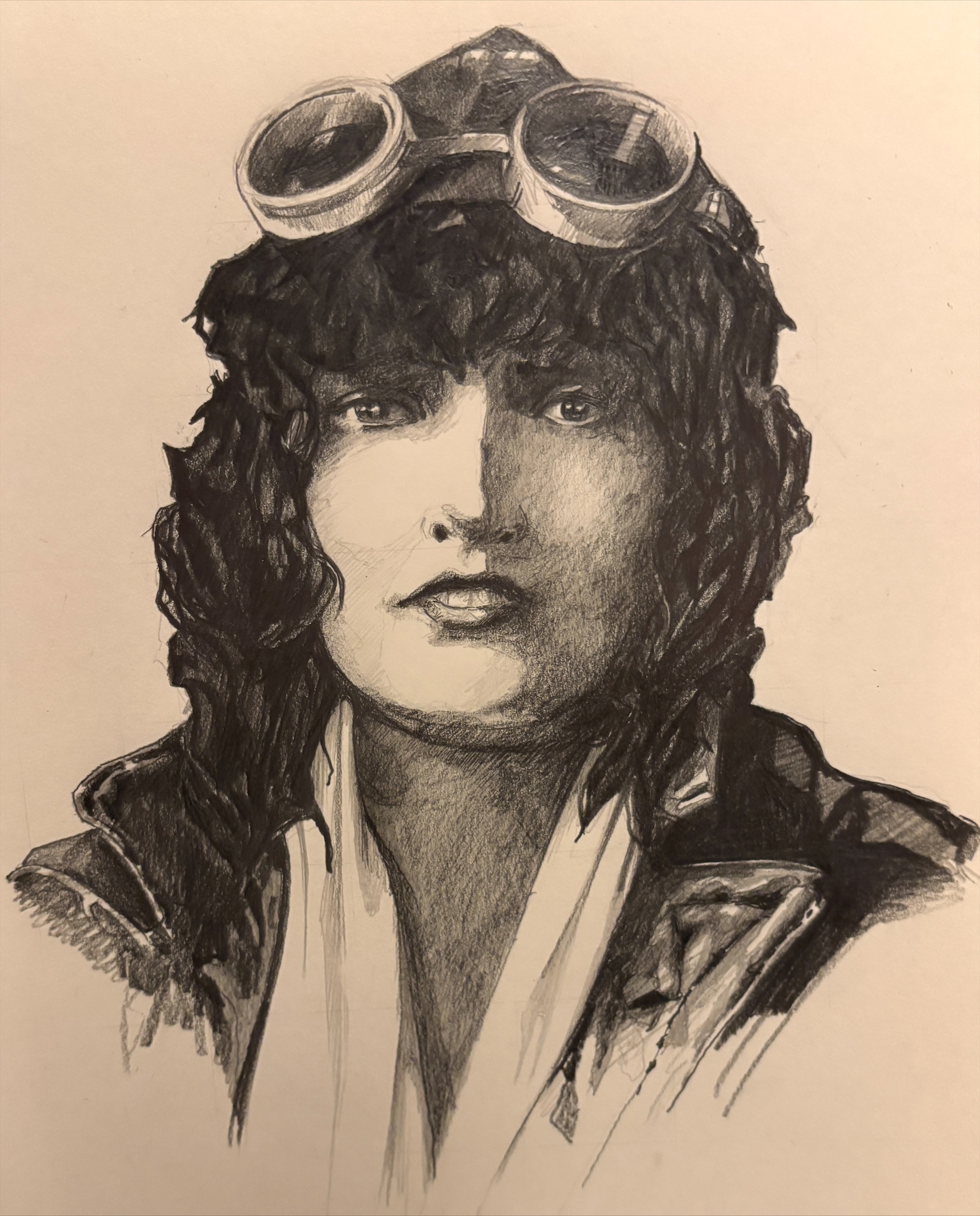
#OTD Scottish aviatrix Elsie Mackay and her co-pilot Captain Hinchliffe set off from RAF Cranwell on a secret flight in their plane ‘Endeavour’. Elsie intended to be the first woman to fly the Atlantic in either direction and, with Hinch, to make the first successful flight over the Atlantic in the harder east-west direction.
Portrait of Elsie by Sandy Morrison @sandysdrawingroom
Elsie had no need of fame and fortune but wanted to use her achievement to launch her own commercially viable airline.
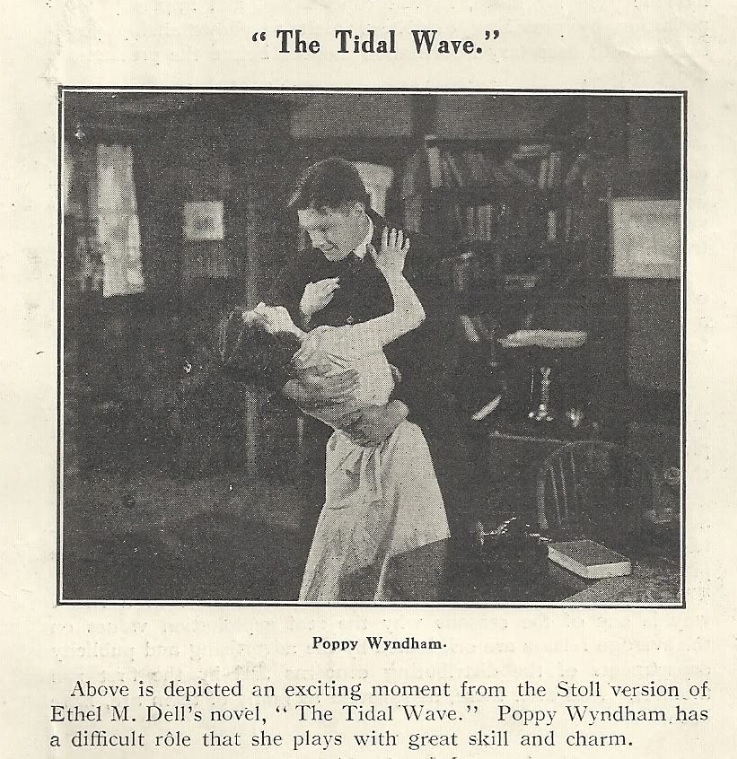
A former filmstar with the stage name Poppy Wyndham, she was the wealthy daughter of Lord Inchcape, chairman of P&O shipping line, and worked as interior designer on his ships. Their Scottish home was fairytale Glenapp Castle in Ayrshire.
Find out more about Elsie’s extraordinary story in The Endeavour of Elsie Mackay, published by Allison and Busby.
The paperback edition of The Paris Peacemakers will come out in October with a stylish new cover, and I’m delighted to share some events which are coming up. These are all free but ticketed: please do sign up and come along!
I’m so pleased to be taking part in the Portobello Book Festival again! I’ll be part of a panel on Women in Historical Fiction along Jane Anderson, author of The Paintress, and Sue Lawrence, author of Lady’s Rock. The panel will be chaired by Joanne Baird of the wonderful Portobello Book Blog. It should be a really interesting discussion. Tickets are available from Portobello Library.
And I’m excited on Tuesday 12 November to be celebrating the launch of the paperback in the fabulous HTA Design Studio at 75 Wallis Road, London at 6 for 6.30pm. I’ll be in conversation with Lisa Highton of Jenny Brown Associates. Tickets available soon.
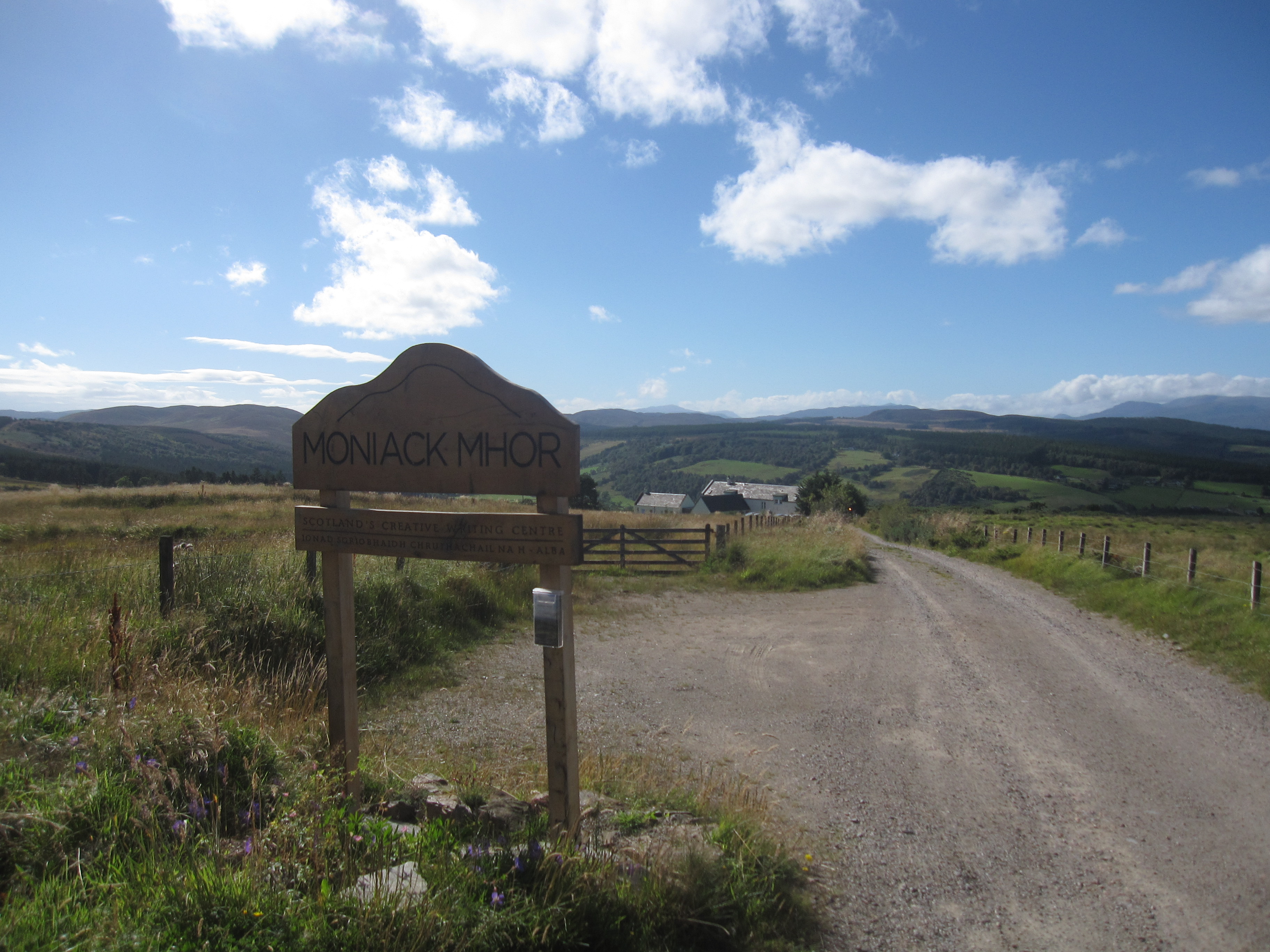
Scotland’s creative writing centre, Moniack Mhor, is a very special place. I’ve stayed there twice in the last few years, and those two weeks were hugely influential in the writing of What You Call Free.
I’ve been working on this book for a very long time! I began writing it in 2013, although the idea had been there for much longer. In 2016 I entered it into the Bridge Awards’ Emerging Writer Award and was delighted to be ‘highly commended’, and to receive a grant towards a Moniack Mhor retreat as a result.
The format for the tutored courses is a perfect combination of workshops, one-to-one tutorials, evening readings, and as much thinking time, writing time, good food, good wine and good conversation as you could possibly want. With some trepidation, I chose a historical fiction course led by Isla Dewar and Margaret Elphinstone, and travelled to Moniack. Although I am used to having my non-fiction words published in different forms, my fiction writing had always been a private and solitary enterprise. I had never done a creative writing course or joined a writing group, and had rarely shared or spoken about my work. I learned a great deal on that course, but I think its real significance lay in giving me permission and confidence to think of myself as a fiction writer. It was a completely new experience to speak the language of fiction with other people and to discuss my writing and my dreams. The book I was working on – at that time called Sackcloth on Skin – was a bit of a sprawling, multi-strand, multi-timeframe mess, but my first visit to Moniack Mhor encouraged me to believe not just in the book but in myself as a writer.
Eventually I was ready to send it out. There were some positives – a couple of longlistings for example – but then came the stream of rejections from agents and publishers. If you have ever put yourself through this you will know how completely demoralising and destructive it is. By the end of 2018 any confidence I’d discovered at Moniack was fast disappearing. And yet, I couldn’t quite bring myself to give up on this story. I still believed in it, but something needed to change. My choice seemed to be either to self-publish the book as it was or to change it drastically. I decided to try removing everything but the 17th-century storyline, and rewriting it as a historical novel.
It should have been devastating but it was actually quite cathartic! By the time I had cut out everything I no longer wanted, the book was about half the length. It was much easier to see its weaknesses, and where the historical story needed development. Around the same time the Moniack programme for 2019 dropped into my inbox. I hadn’t planned to go back, but a course on ‘Finding the heart of your novel’ led by James Robertson and Cynthia Rogerson caught my eye. Could Moniack work its magic a second time?
I signed up, and then left the book aside until June 2019, when I returned to Moniack with a mutilated half novel! I was worried the course might not live up to my first experience, but it was a wonderful week. As before, the setting, the people, the generous help from the tutors and the encouraging atmosphere all combined to help me to understand how to take the book forward.
I spent the rest of 2019 rewriting, and by the start of the year was ready to begin the daunting prospect of sending my novel – now What You Call Free – out again. But this time I had more experience, and the support and advice of writer friends made on that course. In summer 2020 the book found its home – with Ringwood Publishing, an independent Glasgow based publisher who publish an exciting range of Scottish fiction and non-fiction. It should come out early next year. There’s still a long way to go, but I will be forever grateful to Moniack Mhor for helping me firstly to believe in myself as a writer and then to understand the book I was writing.
This has obviously been a really hard year for Moniack Mhor, but they continue to offer online courses and opportunities. Check them out, and support them if you can!
During the course of the summer I received the wonderful news that my debut novel is to be published by Ringwood Publishing next year.
I’ve shared a bit over the years about the progress of this novel. I began working on it years ago, alongside my freelance writing and heritage career, and it has been through many drafts! There were some really encouraging early moments, including being highly commended in the Bridge Awards Emerging Writer Award and longlisted for the Mslexia Novel Award, but there have been so many disappointments too.
The decision I took 18 months ago to move to a different part-time job, giving myself time to focus properly on my fiction, has proved to be really important, as was my second visit to Moniack Mhor in June 2019.
After a drastic rewrite, which included removing an entire storyline (around half the manuscript!), What You Call Free (yes, new title too) has at last found its perfect home.
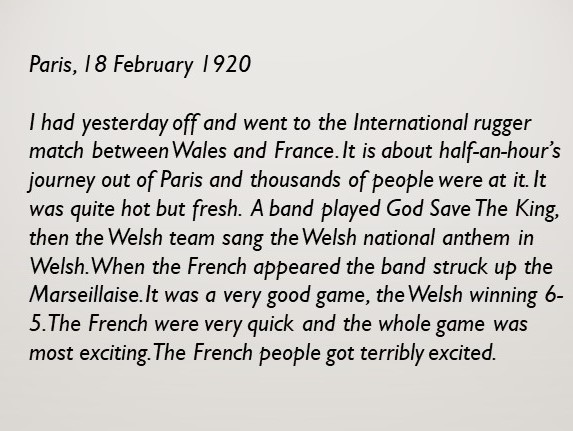
I spent all weekend watching Six Nations Rugby then returned today to transcribing letters written by a Scotswoman in Paris one hundred years ago, as research for my WIP. Came across this.
This was an interesting project I did a few years ago – researching the lives of the two founders of what is now Stewart’s Melville College. The results have just been put online on their Digital Archives site which has some fascinating material. I haven’t done any work like this for a while now, having moved from freelance research and exhibition work to a part-time job which allows me a day a week for working on fiction, but it’s nice to be reminded of my former life!
The first of April may be April Fools’ Day, but I really
hope this isn’t a joke, as this week I move into a new pattern of work.
I’m starting a new part-time job tomorrow as Church Office
Manager at Davidson’s Mains Parish Church in Edinburgh. This is my local church
where I’m already very involved, and committed to all that we’re about. The
church office is beside our fabulous café, The Sycamore Tree, and it’s a busy
place with all sorts of community contact. I’ll have lots to learn but I’m
really excited about getting started.
But I set up this website a few years ago to share news
about my writing, and this new pattern could be quite a significant one in
those terms too. I’ve been thinking a lot about purpose and calling over the
last few months as I’ve been making these decisions, and it seems that for me that’s
always a multi-faceted thing. Family … work … faith … writing … they’ve always
all been part of the mix. All that’s happening just now is a shift in balance.
I’ve worked from home
ever since the children were born on a range of projects, and for the past few
years almost exclusively on exhibition work for CMC Associates. That work
pattern was ideal for our circumstances, but things have changed. One of the
challenges of my unpredictable work pattern was making time for my own writing.
Whenever I had a project on it was pretty much impossible to make space for
writing, and whenever I had a gap between projects I felt guilty about writing and
not earning money. Now for the first time I will have a fixed day each week given
over to my own writing, and I can give myself that permission to write. I cannot
tell you how exciting that is!
So I have a list beginning to take shape … flash fiction
competitions (new to me), submissions strategy, and probably most importantly a
review and potential major redraft of my novel. I’m going back to Moniack Mhor
later in the year and I’m pinning my hopes on that as a chance to get some
clarity about where I go next with it. Between now and then there’s a good deal
of preparation to be done.
Today is my first ‘writing Monday’ and I think I just got started!
Norman Macleod was one of the main characters in my book Faith in a Crisis. Now the house he lived in, which was part of his story, is on the market. The lady who lived there was a friend of my parents and I remember visiting as a child, but the shiver down the spine comes when I think of Norman and Julia descending those stairs, walking through those rooms …. and leaving the house with their ‘young and helpless family’ when they were evicted by the factor in 1843.
Trumisgarry Church
Extract from Faith in a Crisis (Islands Book Trust, 2012):
Norman, by quitting his church at Trumisgarry, was no longer entitled to his house. He wrote to Lord Macdonald, offering to pay the same rent as any other and observing, ‘I trust your Lordship does not really intend to drive me with my young and helpless family out of my present dwelling house.’ The factor, Seumas Ruadh of Balranald, himself an Established Church elder, replied in these terms:
It is not [his Lordship’s] intention either to grant you a site or to give you any lands …. I am sorry for you and your family, you will be much put about, but you have brought it all on yourself. …. Kind compliments to Mrs McLeod.
Within a few years, of course, many of Norman’s congregation would also have been evicted from their homes and land, with fewer resources to survive and far more drastic consequences.
Seumas Ruadh was the father of Jessie of Balranald, whose story I told here. It was recently fictionalised in the novel The False Men by Mhairead Macleod.
It seems a while since I put anything up here. I’ve been busy with other projects, the ‘proper work’ kind that I don’t post much about, and although I keep querying about the novel there has been very little progress over the last few months. I have one or two other ideas on the backburner, but can’t let myself focus on them until I get the current piece of work completed.
But I came across this from James Robertson, who was the guest reader at Moniack when I was there, and I wanted to share it. He’s an outstanding writer, and for me this really resonates with the thinking which led me to write Sackcloth on Skin.
‘It’s in oor banes, man.’
‘Bible Talk’
We were oot for oor usual dauner roond the toun, Tam and me, and had stopped for a pech at the tap o the hill, whaur they’re plannin tae build eichty new hooses if naebody objects, and probably even if they dae. We had got ontae the Bible, some wey or ither. “In anither thirty …
Shaping the Landscape is an exhibition currently running at New Lanark Visitor Centre. It tells the story of the dramatic geology of the Clyde and Avon valleys, and how this has influenced all aspects of life in the area. I worked on this exhibition as part of the work I do for CMC Associates, carrying out research, organising content and writing texts for display panels and digital installations.
New Lanark World Heritage Site
Geology may or may not be your first interest, but it’s fascinating to consider how it (literally) underlies everything else. As well as telling the geological story, the exhibition covers topics as diverse as Roman roads, Sir Walter Scott’s ‘Tillietudlem’, coal mining and ancient woodlands. It’s well worth a look if you’re in the area – and there are some stunning walks through the gorges and woodlands too.











 Flora Johnston