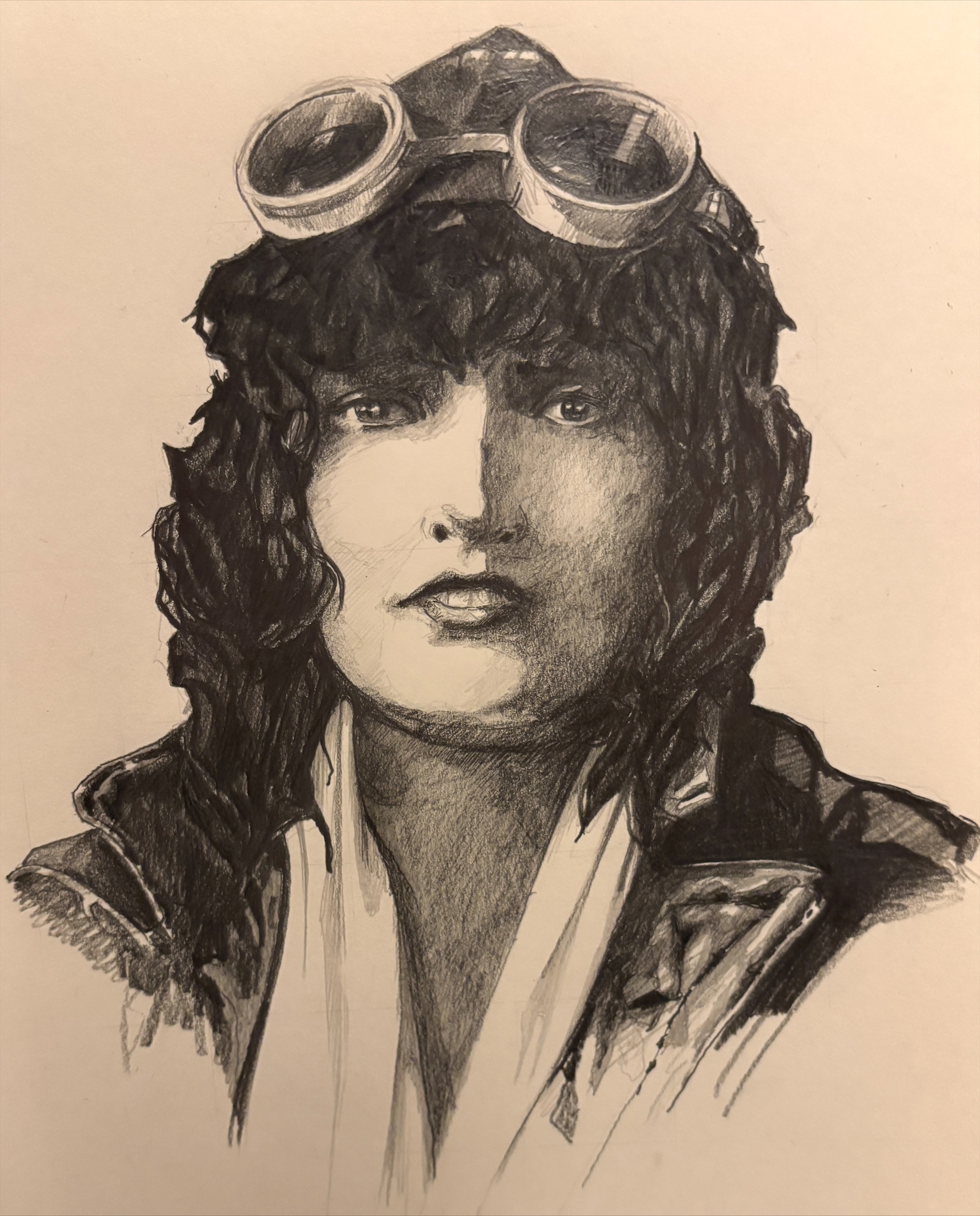
#OTD Scottish aviatrix Elsie Mackay and her co-pilot Captain Hinchliffe set off from RAF Cranwell on a secret flight in their plane ‘Endeavour’. Elsie intended to be the first woman to fly the Atlantic in either direction and, with Hinch, to make the first successful flight over the Atlantic in the harder east-west direction.
Portrait of Elsie by Sandy Morrison @sandysdrawingroom
Elsie had no need of fame and fortune but wanted to use her achievement to launch her own commercially viable airline.
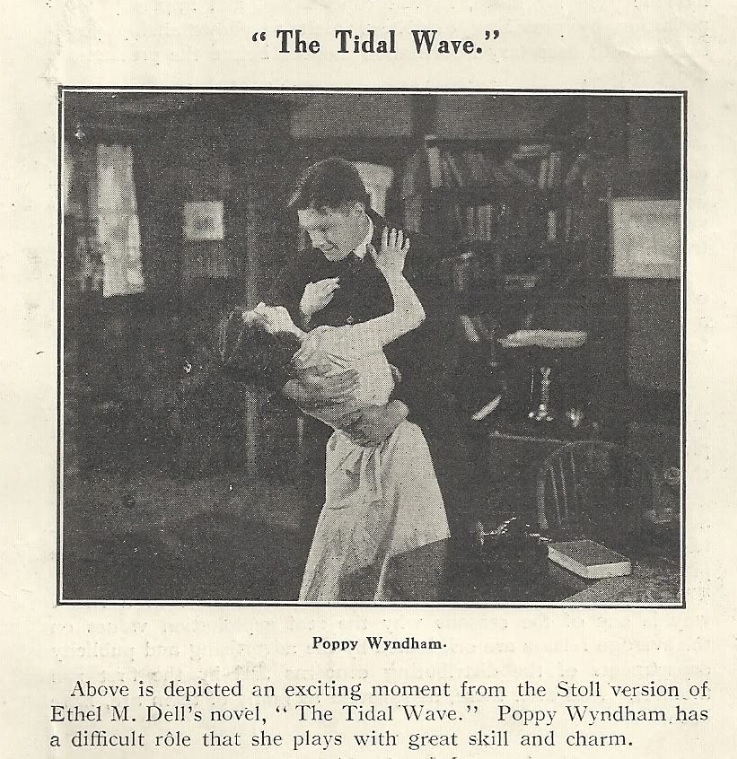
A former filmstar with the stage name Poppy Wyndham, she was the wealthy daughter of Lord Inchcape, chairman of P&O shipping line, and worked as interior designer on his ships. Their Scottish home was fairytale Glenapp Castle in Ayrshire.
Find out more about Elsie’s extraordinary story in The Endeavour of Elsie Mackay, published by Allison and Busby.
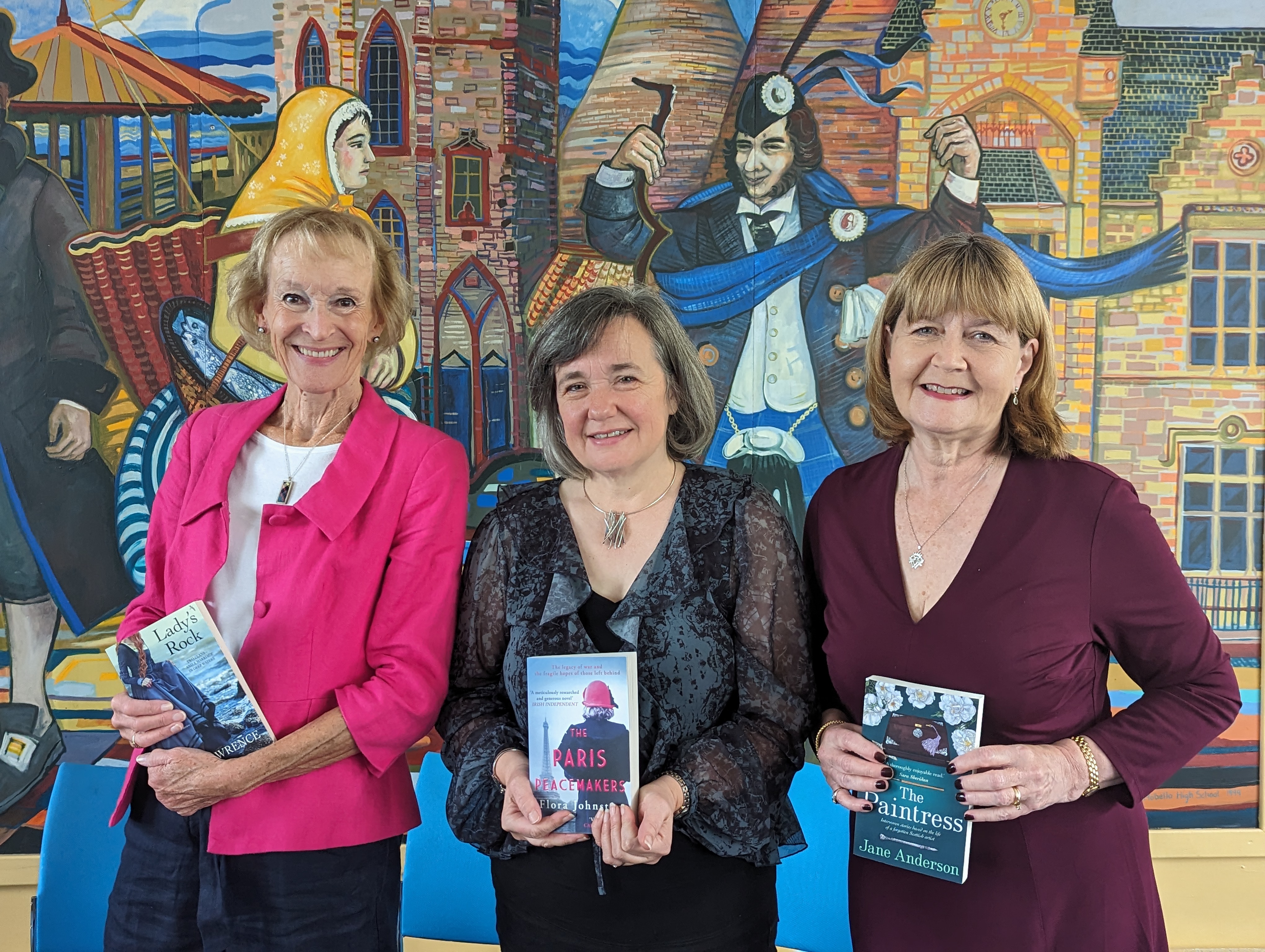
It’s been a good week! On Saturday I had a great time taking part in the Portobello Book Festival as part of a panel on ‘Women in Historical Fiction’, along with Jane Anderson (The Paintress) and Sue Lawrence (Lady’s Rock), expertly chaired by Joanne Baird. This is a brilliant community book festival which always has an interesting programme – check it out next year!
Then on Wednesday Edinburgh Central Library kindly hosted an event exploring ‘Family Stories in Historical Fiction’. Helen Graham (The Real Mackay) and I really enjoyed our discussion on researching and writing our recent novels, and Susan Elsley was a fabulous chair. It was an added bonus to have my brother Sandy in the audience sketching the event. If you’ve read The Paris Peacemakers, you’ll know that Jack’s sketch of the Calcutta Cup match at the start of the novel is significant. The idea of a brother who sketches on every occasion may not be entirely fiction!
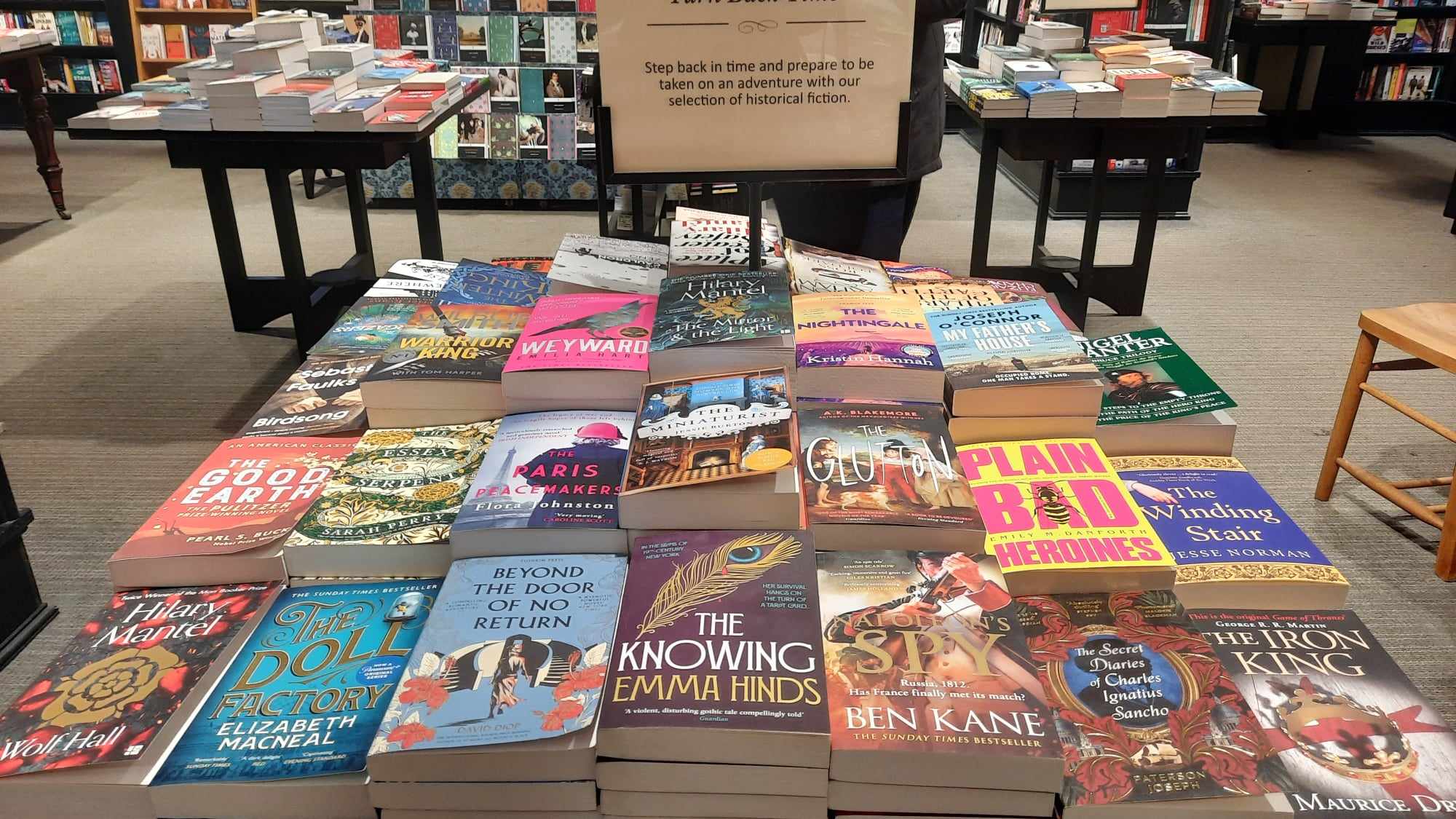
On my way into town on Wednesday for the Central Library event I popped into Waterstones at the West End. What a thrill to see copies of the new paperback edition of The Paris Peacemakers on the historical fiction table, alongside some amazing authors!
We’re looking forward to celebrating the launch of the paperback in London at HTA Design on 12 November. Tickets available here!
The paperback edition of The Paris Peacemakers will come out in October with a stylish new cover, and I’m delighted to share some events which are coming up. These are all free but ticketed: please do sign up and come along!
I’m so pleased to be taking part in the Portobello Book Festival again! I’ll be part of a panel on Women in Historical Fiction along Jane Anderson, author of The Paintress, and Sue Lawrence, author of Lady’s Rock. The panel will be chaired by Joanne Baird of the wonderful Portobello Book Blog. It should be a really interesting discussion. Tickets are available from Portobello Library.
And I’m excited on Tuesday 12 November to be celebrating the launch of the paperback in the fabulous HTA Design Studio at 75 Wallis Road, London at 6 for 6.30pm. I’ll be in conversation with Lisa Highton of Jenny Brown Associates. Tickets available soon.
It’s now a year and a half since my debut novel What You Call Free was published. For most of the time since then I’ve been working on the next novel and I’ve been immersed in 1919: the bright lights of Paris and the depths of Scapa Flow; ghost-filled rugby changing rooms and post-WW1 hospitals where despair meets hope.
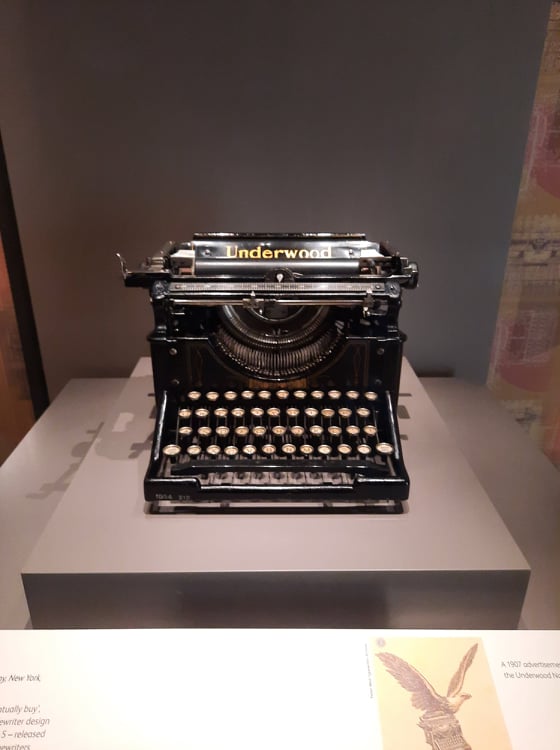
I’ve been making early forays into the research for book three too. How did those 1920s aeroplanes ever stay up?
That’s right, they often didn’t.
But the 17th century is calling to me! Between September and January I’m fortunate enough to have a series of opportunities to speak about What You Call Free. As I prepare for these, I remember just how invested I am in the lives of these two real women, Jonet Gothskirk and Helen Alexander.
It’s good to be back.
What You Call Free is available to purchase in paperback and ebook direct from Ringwood Publishing and from your usual book retailer.
For details of forthcoming events see events page.
Scotland’s creative writing centre, Moniack Mhor, is a very special place. I’ve stayed there twice in the last few years, and those two weeks were hugely influential in the writing of What You Call Free.
I’ve been working on this book for a very long time! I began writing it in 2013, although the idea had been there for much longer. In 2016 I entered it into the Bridge Awards’ Emerging Writer Award and was delighted to be ‘highly commended’, and to receive a grant towards a Moniack Mhor retreat as a result.
The format for the tutored courses is a perfect combination of workshops, one-to-one tutorials, evening readings, and as much thinking time, writing time, good food, good wine and good conversation as you could possibly want. With some trepidation, I chose a historical fiction course led by Isla Dewar and Margaret Elphinstone, and travelled to Moniack. Although I am used to having my non-fiction words published in different forms, my fiction writing had always been a private and solitary enterprise. I had never done a creative writing course or joined a writing group, and had rarely shared or spoken about my work. I learned a great deal on that course, but I think its real significance lay in giving me permission and confidence to think of myself as a fiction writer. It was a completely new experience to speak the language of fiction with other people and to discuss my writing and my dreams. The book I was working on – at that time called Sackcloth on Skin – was a bit of a sprawling, multi-strand, multi-timeframe mess, but my first visit to Moniack Mhor encouraged me to believe not just in the book but in myself as a writer.
Eventually I was ready to send it out. There were some positives – a couple of longlistings for example – but then came the stream of rejections from agents and publishers. If you have ever put yourself through this you will know how completely demoralising and destructive it is. By the end of 2018 any confidence I’d discovered at Moniack was fast disappearing. And yet, I couldn’t quite bring myself to give up on this story. I still believed in it, but something needed to change. My choice seemed to be either to self-publish the book as it was or to change it drastically. I decided to try removing everything but the 17th-century storyline, and rewriting it as a historical novel.
It should have been devastating but it was actually quite cathartic! By the time I had cut out everything I no longer wanted, the book was about half the length. It was much easier to see its weaknesses, and where the historical story needed development. Around the same time the Moniack programme for 2019 dropped into my inbox. I hadn’t planned to go back, but a course on ‘Finding the heart of your novel’ led by James Robertson and Cynthia Rogerson caught my eye. Could Moniack work its magic a second time?
I signed up, and then left the book aside until June 2019, when I returned to Moniack with a mutilated half novel! I was worried the course might not live up to my first experience, but it was a wonderful week. As before, the setting, the people, the generous help from the tutors and the encouraging atmosphere all combined to help me to understand how to take the book forward.
I spent the rest of 2019 rewriting, and by the start of the year was ready to begin the daunting prospect of sending my novel – now What You Call Free – out again. But this time I had more experience, and the support and advice of writer friends made on that course. In summer 2020 the book found its home – with Ringwood Publishing, an independent Glasgow based publisher who publish an exciting range of Scottish fiction and non-fiction. It should come out early next year. There’s still a long way to go, but I will be forever grateful to Moniack Mhor for helping me firstly to believe in myself as a writer and then to understand the book I was writing.
This has obviously been a really hard year for Moniack Mhor, but they continue to offer online courses and opportunities. Check them out, and support them if you can!
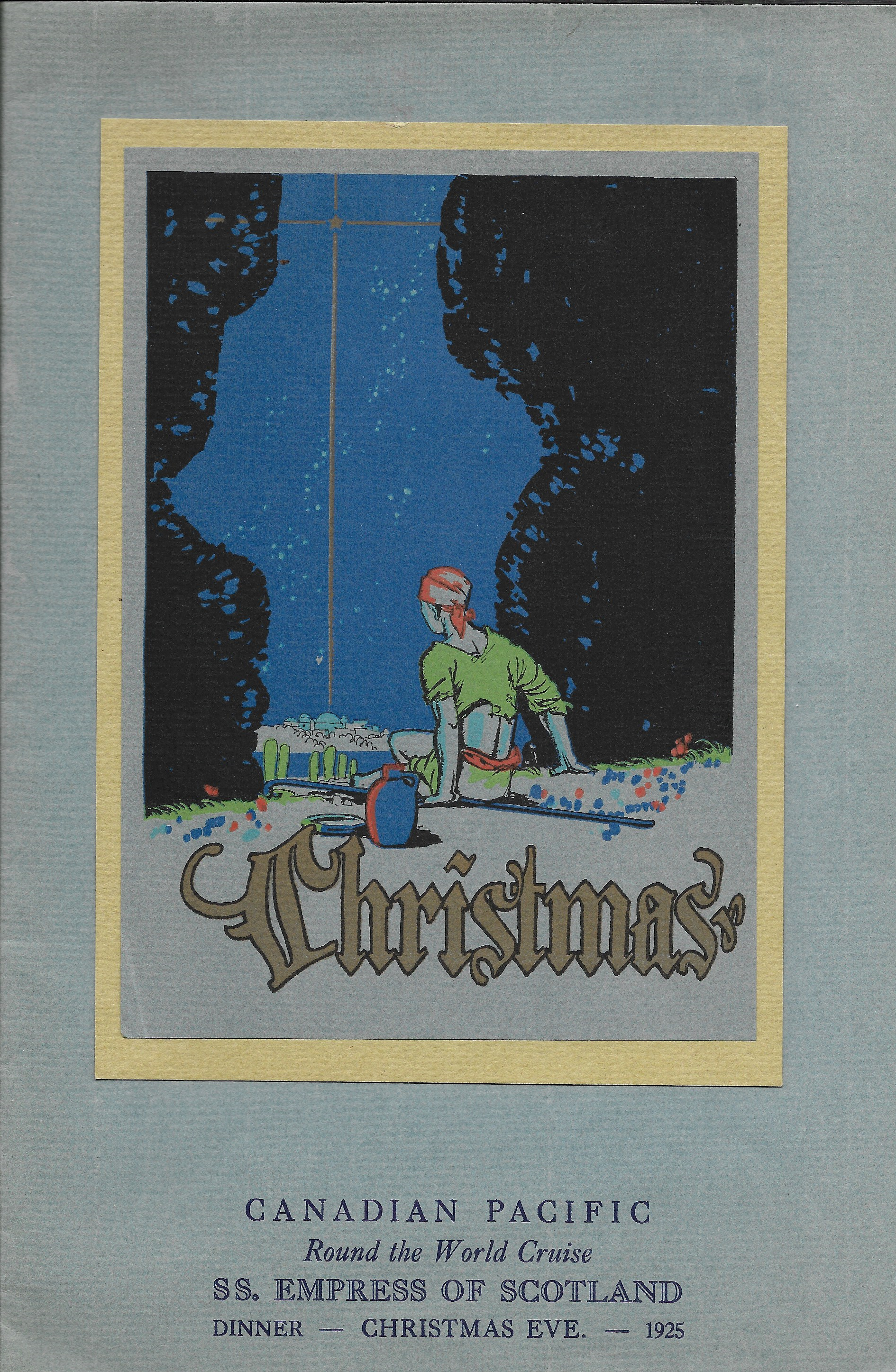
In November 1925 the SS Empress of Scotland set sail from Southampton across the Atlantic, at the start of a voyage round the world. Among her passengers was 36-year-old Christina Keith, a Classics lecturer from St Hilda’s College Oxford who was on a year’s sabbatical. Independent-minded and always unconventional, Christina was embarking on the voyage alone, writing, ‘I want to meet different people for one year.’
Christina was my great-aunt, and I published her wartime memoir as War Classics. She was born in Thurso in 1889 and studied the male-dominated subjects of Latin, Greek and Classical Archaeology at Edinburgh and Cambridge Universities. Her pioneering early career was interrupted by the First World War, and War Classics recounts her experiences lecturing to the troops in France and exploring the devastated battlefields soon after the guns had fallen silent.
Now, after six years of lecturing in Oxford, she was seeking wider horizons once more. I have the letters she wrote to her mother during her cruise, and they are full of vivid descriptions of life on board a 1920s ocean liner, and the changing world she met at each different port.
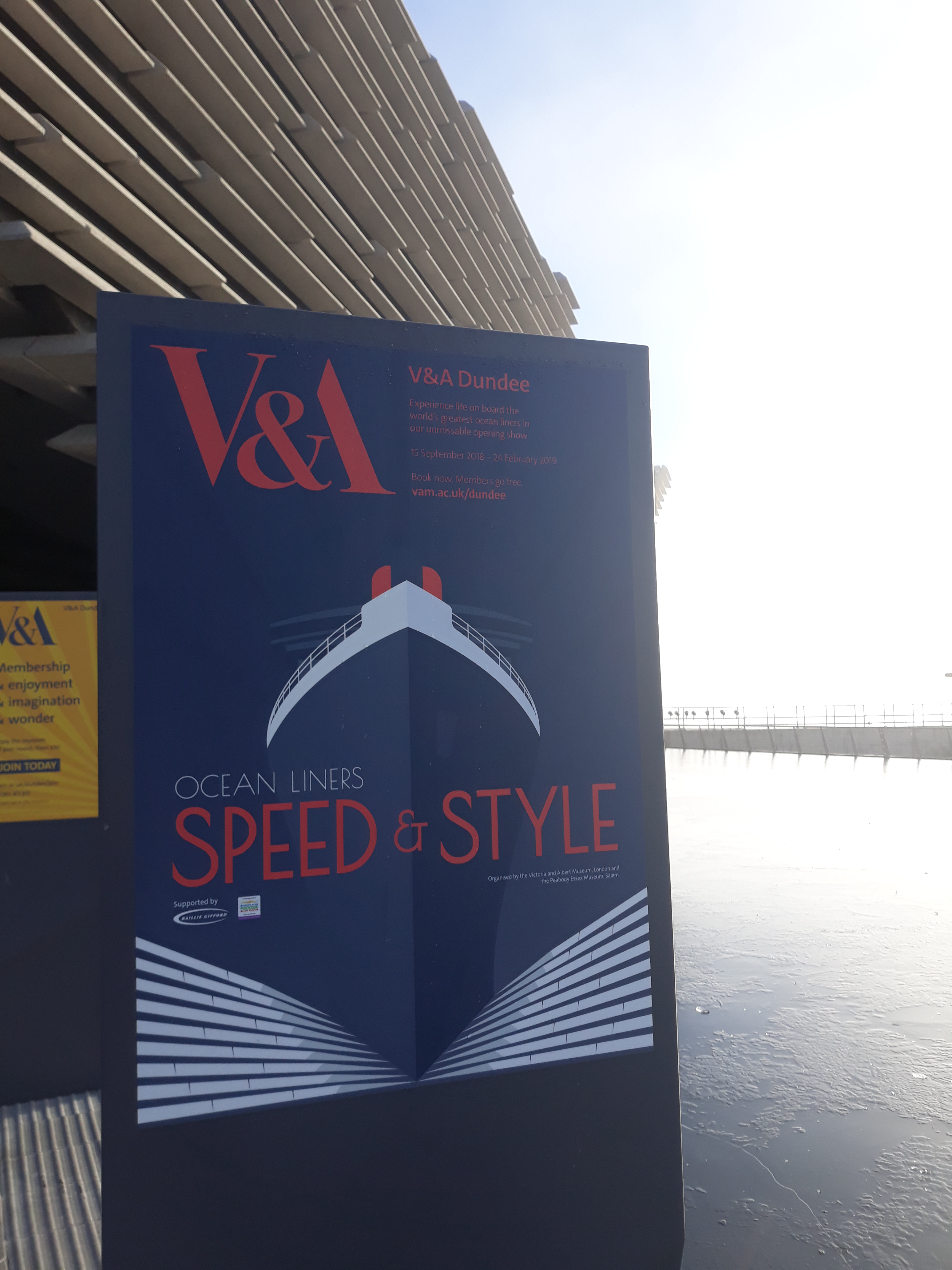
That’s why I was so keen to see the Ocean Liners: Speed and Style exhibition at the new V&A in Dundee, and it didn’t disappoint. The exhibition explores the cutting edge design and cultural impact of these legendary ships, and helped me place the story of Christina’s voyage and of her ship – built in Germany as the Kaiserin Auguste Victoria in 1905 – within that wider context.
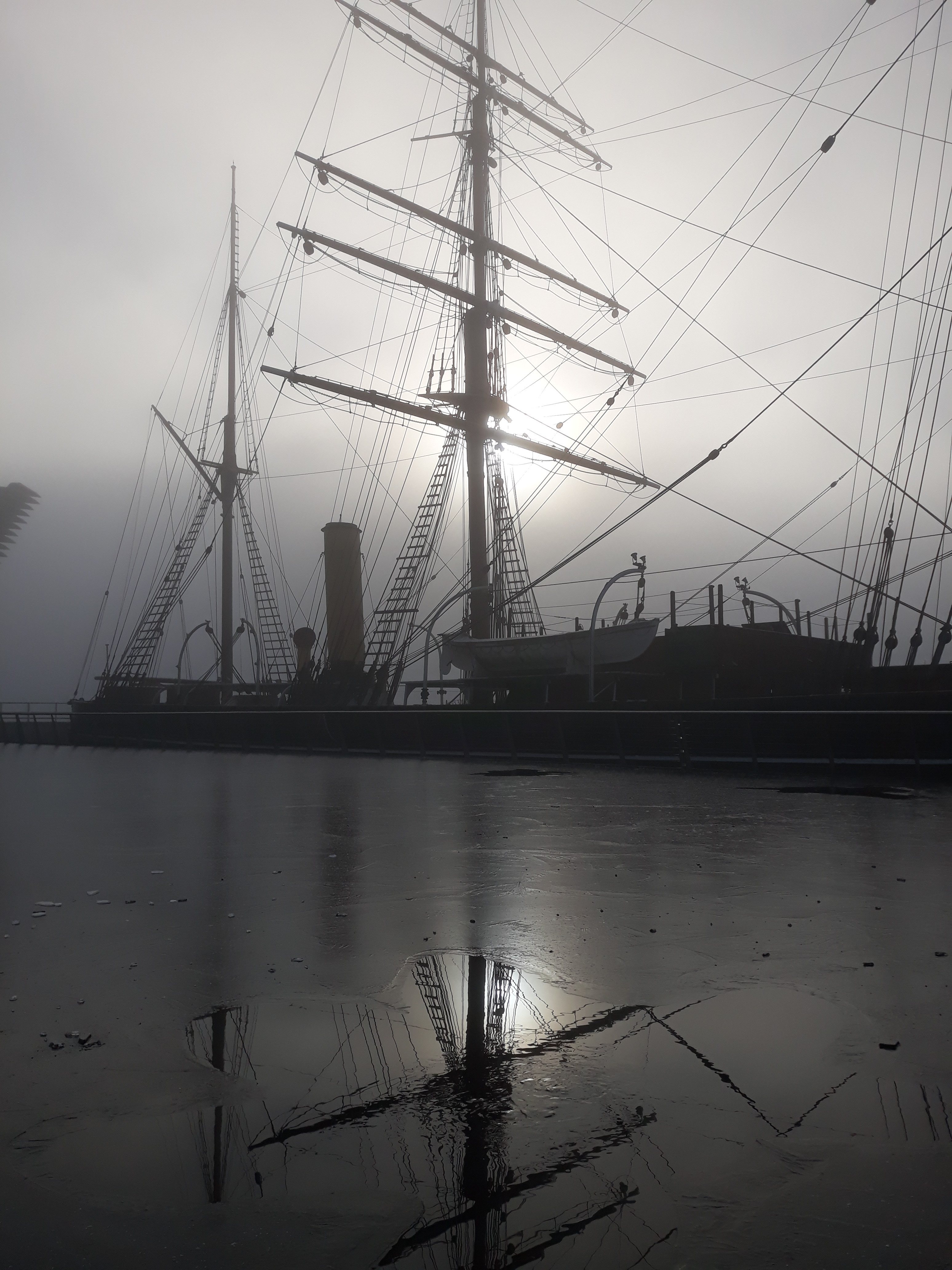
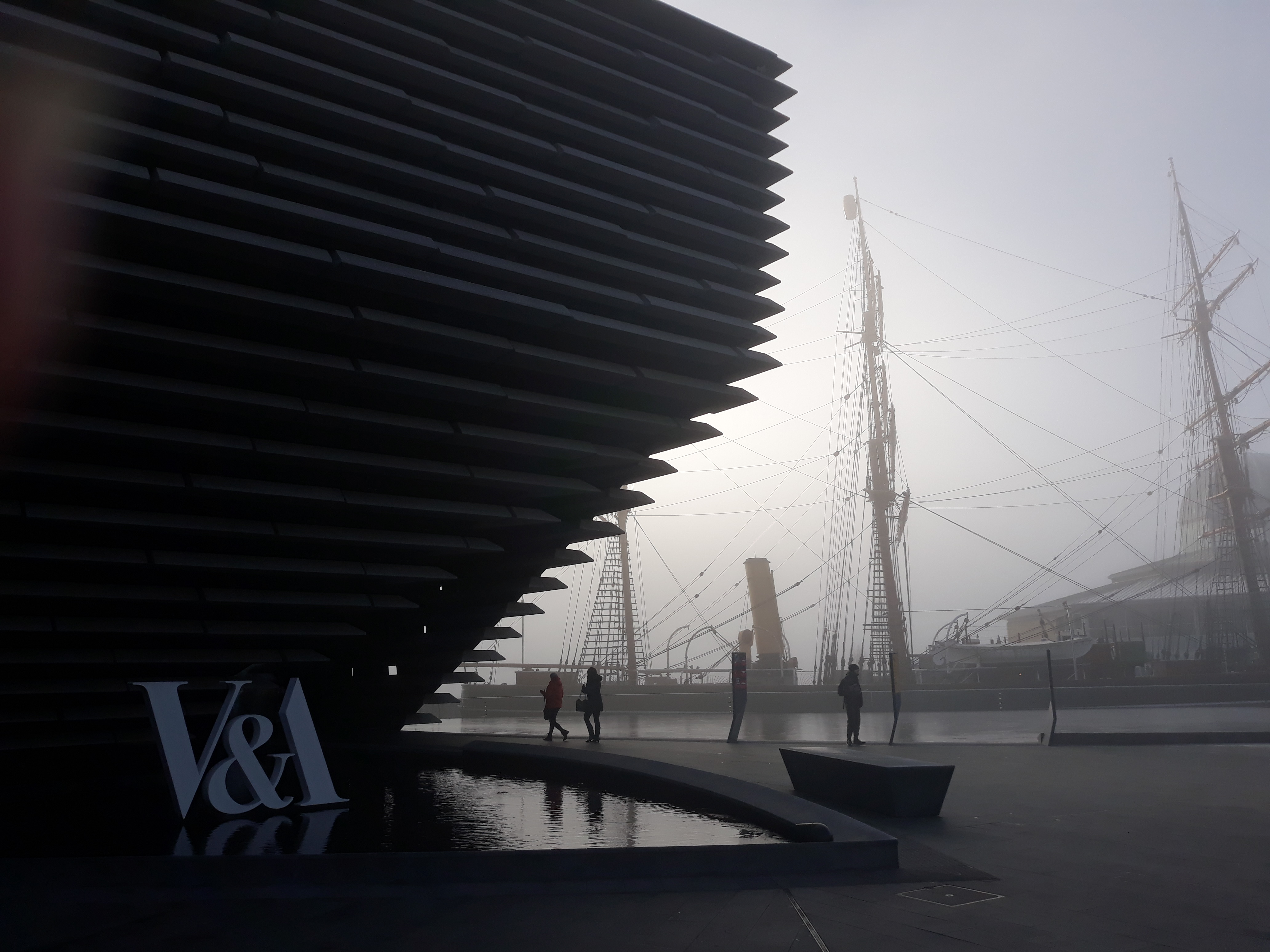
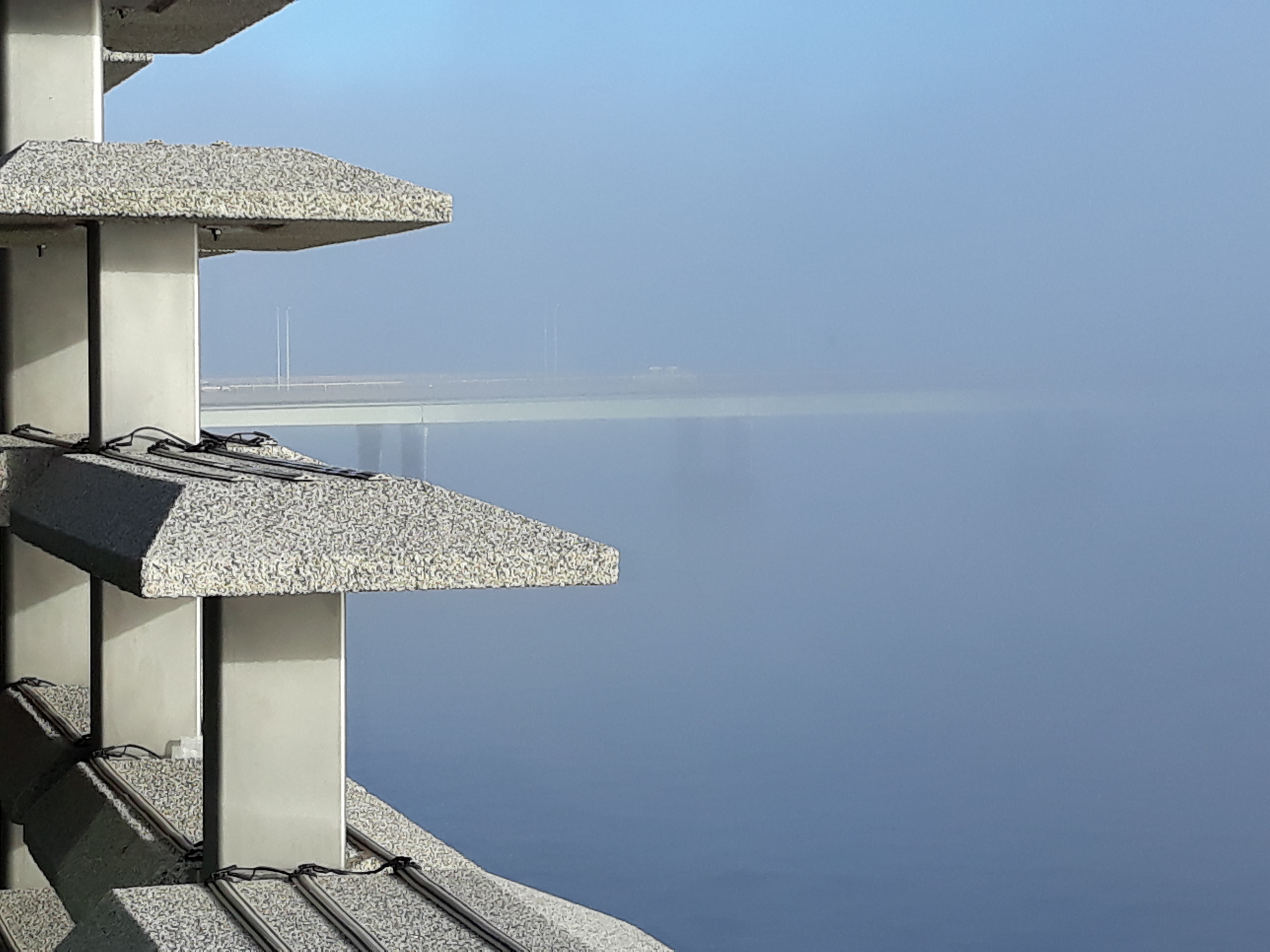
It was a stunning, if bitterly cold, day for my first visit to the V&A Dundee, with the impressive building looming out of the freezing fog, and the RSS Discovery appropriately enough reflected in (very thin) ice.
I think Christina and I may well have some unfinished business …
One hundred years ago my great-aunt Christina was behind the lines in Dieppe as a tutor with the army’s education scheme. She describes the day when peace was declared after the four long years which had devastated her generation:
Late in the afternoon I went into the huts to see the men and how they took it. The Base Commandant had sent round word to close the canteens if we wished, as the men might be drunk. But we did not wish. On that night of all nights every man, drunk or sober, was to find a welcome there.
When I went in, they were still sober and the hut was packed to the door. Most of them were singing and some few laughing and talking. Would you like to know what they sang? No ‘Rule Britannia’ or ‘God Save The King’ – English soldiers rarely sing either unless they are bidden. No – it was a chorus we were to hear every day for the next six months, with varying emphasis – ‘When do we go home?’, each word punctuated by thumps of mugs on tables, and the last word raised the roof.
At night they were many of them drunk, and the sober ones, with thoughts of the punctilious WAACs with whom they were dancing, were for turning the drunks out. ‘No, no,’ said the Hut leader firmly, ‘let the drunks dance by themselves in this corner.’ So, sometimes three together, sometimes the orthodox two, sometimes one, the drunks danced merrily in their corner; whenever one, well meaning but nothing more, lurched out to grab a WAAC, he was hastily but tenderly shepherded back by a stronger comrade.
Outside bells blared; flags flew; bands played; at every window in the Grande Rue faces looked out, laughing, crying. In the distance the Marseillaise came rolling down and its echo ‘It’s – a – long – way – to – go.’
I stole into the Cathedral. Over the altar hung our flags, quiet and still. There was no need to wave them now. Utter quietness here and one spot of light only. In the chapel at my side lay the empty tomb and the marble watchers beside it. The figure of the risen Christ was outlined and ringed with light. Never have I seen so many candles ablaze together. Beneath Him in the darkness knelt clusters of black-robed women. Peace had come.
Norman Macleod was one of the main characters in my book Faith in a Crisis. Now the house he lived in, which was part of his story, is on the market. The lady who lived there was a friend of my parents and I remember visiting as a child, but the shiver down the spine comes when I think of Norman and Julia descending those stairs, walking through those rooms …. and leaving the house with their ‘young and helpless family’ when they were evicted by the factor in 1843.
Trumisgarry Church
Extract from Faith in a Crisis (Islands Book Trust, 2012):
Norman, by quitting his church at Trumisgarry, was no longer entitled to his house. He wrote to Lord Macdonald, offering to pay the same rent as any other and observing, ‘I trust your Lordship does not really intend to drive me with my young and helpless family out of my present dwelling house.’ The factor, Seumas Ruadh of Balranald, himself an Established Church elder, replied in these terms:
It is not [his Lordship’s] intention either to grant you a site or to give you any lands …. I am sorry for you and your family, you will be much put about, but you have brought it all on yourself. …. Kind compliments to Mrs McLeod.
Within a few years, of course, many of Norman’s congregation would also have been evicted from their homes and land, with fewer resources to survive and far more drastic consequences.
Seumas Ruadh was the father of Jessie of Balranald, whose story I told here. It was recently fictionalised in the novel The False Men by Mhairead Macleod.
I read a lot of non-fiction for work, but not very often for pleasure. 60 Degrees North by Malachy Tallack was a real pleasure.
There’s something about northern light and coastal communities which draws me in with a wee touch of envy. It’s a different island community which has a hold on me – North Uist to the west rather than Shetland to the north – but the themes Malachy Tallack explores as he travels ‘around the world in search of home’ found many echoes as I followed his journey.
It’s an experience I remember from childhood, standing on white sand with my feet in icy clear water, looking to the smudged blue horizon and thinking, next stop Canada. And there’s one of the family stories right there, my great-grandfather, the restless lad who looked out on that sea and eventually used it as his means of escape, ending up in the diamond mines of South Africa. But I can’t stand on that beach and look out to sea without also being aware of what lies behind – the curve of the strand, the steep dunes and above them the mound with its leaning gravestones, the names of my forebears chiselled into stone.
Only two of my eight great-grandparents came from the island … but this is the place we went back to again and again, rather than Angus or Wester Ross or Caithness (and there’s the story of industrialisation in Scotland right there) …. so it’s the one that remains relevant in the life I live now. It’s a mix of history and memory; of family mythology and very real picnics with dark clouds racing towards us and slippery rocks underfoot. It’s caught up with a Gaelic culture my dad embraced, which has its own resonance now that he is no longer here to tell the stories he loved.
So there was a lot in 60 Degrees North which drew me in, but then it drew me on – on into the author’s journey along the 60th parallel, from Shetland through Greenland, Canada, Alaska, Siberia, St Petersburg, Finland, Sweden and Norway. Through the extremes of northern light and darkness, coastal communities and forests belonging to bears, he uncovers contrasting ways different communities and individuals have related and continue to relate to the landscape in which they live. What they treasure, and what they have lost. It’s a personal journey for the writer, but one written so evocatively and thought-provokingly that I kept going back to re-read and savour paragraphs again and again.
Malachy Tallack’s novel The Valley at the Centre of the World is published by Canongate in May. I’ll look out for it.
2018 reading to date (because I said I’d keep a note of it):
Swing Time, Zadie Smith
How To Stop Time, Matt Haig
The Lesser Bohemians, Eimear McBride
Room, Emma Donoghue
The Map of Love, Ahdaf Soueif
The Minister and the Murderer, Stuart Kelly
The Secret River, Kate Grenville
60 Degrees North, Malachy Tallack
My one and only resolution of 2018 is to keep a note throughout the year of what I’m reading. (I could have many more resolutions, but hey, another year, same dream.)
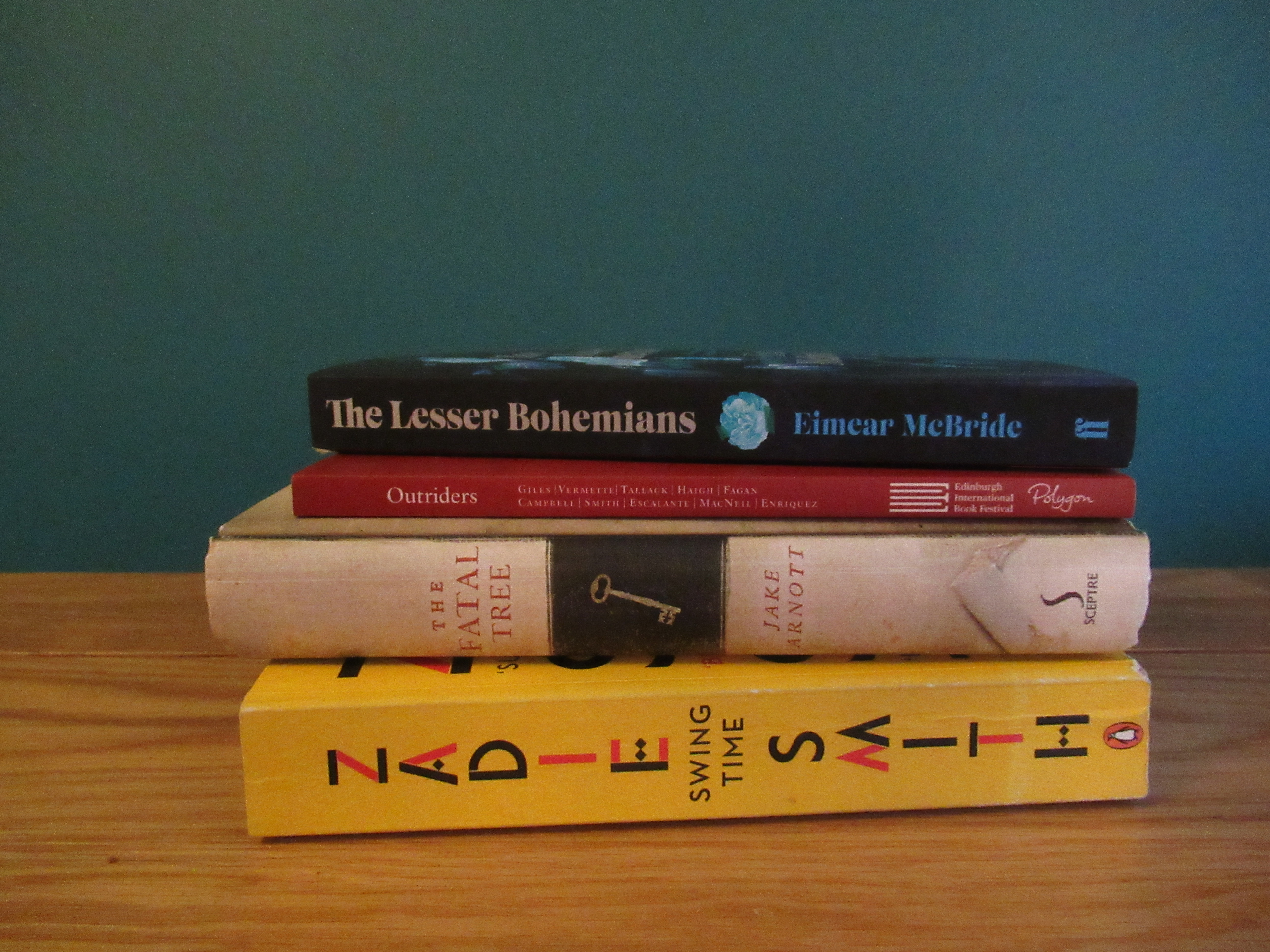
I don’t intend to share what I’m reading unless it’s of particular interest, but I’ve started the year with Zadie Smith’s Swing Time, and it’s going to be hard to beat. I was lucky enough to win it just before Christmas in a Twitter competition, along with Outriders, The Lesser Bohemians by Eimear McBride and The Fatal Tree by Jake Arnott. Thank you, Edinburgh Book Festival!
I read and enjoyed White Teeth years ago when it came out, but I haven’t read anything else by Zadie Smith. That may soon change, as I loved Swing Time. I like to read a book which is not my experience yet is so convincing and so human that I can enter into that experience. And I particularly like to read a book where I’m not marvelling with every sentence and every plot twist at how wonderfully clever the writer is, because the writer has pulled me in so far that I have forgotten all about him or her – but nevertheless every now and then I’m drawn up by the beauty or poignancy or truth of what I’ve just read. That’s what happened with this book – like this, which foreshadows #metoo so evocatively:
I remembered my own classrooms, dance classes, playgrounds, youth groups, birthday parties, hen nights, I remember there was always a girl with a secret, with something furtive and broken in her, and walking through the village with Aimee, entering people’s homes, shaking their hands, accepting their food and drink, being hugged by their children, I often thought I saw her again, this girl who lives everywhere and at all times in history, who is sweeping the yard or pouring out tea or carrying somebody else’s baby on her hip and looking over at you with a secret she can’t tell.
Next on my list is Matt Haig’s How To Stop Time which my children gave me for Christmas. I’m looking forward to it, but I always prefer to have a breather after a really good book – to stay in its world for a while before moving on. I have some research materials on standby for a possible new project, so that’s where I’ll go next.















 Flora Johnston