If you’ve read Faith in a Crisis, my book about the famine and evictions in 19th-century Uist, this article on the Carmichael Watson Project blog might be of interest. It has some interesting perspectives on both Finlay Macrae and Norman Macleod.
I spent most of Saturday in a world of love, violence, feuding, greed and ambition. Fifteenth-century Scotland.
The new trilogy of history plays, The James Plays, is being performed for the first time at this year’s Edinburgh International Festival, and will travel to London when the Festival is over. On Saturday there was an opportunity to watch all three plays in one day – James I: The Key Will Keep The Lock, James II: Day Of The Innocents and James III: The True Mirror.
The early Stewarts were easily my favourite aspect of studying Scottish History at St Andrews, so it was partly a trip down memory lane. The programme for the plays contained mini essays about each king’s reign written by St Andrews academics – and what a joy to read the story of James III as told by Norman MacDougall, whose Special Subject on James III was so much fun!
So what about the plays? As a trilogy they were superb. I loved the fact that each play had a very different feel, both in the writing and the production. James I offered a hugely entertaining portrayal of 15th-century Scotland, with a host of strong characters and great performances. James I is variously remembered as a tyrant or a strong ruler, and Rona Munro’s interpretation of how his style of kingship may have come about was both interesting and convincing.
James II had a darker feel which was powerfully communicated. While not every aspect of the interpretation was how I would have imagined events taking place, the portrayal of the manipulated child king who was haunted by the events he had witnessed was very effective.
James II is the only one of the three kings whose story I have seen dramatized before, in The Ballad of James II, performed at Rosslyn Chapel in 2007.
I enjoyed James III as a climax to the first two, but it was the part of the trilogy which I personally found least satisfying. It was a vivid imagining of the possible story of Margaret of Denmark, and Sophie Grabøl’s performance was impressive. But the development of Margaret’s character left us with a fairly one-dimensional picture of her husband. Only once, I felt, did he almost spark into life, when he seemed to taunt his people with having too narrow a view to grasp what he could have offered them. Personally I would have enjoyed seeing this, or other, aspects of his personality and reign explored. Instead this play was the one which probably travelled furthest from history to imagination – the result was an enjoyable performance, but for me it had less impact than the previous two.
Still, watching all three plays one after the other was a thrilling experience. James I, James II and James III, remembered in Scotland at last! See them if you can.
The overgrown ruins of the tacksman’s house and Finlay’s home are modest when compared with the gloomy Edwardian mansion which lies close by. Erskine Beveridge built his imposing summer home where he could enjoy spectacular views across the strand to the island of North Uist, and north towards the hills of Harris. But it was much more that simply the scenery which attracted this Fife-based businessman to Vallay.
Erskine Beveridge inherited and expanded his father’s damask linen business in Dunfermline, and made his fortune in the process. He was a keen amateur archaeologist and was very interested in the new art and science of photography. Erskine travelled widely, in Scotland, Europe, America and Canada, but in North Uist he found the ideal location to pursue these two interests of archaeology and photography. He first visited the island in 1897, and bought the island of Vallay in 1901. He then set about building a suitable house for his family – no easy task on a tidal island!
In 1911 Erskine Beveridge published North Uist: Its Archaeology and Topography, the result of his investigations on the island. Today this can be obtained in a reprint. More evidence of his time in North Uist can be found in a book recently published by RCAHMS, Wanderings with a Camera in Scotland. This wonderful book is an invaluable record of the landscape, people and architecture of Scotland in the late 19th and early 20th centuries. The North Uist photos in the collection include pictures of Beveridge’s own excavations in progresss, as well as a mixture of crofting townships and archaeological sites.
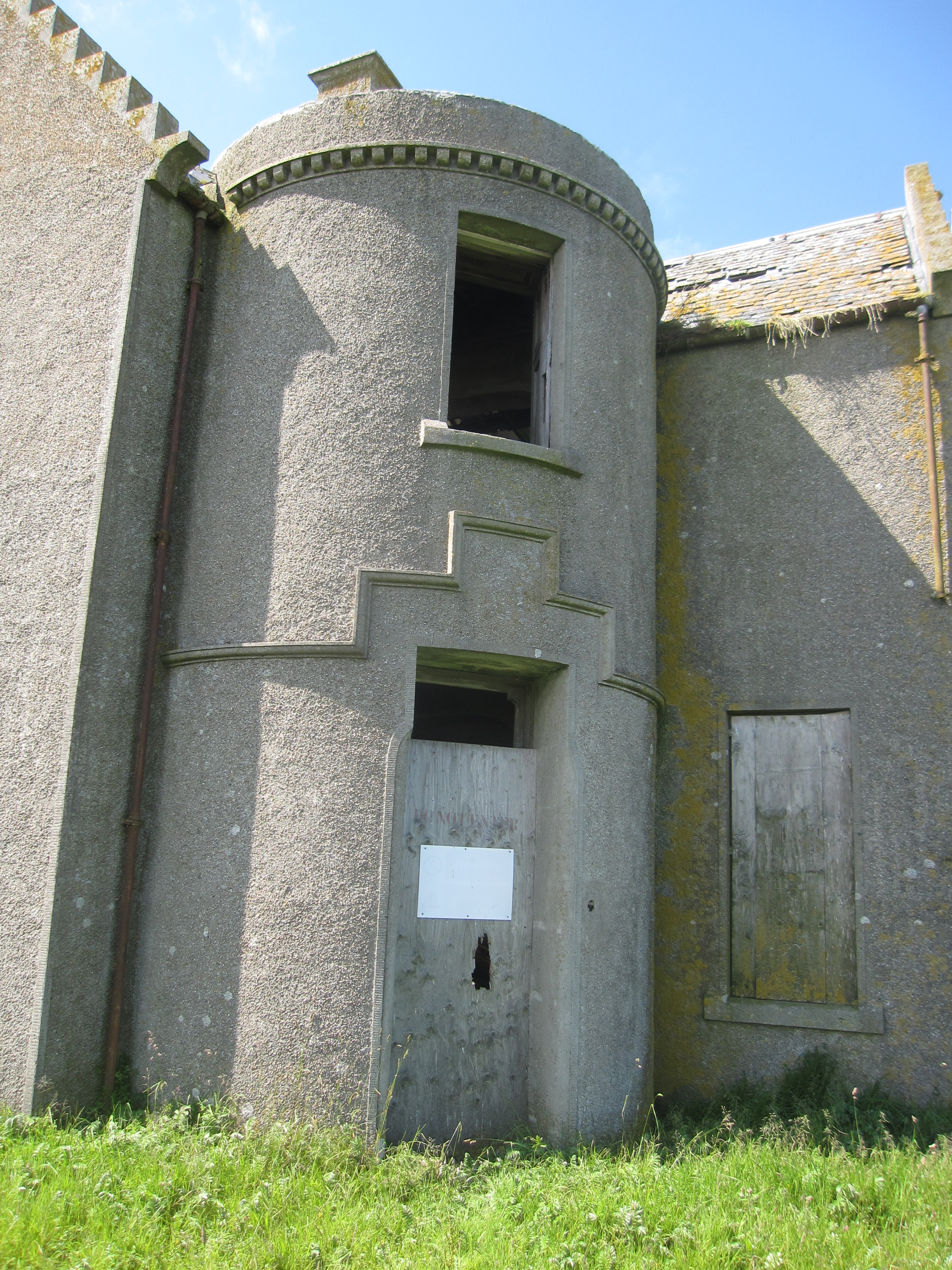
Erskine Beveridge died in 1920, and left the house to his son. But his son was tragically drowned crossing the strand in 1944, and Vallay House was soon abandoned. As each winter passes, its exposed position on the edge of the Atlantic must be taking its toll. Much of the roof and many of the floors have collapsed, and the building would be dangerous to enter. Still, there’s enough to be seen through the windows – rich red wall colouring, tiled fireplaces, even a tap – to conjur up an image of Erskine Beveridge, perhaps sitting by that fireside reading over his notes of the day, living his own island dream.
There’s much more to see on Vallay – ruined farm buildings, beautiful beaches, archaeological sites. There wasn’t nearly enough time to see it all before the tide would be rolling in again. Which just means I’ll have to go back ….
I spent last week on the beautiful island of North Uist in the Outer Hebrides. Top of the list of things to do this time was walking across the strand to the tidal island of Vallay. When we were on Uist last year the tide times were all wrong, but this year they were perfect, and the weather on the day we crossed was perfect too.
There’s something very special about a tidal island. I remember spending a few days on Lindisfarne when I was researching St Cuthbert, and being so struck by the rhythms of the place – the way the visitors empty out just before the incoming tide spills over the causeway, offering precious breathing space to those who live there and to the landscape itself.
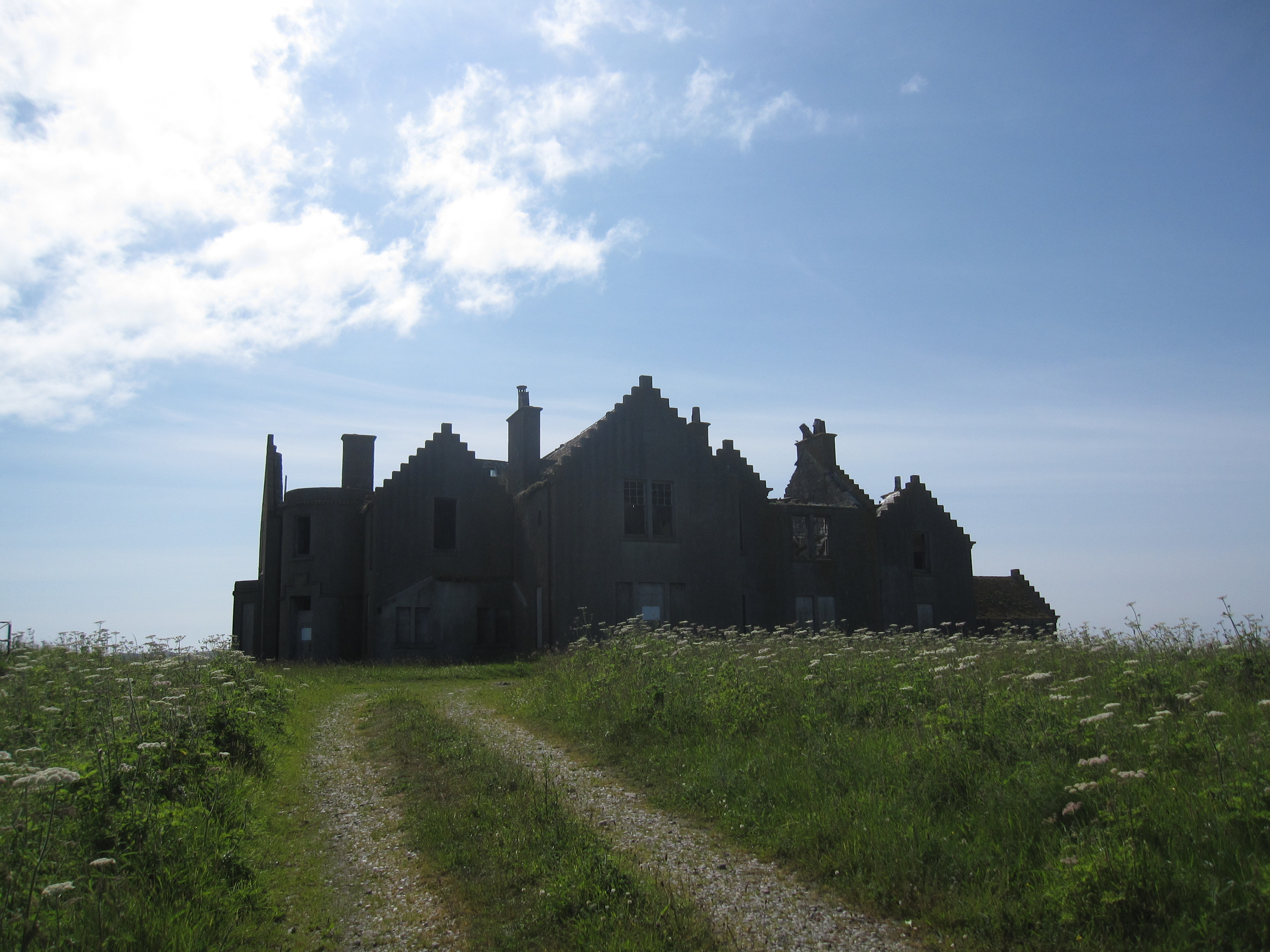
There’s no causeway to Vallay – just a vast expanse of wet sand – and there’s no one living there permanently nowadays either. But that wasn’t always the case, and the ruined houses which stand silhouetted against the skyline are a reminder of those for whom this place was once home.
In 2012 my book Faith in a Crisiswas published by the Islands Book Trust. It explores the role of the clergy during the desperate years of famine and clearance on the islands of North Uist, South Uist and Benbecula. It told the story of three men, one of whom was Finlay Macrae, minister of the Church of Scotland on North Uist. From 1825 until his death in 1858 Finlay and his family lived on Vallay.
Now stop for a moment and think of a minister being dependent on the shifting tides for access to his parishioners. Not exactly convenient! Sources agree that Finlay was very much a farmer first and a minister second, and his sermons were known as ‘the short sermons of the ebb’, as he often had to cut his service short and make a dash for home! The pastoral care of his people must also have often been dictated by the ebb and flow of the sea.
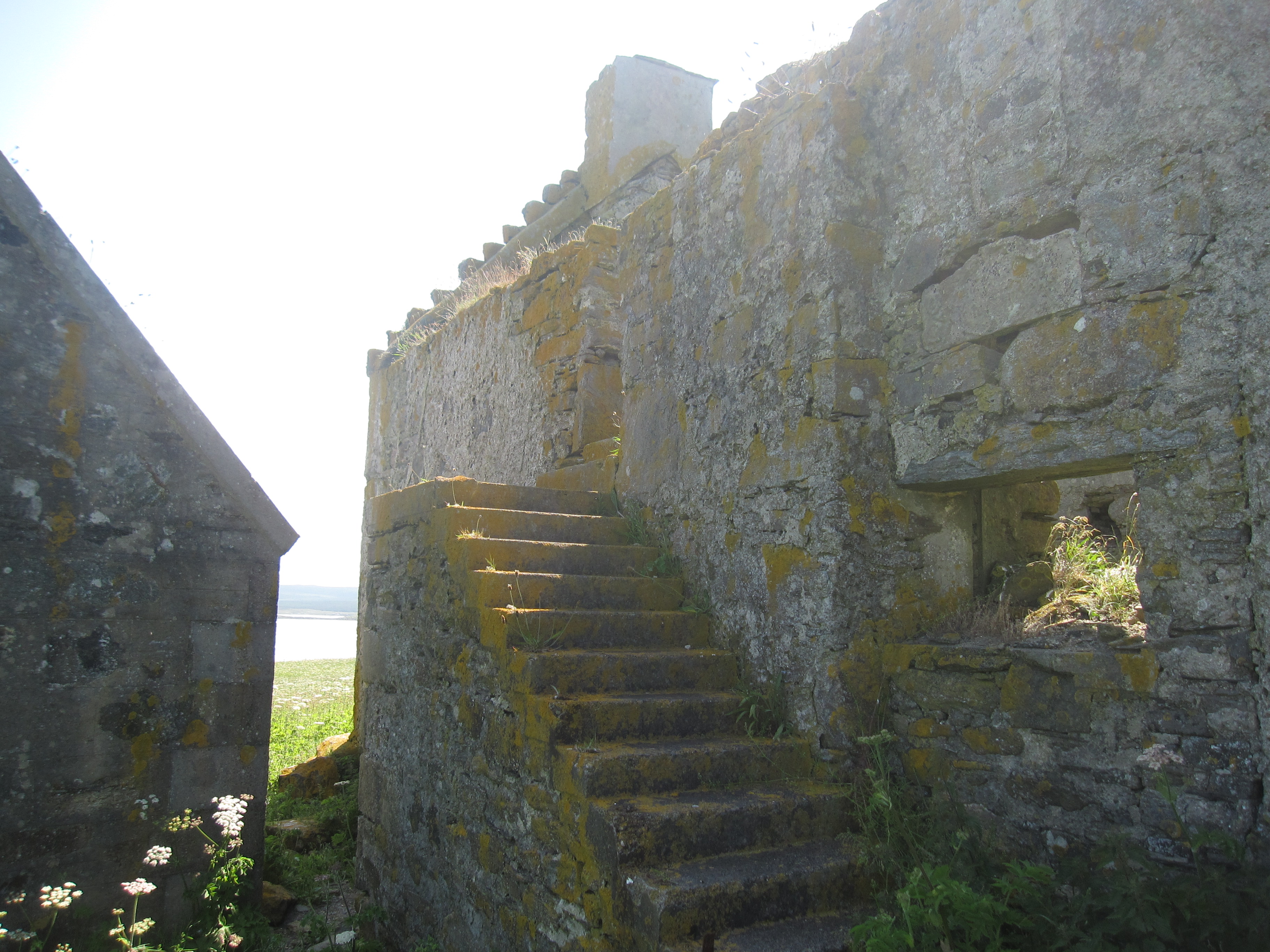
This is the house in which Finlay lived with his wife Isabella – sister of the local factor – and their children. It was said to have been built by James Gillespie Graham in the 1790s.
At right angles to Finlay’s house is another ruined house, known as old Vallay House, which is described on the RCAHMS website as ‘the only surviving example in the Uists of a tacksman’s house with crowstepped gables’.
It was built for Ewan MacDonald and his wife Mary MacLean, and their marriage is commemorated in a weathered lintel EMD & MML 1742.
These two simple, roofless structures are overwhelmed by their neighbour. Vallay House was built around 1902 for Erskine Beveridge, linen magnate, archaeologist and photographer from Dunfermline. Although ruined, his former home still contains haunting echoes of its life as a grand Edwardian mansion.
I crossed to Vallay thinking about Finlay, and found myself becoming increasingly intrigued by Erskine Beveridge. So much so that I think he deserves a separate post. More here.
I spent today at Stirling Castle. On my own. Part proper work, part research, part sheer indulgence.
The proper work bit was to see the exhibition Wallace, Bruce and Scotland’s Contested Crown before it closes next week. It’s fun to go along and watch people interacting with the displays.
The staff were fantastic. The man who sold me my ticket told me about the special exhibition, about these documents which are ‘the oldest thing you’ll see today, older than any part of the castle’. The guide in the room was doing a brilliant job of making 700-year-old Latin texts sound interesting to a group of schoolchildren. The running totals on the ‘who would you vote for’ between Wallace and Bruce were up in the 600s, with a narrow lead for William Wallace. The exhibition was remarkably busy.
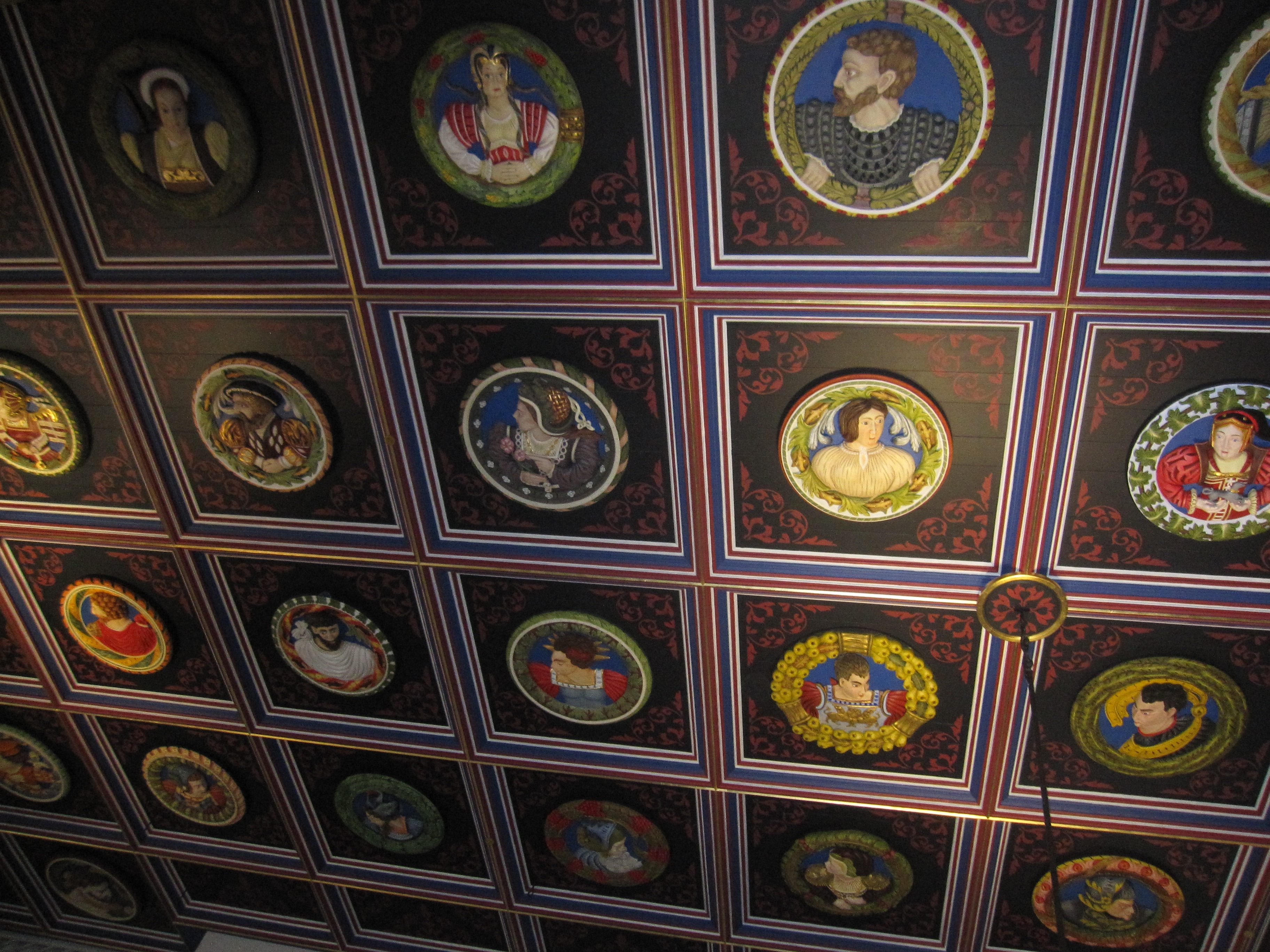
I was in Stirling Castle about twenty years ago on a Scottish History trip from St Andrews, and then again about ten years ago. But so much restoration work has been carried out on these magnificent Stewart buildings that it was well worth another visit. It’s fabulous to see the coloured reconstructions of the Stirling heads, and so much more. I love to think that many of these depict the men and women of James V’s court – it’s like having the pictures in Hello spread out across the ceiling!
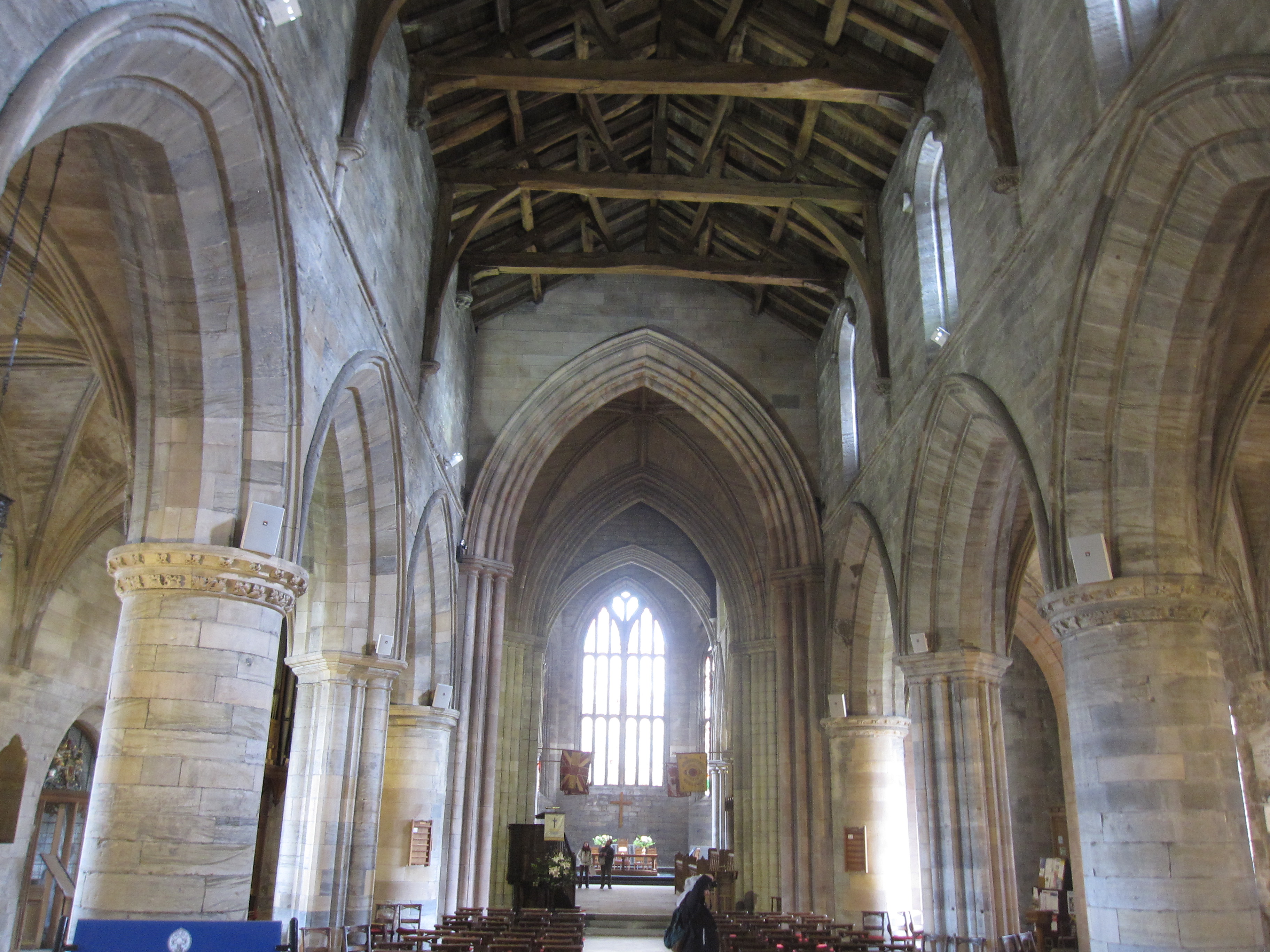
I wandered down the hill to the Church of the Holy Rude, which I’m not sure I’ve ever visited before but I particularly wanted to see today – that was part of the ‘research’ bit.
The infant King James VI was crowned here in 1567 when his mother Mary Queen of Scots was forced to abdicate.
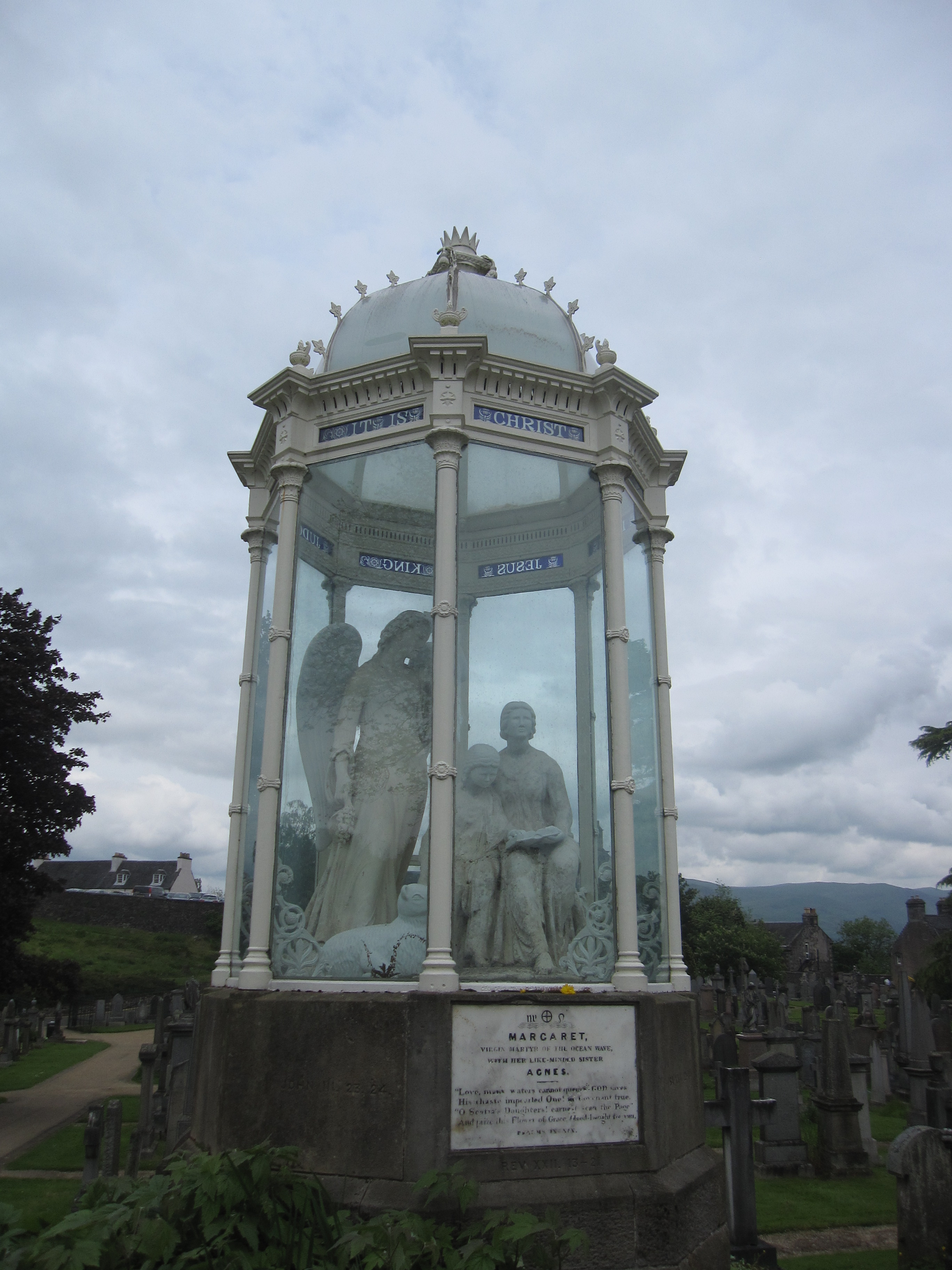
Behind the church is a graveyard which was partly laid out by the Victorians, and has some rather unexpected statues of figures from Scottish reformation history dotted around, including this truly bizarre monument to two famous Covenanting martyrs who were drowned in the Solway.
There’s a small hill in the graveyard. Climb that hill and look around, and you really are in the heartland of Scotland’s history. The surrounding landscape has been fought over again and again – Stirling Bridge, Bannockburn, Sauchieburn ….. The castle of the Stewart kings looms high, not just a strategic fortress but also a self-confident expression of dynastic power and artistic ambition. The medieval church has its own story to tell through the centuries, and then there are those figures of the Scottish reformation, interpreted through Victorian eyes. Whistlestop tour through the centuries!
There’s an interesting article in The Hindu today. It groups War Classics with several books which approach the First World War from a different angle.
World War I spawned literature of various hues. One hundred years later, we still grope for meanings and explanations. Here are a few books that give us some indication of the pointless nature of the Great War, told by individuals who either experienced it firsthand or wrote about it later.
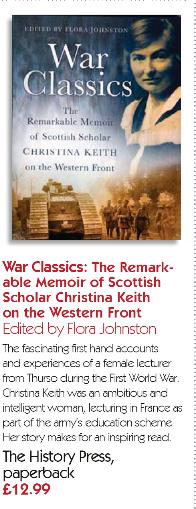
War Classics: The Remarkable Memoir of Scottish Scholar Christina Keith on the Western Front by Flora Johnston talks about a woman from upper class Scottish society, a lecturer in Classics, who went to live and struggle with common soldiers as a teacher with the army’s education scheme in France. The memoirs tell of the role played by thousands of men and women behind the lines to support the war and opens up a whole new world that lay just a few miles from the front. Keith also travelled across the devastated war zones after the Armistice and spoke of “a dream world, where everything happened… on a background of infinite horror”. She met the soldiers who had survived, saw tanks, clothing and weaponry lying littered across the battlefields of Europe and the war graves consisting of rough wooden crosses stuck in yellow mud and water.
I don’t think Christina was setting out to portray the war as pointless, but I do think her descriptions of the devastation it caused have real power – in part because they are written from a different viewpoint to most other commentators. The article concludes, We need books like these to approach the truth.
I’ve been working on the interactive to accompany this exhibition over the last couple of months. The exhibition brings together two extremely rare documents, one associated with William Wallace and one associated with Robert Bruce. Medieval documents aren’t instantly accessible to most of us, yet these two rare survivors have the power to link us directly back to some of the most exciting events in Scotland’s history.
The exhibition will set the documents in their national and international context, and the interactive helps you to explore both the actual documents and the story behind them.
It’s been fun to go medieval again!
The exhibition opens in Stirling Castle on 3 May. I’m looking forward to seeing it.