Author Archives: florajohnston

Unknown's avatar

About florajohnston

I'm a freelance writer and researcher interested in anything and everything to do with Scotland's history and culture.

Wallace and Bruce exhibition

And now for something a wee bit different:

Wallace and Bruce letters on show at Stirling Castle

Bruce letter

http://www.bbc.co.uk/news/uk-scotland-tayside-central-26886191

I’ve been working on the interactive to accompany this exhibition over the last couple of months. The exhibition brings together two extremely rare documents, one associated with William Wallace and one associated with Robert Bruce. Medieval documents aren’t instantly accessible to most of us, yet these two rare survivors have the power to link us directly back to some of the most exciting events in Scotland’s history.

The exhibition will set the documents in their national and international context, and the interactive helps you to explore both the actual documents and the story behind them.

It’s been fun to go medieval again!

The exhibition opens in Stirling Castle on 3 May. I’m looking forward to seeing it.

© All content copyright Flora Johnston. You may reblog or share with acknowledgement, but please do not use in any other context without permission.

Miss Tiny Keith

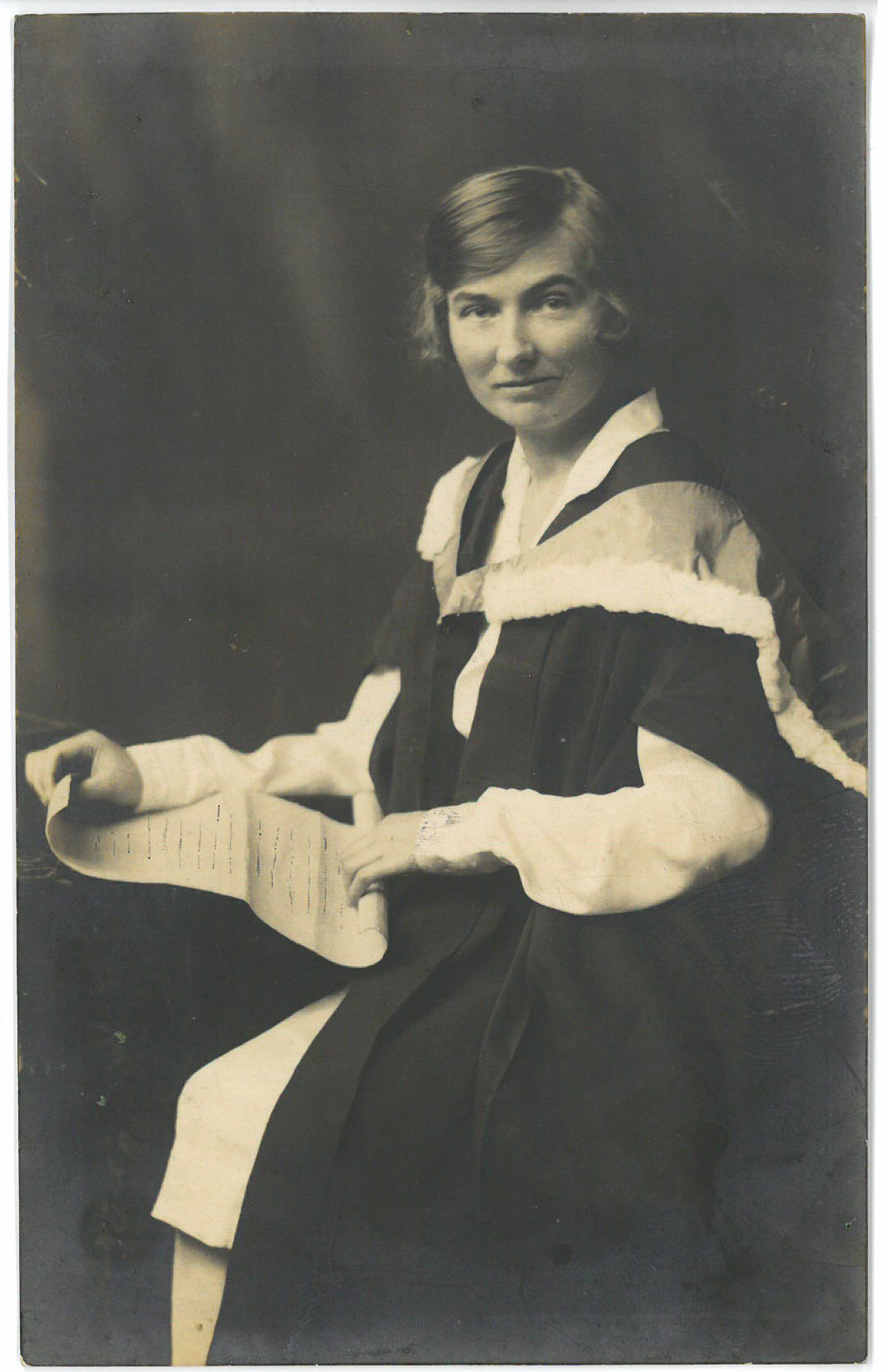
young ChristinaYesterday I found this wonderful article about Christina from when she was 14 years old. It must have been published c1903, probably in the Caithness Courier or John o Groat Journal, although the clipping doesn’t give a source. I love the picture, from the days when it was too expensive to take a photograph for a short piece on schoolgirl prizes.

It seems there’s always more to find!

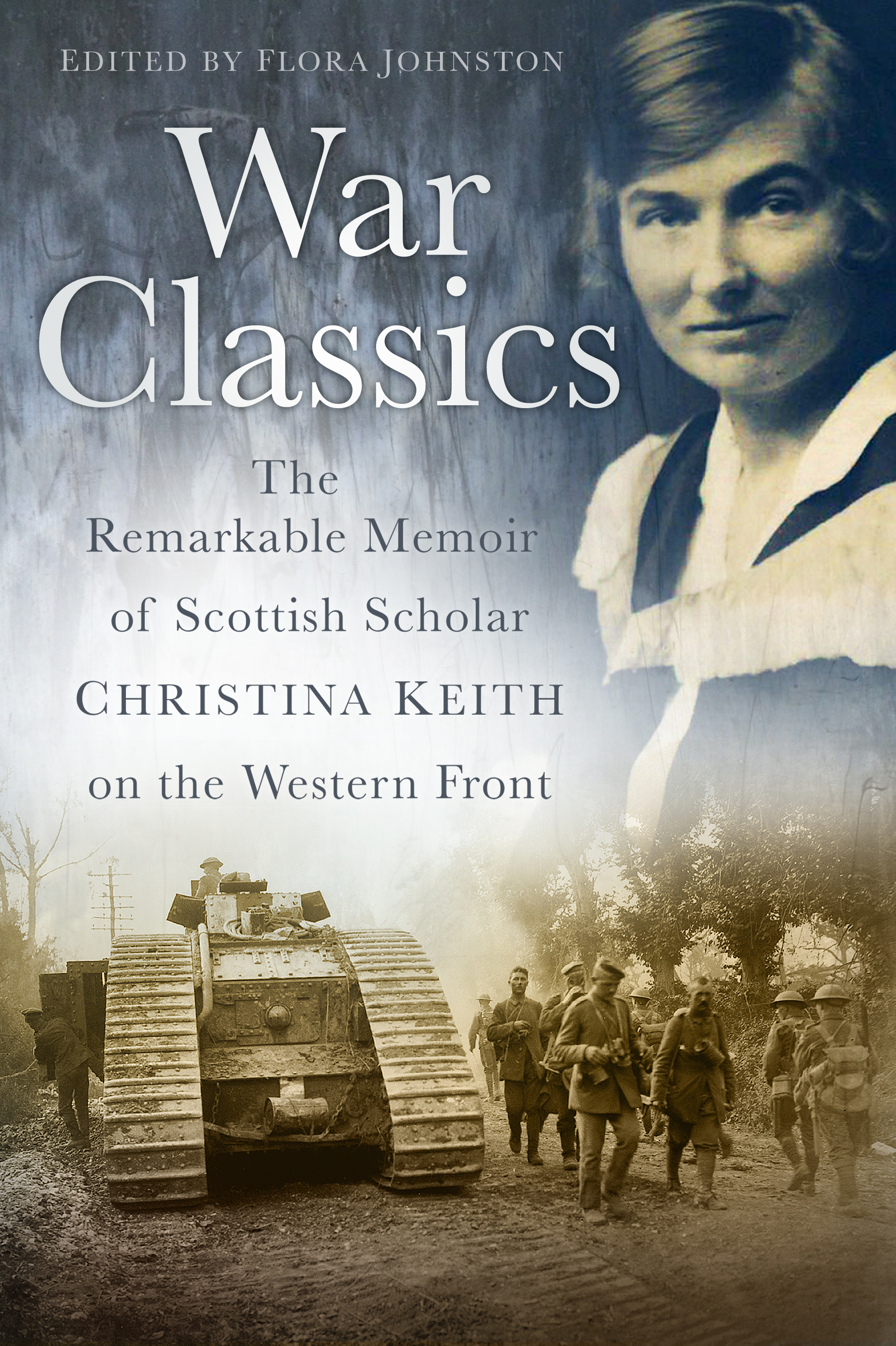
War Classics: the remarkable memoir of Scottish scholar Christina Keith on the western front, edited by Flora Johnston, is published by The History Press

© All content copyright Flora Johnston. You may reblog or share with acknowledgement, but please do not use in any other context without permission.

Publication

War Classics: the remarkable memoir of Scottish scholar Christina Keith on the Western Front is now available to purchase via The History Press, Amazon, Waterstones and other websites.

Christina cover

It tells the story of a young academic from Thurso who travelled to France towards the end of the First World War as a lecturer with the army’s education scheme. Christina was part of the generation which pioneered higher education for women, and which was most affected by the war. The two themes of education and war intertwine through the book.

Christina writes with warmth and affection of her encounters with the troops, while her account of travelling across devastated battlefields is both vivid and moving. The book also includes letters written by her brother, David Barrogill Keith, from the Front.

© All content copyright Flora Johnston. You may reblog or share with acknowledgement, but please do not use in any other context without permission.

2014

2014. The year seems familiar already as this date has been discussed so often. And whatever happens in the independence referendum, we know that 2014 will be a year we’ll always remember in Scotland.

Strange then, that it’s also a year which will itself see a great deal of remembering, as events take place to mark one hundred years since another unforgettable year, 1914. There will be debate about the nature, tone and purpose of such events. For me, there’s an interesting synchronicity in the fact that 2014 will see the publication of my great-aunt Christina Keith’s memoir of her time in France towards the end of the First World War, lecturing to the troops.

I hadn’t particularly planned it that way, but I’m glad now that Christina’s story will join all those others, as it explores a very different aspect of life on the Western Front from that which initially comes to mind.

When the war broke out in the summer of 1914, Christina was 25 years old and about to take up her first position as a lecturer at Armstrong College in Newcastle. Life in the College, as elsewhere, would soon be thrown into turmoil by the sheer scale of this conflict. As part of my research into Christina’s story I read the diaries of her Professor in Newcastle. On August 5 1914, while on holiday, he wrote:

We wake to find ourselves a nation at war with Germany. Germany would not agree to guarantee the inviolability of Belgium to which she is pledged by treaty like Britain; and so late last night Britain announced that a state of war existed between her and Germany. Arnold and I fished for a time in heavy rain.

IMG_7127

Christina’s classes took place here in the Lit & Phil Society building as Armstrong College was requisitioned as a military hospital.

Christina’s memoir is not primarily a story of blood and guts and glory – but then, not everyone fought on the front line, but everyone was affected by the war. Christina’s memoirs tell a fascinating story of an extraordinary few months in her life which, while being laced with the sorrow and weariness of four years of conflict, were unexpectedly liberating.

War Classics: the remarkable memoir of Scottish scholar Christina Keith on the Western Front will be published on 3 March 2014. For me it’s another reason that this should be a memorable year!

© All content copyright Flora Johnston. You may reblog or share with acknowledgement, but please do not use in any other context without permission.

Remembering

Remembering

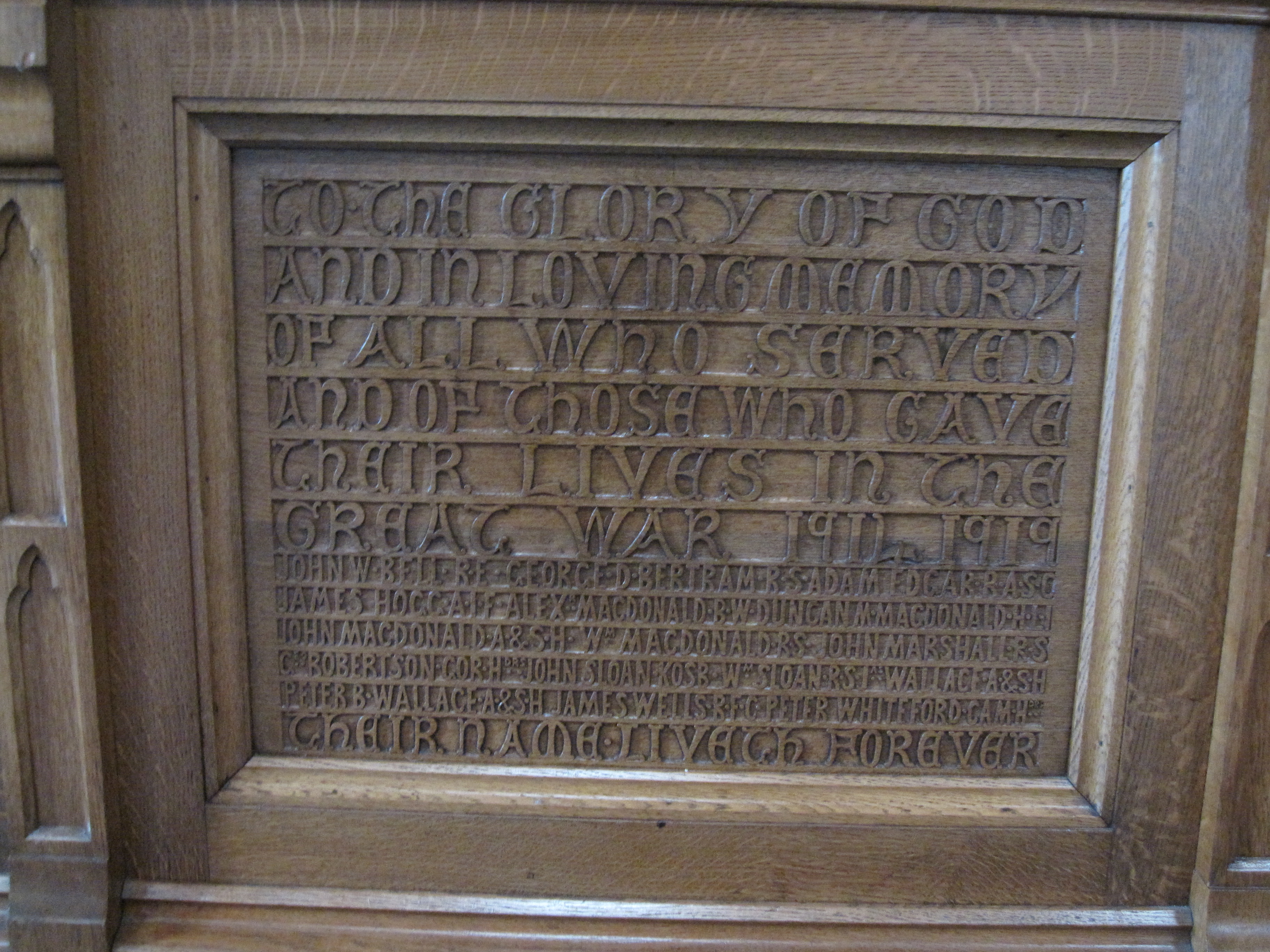
 The names of sixteen men from Davidson’s Mains in Edinburgh who were killed in the First World War are carved on the church war memorial which, unusually, is also the communion table.
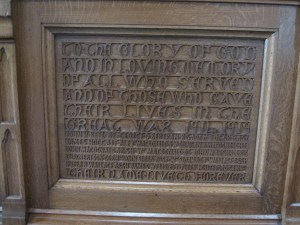
Communion table inscription (2)

 A few years ago I tried to find out something about the lives behind these names, and this is part of an article I wrote for the church magazine about them.

 To the glory of God and in loving memory of all who served and of those who gave their lives in the Great War 1914-1919.

 John Wilson Bell was 23 when he died in February 1917. He was a 2nd lieutenant in the Royal Engineers and is the only one of the 16 men to be buried in Edinburgh, in Comely Bank cemetery. His parents lived at Hillview Terrace.

 George Dawson Bertram grew up at Dowie’s Mill. He was a Private in the 9th Battalion of the Royal Scots. He was killed in France in 1917 aged 31 and is buried in Etaples Military Cemetery.

 Adam Edgar was a local family man, living in Davidson’s Mains with his wife and small daughters. He was a motor driver, and so served as a driver with the Royal Army Service Corps. He died in Germany in March 1919 aged 33, and is buried in Cologne Southern Cemetery.

 James Hogg had left Edinburgh by the time war broke out. His parents died when he was young, and he lived with his older brother Charles. At some point James emigrated to Australia, and he was working as a leather worker in South Yarra, Victoria when he enlisted. His brother Charles still lived in Mary Cottage in Main Street, and became an elder in the church. In February 1919 James was on leave in the UK. He returned to France, and just weeks later was killed accidentally, aged 31. Although part of the Australian Forces, he is remembered here in the church of his childhood. He is buried in Duisans British Cemetery, Etrun. Some years later Charles also emigrated to Australia.

 Alexander, Duncan and John MacDonald
There are three sets of brothers commemorated on the communion table. Alexander and Christina MacDonald tragically lost three of their sons. They had come from Skye to Edinburgh, where Alexander worked as a railway plate fitter, and they brought up their family in Corbiehill Road. John, who was in the Argyll and Sutherland Highlanders, died in April 1917 aged 25,  and is commemorated on the Arras Memorial. Alexander, of the Black Watch, died on 19 July 1918 aged 23. Like his brother he has no known grave and is commemorated on the Ploegsteert Memorial in Belgium. And then, just 36 days later, a third son Duncan was killed, aged just 21. He had been in the Highland Light Infantry, and is buried at Bac-de-Sud British Cemetery, Bailleuval, France.

 William MacDonald, Royal Scots. I am not sure of his identity.  

 John Marshall, a baker who lived with his wife and children in Ivylea, Davidson’s Mains, is one of two men commemorated on the table who were part of the famous ‘Hearts Company’, or ‘McCrae’s Battalion’. This 16th Battalion of the Royal Scots included thirteen Hearts footballers and many other local young men, often Hearts supporters. They were at the front of the assault on the first day of the Battle of the Somme, 1 July 1916, and suffered huge losses. John Marshall died that day, aged 34. His name is remembered along with thousands of others on the Thiepval Memorial, the memorial to the missing of the Somme. John’s father William was an elder who played a significant part in the life of the church over many decades.

 George Robertson, whose parents lived in Main Street, served with the Gordon Highlanders. He was killed at Ypres in April 1916, and is commemorated on the Menin Gate Memorial.

 Jack and William Sloan’s parents were John and Elizabeth Sloan of Craigcrook Terrace. Their father was an elder in the church. The Kirk Session records of June 1915 reveal that Pte William Sloan, son of members of this congregation and serving in the Royal Scots, has been admitted to the Full Communion of the Presbyterian Church by one of the Presbyterian Chaplains to His Majesty’s Forces. William was another who had joined up with the ‘Hearts Company’. Like John Marshall, he was killed in the carnage of the Somme on 1 July 1916, aged 22, and he is commemorated on the same memorial. His younger brother Jack was 2nd Lieutenant with the Kings Own Scottish Borderers, and died in France on 23 July 1918, aged 21. He is buried in Buzancy Military Cemetery.

 James and Peter Wallace are the third set of brothers to be remembered on our communion table. They both served with the Argyll and Sutherland Highlanders. James had married and was living in West Kilbride when he enlisted. He died in August 1916, aged 25, and is buried at Bois Guillame Communal Cemetery, France. His younger brother Peter was just 20 when he was killed at the Battle of Loos in September 1915 – the youngest of the sixteen men. He is commemorated on the Loos Memorial. Their family home was in Main Street, Davidson’s Mains.

 James Wells of the Royal Flying Corps may be James Ritchie Wells, who died on 17 November 1917 aged 27, and whose parents lived in Glasgow. He is buried Glasgow. I have not found a link with Davidson’s Mains.

 Peter Whiteford, the final name on the communion table, had the closest association with the church as his father was the beadle, and his family lived in the Cottage. He was a sergeant in the Cameron Highlanders, and was killed in action in January 1915, aged 27. He is commemorated on Le Touret Memorial in France.

Remembrance is about much more than one conflict 100 years ago, but whether in the distant past or more modern times it’s surely more meaningful when we honour not just a list of names but real people, with homes and lives and families who grieve. We will remember them.

© All content copyright Flora Johnston. You may reblog or share with acknowledgement, but please do not use in any other context without permission.

Women’s education and war

It’s two years now since I first became fascinated by the memoir of Christina Keith, my great-aunt from Thurso. My father – her nephew – has owned this manuscript for many years and I knew of its existence, but had never actually read it. Now it’s to be published. SKMBT_C28413080512270

Christina was an academic who spent much of her working life as a lecturer in Classics at St Hilda’s College, Oxford. Born in 1889, she was part of the generation which pioneered higher education for women, and which would be most affected by the First World War. These two themes, women’s education and war, intertwine in Christina’s story.

Towards the end of the First World War – although it’s worth remembering that when she signed up she didn’t know it was ‘towards the end’ – Christina travelled to France to take part in the army’s education scheme. She taught soldiers of all backgrounds, immersed herself in army life, and was one of the first women to travel across the devastated battlefields once the guns had fallen silent. She has left a fascinating memoir of her time in France which offers a truly fresh perspective on life on the Western Front as the conflict drew to a close.

I spent a wonderful few months in 2012 exploring Christina’s story from her early years as the eldest child in a large Caithness family, through her choice to pursue an academic career in male-dominated subjects, and on to her time in France.  The resulting book consists of my narrative of Christina’s story, her own memoir in full with explanatory notes, and some letters written by her brother Barrogill Keith from the front line. It will be published in March 2014 by The History Press, and you can preorder from Amazon or Waterstones.

Lots more on this to follow over the next few months!

© All content copyright Flora Johnston. You may reblog or share with acknowledgement, but please do not use in any other context without permission.

ScotlandsPeople

I spent yesterday working in the ScotlandsPeople centre, doing some genealogy research for a client.

I love working there – climbing the steps into such a fabulous building and walking through the dome on the way to the search rooms. The system’s really easy to use, and it’s much better value than working remotely if you have a lot to do. Everything’s digitised, it’s simple to search, and you can whizz from generation to generation in minutes.

When I first started doing genealogy research, the original records were brought right to your desk. (It’s not that I’m that old, just that I started doing this when I was a teenager – yes, really!) After hunting through enormous index volumes to find the right entry, you filled out a slip and waited for the book to be physically located and produced – at which point you hoped you really had identified the right person, as otherwise you’d wasted half an hour or more. Any information had to copied out by hand, in pencil of course.

Now you log in, press a few buttons, and view the record instantly on screen.

It makes perfect sense, both for convenience and for preservation of the records … but I found myself thinking yesterday how glad I am that I started doing this in the days when you got to handle the real thing.

For me, that seemed particularly significant when looking at the first statutory registers of births, marriages and deaths in Rogart. My great-great-great grandfather, William Forrest, was schoolmaster, session clerk and registrar, and wrote many of the entries in these volumes. People came to his home, Rogart Schoolhouse, with their fee, and he brought out these books and recorded the information in them.

001

Modern school at Rogart

On one page of deaths from 1855 the first two entries are in his untidy handwriting – but an assistant registrar was called on for the third one. That’s because it records the death of William’s own little two-year-old daughter Hellen from meningitis, and his signature appears this time not as registrar but as bereaved father.

Rogart Church, where Hellen is buried.

Now that the original records are no longer routinely handed out, I feel privileged to have held the very books which were handled by William as he recorded the births and deaths of the local community and of his own family.

Somehow, it beats looking at a screen.

© All content copyright Flora Johnston. You may reblog or share with acknowledgement, but please do not use in any other context without permission.